Join DFJ Sports Mock Draft Pool!
Go to PickPool.APP - Create an account - it’s free!
Search “Detroit Football Journal” in the private section
Enter the password DFJSPORTS11!! (Yes its all CAPS)
You get 1 entry - make it count!
You can join to play for free or donate $5 to Rocked On Cancer Foundation to enter the jersey drawing!
More details at www.BuyMeAcoffee.Com/RockedOn

Live All Draft Long On YouTube!
Full Breakdown & Analysis Of Each Pick
Giveaways & Raffles!
Click Here To Join The Live Streams
See You There!
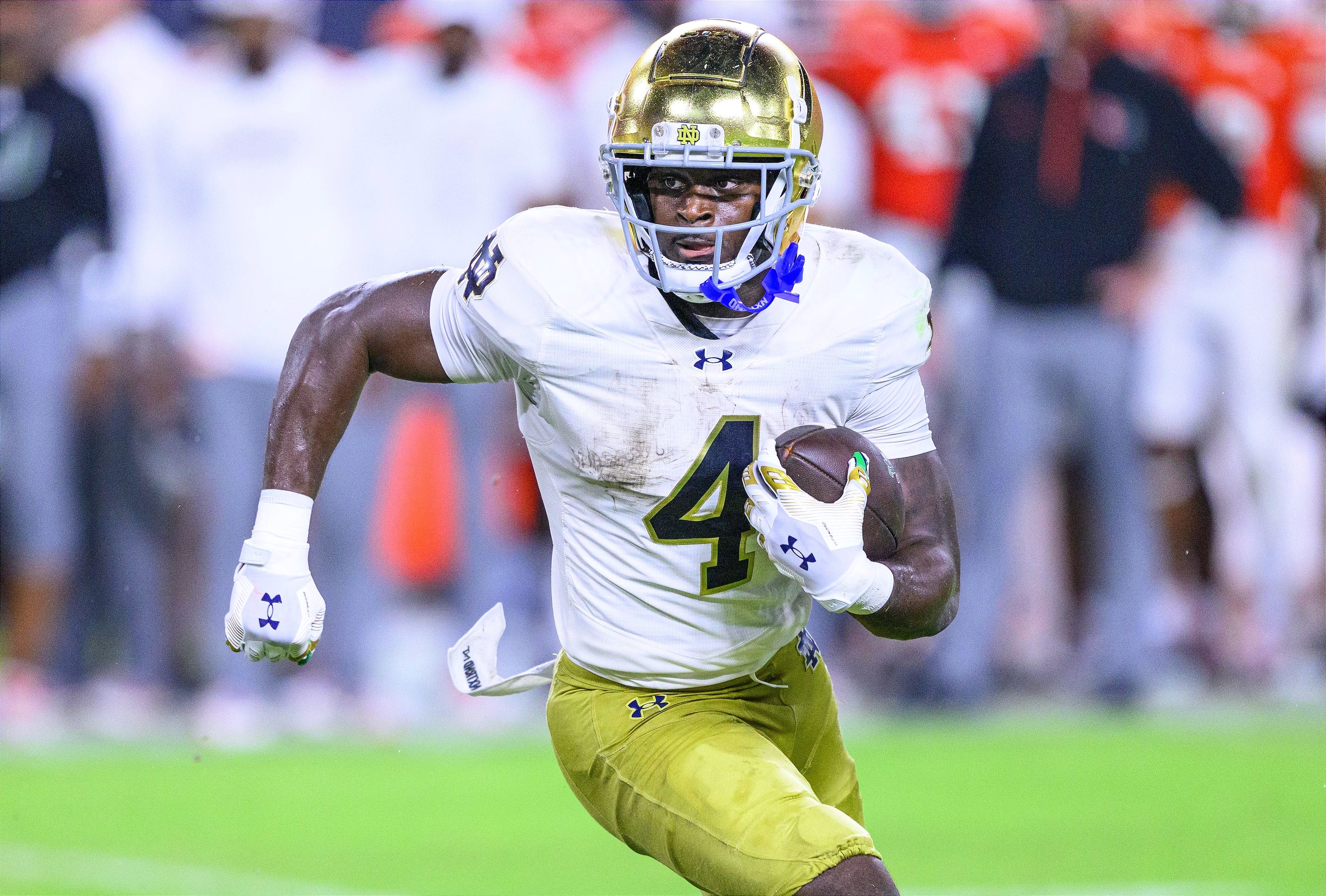
#1 | RB | Jeremiyah Love | Notre Dame
Ht: 6’ 0” (6000) | Wt: 212 | Hand: 9.125” | Arm: 32” | Wing: 78.625” | Ape 1.09 (RARE!)
2025 Stats: 163 / 1,372 Yds | 21 Total TDs (18 Rush / 3 Rec) | 1 Fumble
Key Stats: 127.5 Elusiveness | 56 Forced Missed Tackles | 4.5 YDs After Contact
PFF: 72.7 Rec Grade | 93.7 Rush Grade | 93.1 Overall | 84.5 Gap | 92.8 Zone
Draft Stock: ↗️↙️ No Change | Previous Top-25 Rank: #1 | SIS Big Board #1
Jeremiyah Love is a 21-year-old, high-cut backfield weapon who pairs a dense 212-pound frame with a verified 4.36 40-yard dash and a remarkably rare 1.09 Ape Index. He operates as a schematic trump card, utilizing a devastating second gear that completely shatters pursuit angles and turns marginal creases into breakaway runs. During his dominant 2025 campaign at Notre Dame, he racked up 1,372 rushing yards and 21 total touchdowns while posting an elite 93.1 overall PFF grade. He solidified his blue-chip status during the pre-draft process by logging a 117.3 Speed Score, proving his track-star velocity translates seamlessly to his playing weight without any lingering medical red flags. Functioning as a multi-phase mismatch, his 92.8 zone-rushing grade and refined route-running nuance make him an ideal fit for modern, space-oriented NFL offenses.
The primary technical conflict in his evaluation stems from occasional processing delays at the mesh point, where he can lock onto his primary landmark and miss wide-open backside cutback lanes on gap concepts. However, his elite contact balance—averaging 4.5 yards after contact and forcing 56 missed tackles—ensures that even when his vision betrays him, he still generates positive yardage, and NFL coaching will quickly refine his raw anchor technique in pass protection to match his spotless zero-pressure-allowed collegiate resume.
Rock’s Take:
Love stands as the undisputed RB1 of the 2026 class and a plug-and-play, three-down starter. He mirrors the pure velocity of Jahmyr Gibbs but brings a denser frame built to survive interior NFL traffic. By forcing defensive coordinators into pre-snap alignment conflicts, he represents the most versatile and explosive backfield asset in this draft, fully cementing his value as a locked-in Day One selection.
Previous Top-25 Ranking #1

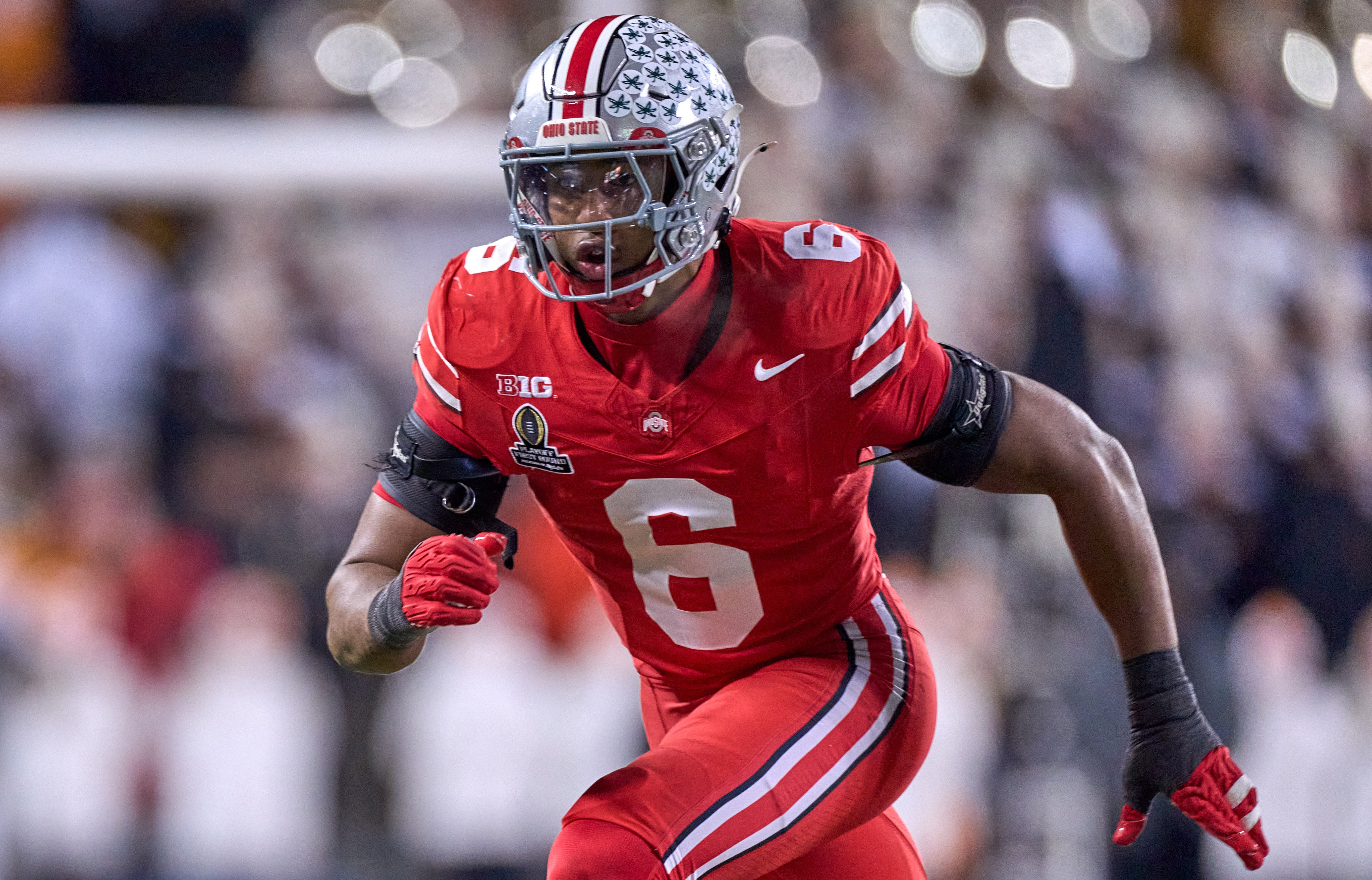
#2 | LB | Sonny Styles | Ohio State
Ht: 6’5” (6050) | Wt: 244 | Hand: 10” | Arm: 32.875” | Wing: 80.875” | Ape: 1.05
2025 Stats: 82 Tackles | 1 Sack | 6.5 TFLs | 1 INT | 11 Pressures
Key Stats: 38 Stops | 75.8 Passer Rate | 2.2% Missed Tackle Rate
Draft Stock: ↗️↙️ No Change | Previous Top-25 Rank #2 | SIS Big Board #5
Sonny Styles is a 21-year-old linebacker at 6’5”, 244 pounds with a rare size-speed profile, verified by a 4.46 forty, 43.5-inch vertical, and 11-foot-2 broad that confirm the movement skills on tape. He posted 82 tackles in 2025 and paired that production with an 88.0 PFF overall grade, 87.8 run-defense grade, and 87.4 coverage grade, giving him one of the cleanest all-around résumés in the class. His game is built on range, downhill burst, coverage versatility, and striking power, allowing Ohio State to deploy him as a true second-level shape-shifter across Mike, Will, pressure looks, and matchup assignments. The former safety still carries defensive back movement into the box, showing real comfort in zone drops, man assignments on backs and tight ends, and disguised pressure roles. He profiles as a modern three-down linebacker who can erase space and expand a coordinator’s menu immediately.
The concern is role refinement more than talent. Styles is still relatively new to full-time linebacker play, and that shows when bigger interior bodies get into him early or when he is forced to consistently stack and shed in tight traffic. His long frame can run a little high, and while the athleticism masks a lot, he is better flowing clean than living in constant trench collisions. There is also some mild hip tightness when projecting him against quicker underneath route breaks, even if his overall coverage range is a major strength. Still, his tackling reliability, communication, and growth in block recognition give him one of the safer developmental floors among top defenders.
Rock’s Take:
Styles is one of the premier defensive assets in this class because he solves real NFL problems. He can cover, blitz, tackle, and play in space at a size most linebackers cannot match, and that kind of versatility changes how a defense can structure the middle of the field. The key is deployment: keep him clean, let him run, and do not force him into a static stack-and-shed role every snap. If a coordinator uses him as a free-flowing, multi-role weapon, this is a premium three-down starter with top-10 value.
Previous Top-25 Ranking #2

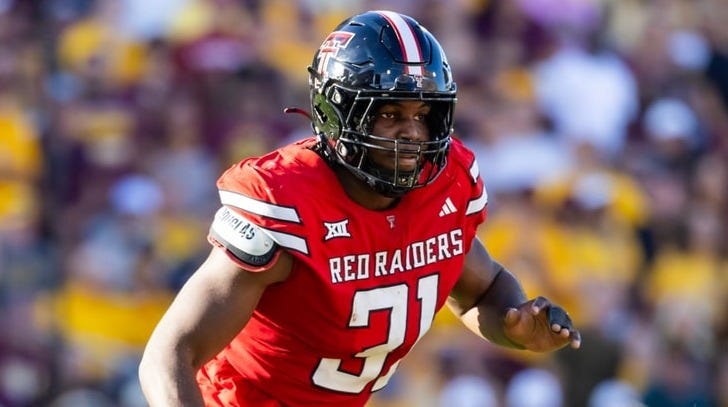
#3 | EDGE | David Bailey | Texas Tech
Ht: 6’ 3-1/2” (6034) | Wt: 251 | Hand: 10.25” | Arm: 33.625” | Wing: 79.625” | Ape: 1.05
2025 Stats: 52 Tackles 14.5 Sacks | 19.5 TFLs | 73 Pressures | 3 FF | 3 PBUs
Key Stats: 21.6% Pass Rush WR | 9.0% Run Stop | 32 Stops | 42 Hurries
PFF: 76.4 RDG | 93.3 Pass RG | 92.4 Overall
Red Flags: 2024 Missed Tackle Rate | 20.7% | Career 15.8%
Draft Stock: ⬆️ 1 | Previous Top-25 Rank #4 | SIS Big Board #2
David Bailey is a 21-year-old EDGE at 6’3½”, 251 pounds with rare first-step explosiveness, validated by a 1.51 10-yard split that immediately puts tackles in recovery mode. He produced like a premier disruptor in 2025, posting 52 tackles, 14.5 sacks, 19.5 TFLs, and 73 pressures with a 21.6% pass-rush win rate and a 93.3 PFF pass-rush grade. His game is built on burst, bend, and violent hand sequencing, pairing a long-arm stab, swipe, spin, and ghost variation to consistently win the high side and flatten to the quarterback. Texas Tech deployed him from wide alignments and two-point looks to maximize his space, cornering ability, and stunt value. He profiles as a pressure-first edge built for aggressive fronts that want their rushers attacking upfield and stressing protections early.
The concern shows up in the run game and overall play strength. Bailey can get overwhelmed at times by bigger bodies on the edge, and his 20.7% missed-tackle rate points to inconsistent finishing and breakdown control in space. He also has moments where he loses rush-lane integrity or over commits inside, opening the perimeter. Still, the issue is more about leverage, mass, and discipline than toughness or effort. He plays with urgency, sees screens and RPOs quickly, and flashes enough contact power to project improvement with coaching and added lower-body strength.
ROCK’S TAKE:
Bailey is a top-tier edge on my board because the most valuable part of his game already looks NFL-ready. This is a defender who changes protection plans before the snap and creates real stress with speed, bend, and sequencing. He may never be a true power-based edge setter, but that is not why you draft him. You draft him because high-end pass rush wins games, and Bailey has legitimate double-digit sack upside with immediate impact value on passing downs.
Previous Top-25 Ranking #4

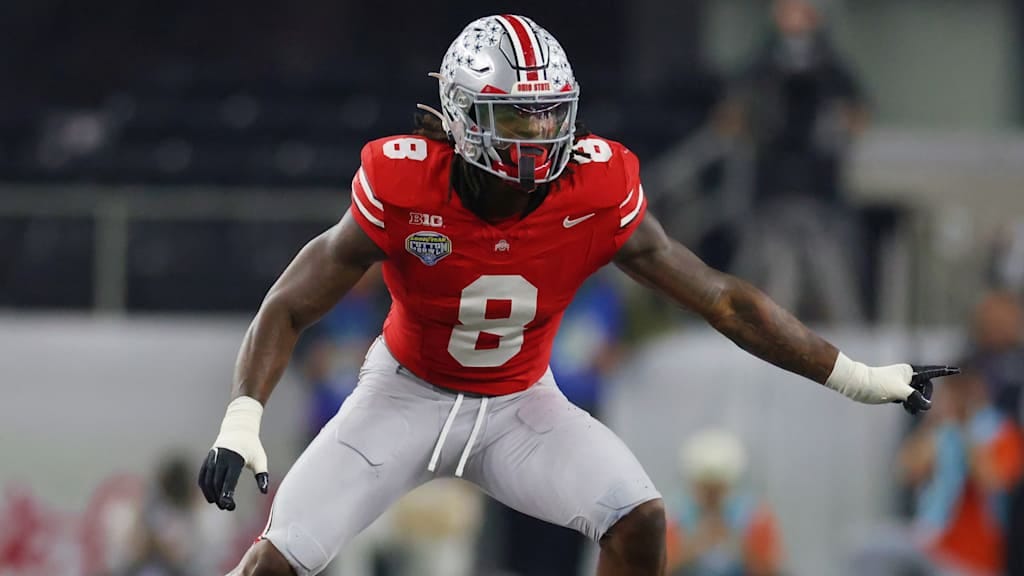
#4 | LB | Arvell Reese | Ohio State
Ht: 6’4-1/8” (6041) | Wt: 241 | Hand: 9.5” | Arm: 32.5” | Wing: 79.5” | Ape 1.04
2025 Stats: 69 tackles | 6.5 sacks | 10 TFLs | 2 PBUs | 0 INT | 23 Pressures
Key Stats: 30 Stops | 100.9 Passer Rate | 6% Missed Tackle Rate
Draft Stock: ⬇️1 | Previous Top-25 Rank #3 | SIS Big Board #4
Arvell Reese is a 20-year-old hybrid linebacker/edge at 6’3”, 241 pounds with rare range and explosive movement traits, validated by a 4.46 forty that matches the burst and closing speed on tape. He brings high-end versatility, aligning off the ball, on the edge, and in pressure packages while flashing the physical profile to develop into a full-time stand-up rusher. His game is built on first-step urgency, violent upper-body strike timing, and pursuit speed, allowing him to stack, shed, and erase space in a hurry. Ohio State leaned on him as a movable front-seven piece, trusting him in coverage, stunts, and edge-setting duties rather than just pure rush volume. He profiles as a pressure-versatile defender built for aggressive fronts that want speed, multiplicity, and range.
The concern is refinement, both mentally and mechanically. Reese is still relatively new to full-time front-seven play, and that shows when post-snap movement muddies his keys or when his pass-rush plan stalls after the initial burst. His toolbox is still developing, and while the traits scream upside, he is not yet a fully formed technician who consistently strings counters together. Coverage value is real, but his taller frame can tighten some transitions and limit how often teams will want him matched in space against quicker route-breakers. Still, the blend of burst, violence, and positional flexibility gives him one of the stronger developmental runways in the class.
Rock’s Take:
Reese is one of the premier traits bets in this draft, and I would rather bet on this kind of movement profile than chase a safer but lower-ceiling defender. He brings immediate sub-package value because the speed, range, and pressure versatility already translate. The long-term question is whether the processing and rush detail catch up enough for him to become a true every-down difference-maker. If they do, this is the kind of front-seven weapon who can tilt protection plans and become a top-10 caliber defensive piece.
Previous Top-25 Ranking #3

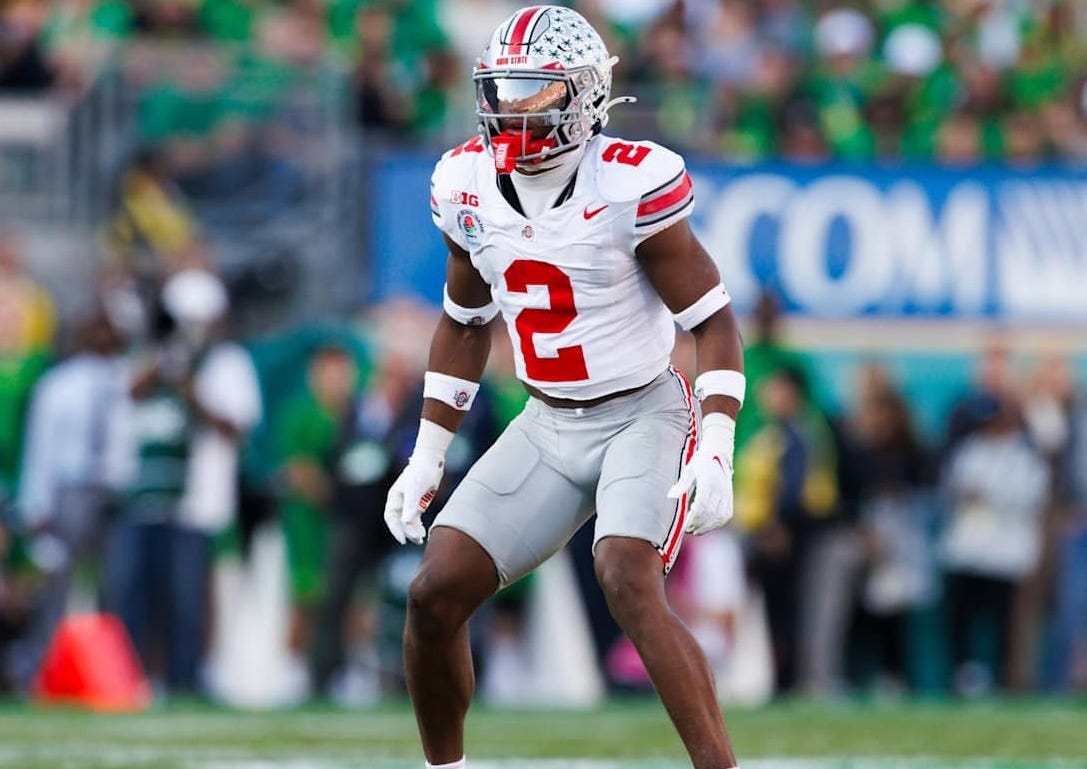
# 5 | Safety | Caleb Downs | Ohio State
Ht: 5’ 11-5/8” (5115) | Wt: 206 | Hand: 9.5” | Arm: 30.25” | Wing: 73.25” | Ape: 1.02
2025 Stats: 68 tackles, 1 Sack, 2 INTs, 2 PBUs, 5 TFLs
Key Stats: 7.7% Forced IR | 11.5% Missed Tackle | 47.9 Passer Rate Allowed
Draft Stock: ⬆️7 | Previous Top-25 Rank #12 | SIS Big Board: #3
Caleb Downs is a 20-year-old safety at 5’11⅝”, 206 pounds with elite diagnostic ability and immediate play recognition that consistently puts him ahead of the snap. He produces across phases with 68 tackles, 5 TFLs, and a 47.9 passer rating allowed, supported by an 83.9 PFF grade and strong coverage impact. His game is built on anticipation, route recognition, and disciplined eyes, allowing him to close windows and arrive at the catch point on time. Ohio State deploys him as a movable piece—box safety, slot defender, and rotational coverage player—maximizing his instincts and versatility. He profiles as a high-IQ, alignment-flexible defender who controls space and dictates offensive timing.
The concern centers on physical limitations, particularly length and finishing consistency. His 30.25-inch arms reduce his disruption radius, contributing to an 11.5% missed-tackle rate and limiting effectiveness at extended catch points. He also lacks elite range as a true single-high defender, capping some deep-field usage. However, his processing speed, angles, and play temperament consistently mitigate those limitations. He arrives early, plays through contact, and rarely loses positioning. With improved tackling consistency and continued strength development, he projects as a reliable, high-impact starter.
Rock’s Take:
Downs is one of the smartest defenders in this class, and that translates immediately on Sundays. He’s not built like a prototype, but he plays faster than everyone else because he sees it first. This is a Day 1 starter who elevates communication, tightens coverage windows, and brings stability to the middle of a defense. For teams valuing instincts and versatility, he’s a player with long-term impact written all over him.
Previous Top-25 Ranking #12

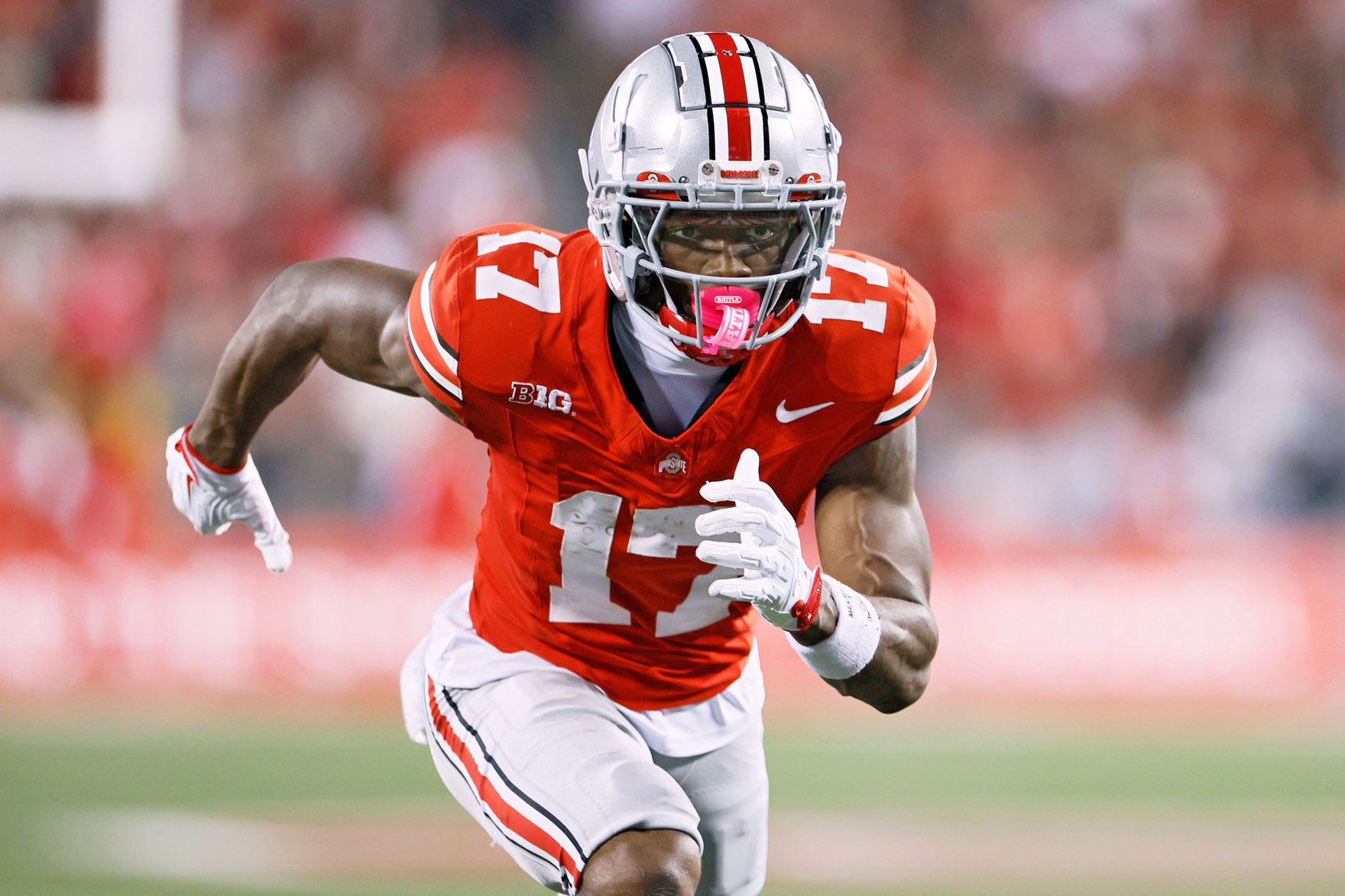
#6 | WR | Carnell Tate | Ohio State
Ht: 6’ 2-1/4” (6022) | Wt: 192 | Hand: 10.25” | Arm: 31.75” | Wing: 78” | Ape: 1.05
2025 Stats: 51 Rec | 875 Yds (17.2 Y/R) | 9 TDs
Key Stats: 85.7% Contested CR | 0% Drops | 150.5 PRWT
Draft Stock: ⬆️ 2 | Previous Top-25 Rank #8 | SIS Big Board #
Carnell Tate is a 21-year-old wide receiver at 6’2¼”, 192 pounds with smooth stride efficiency, advanced route pacing, and some of the cleanest ball production in the class. He posted 51 catches for 875 yards and 9 touchdowns in 2025, while pairing a 90.3 PFF overall grade with elite reliability metrics, including zero drops and an 85.7% contested-catch rate. Ohio State moved him around the formation, but his best work comes from the perimeter where he can use tempo, body control, and late hands to win on intermediate and vertical-breaking patterns. His game is built on leverage manipulation, tracking skill, and quarterback-friendly spacing rather than overwhelming raw explosiveness. He profiles as a polished outside receiver who wins with timing, feel, and finishing.
The concern is whether his physical profile limits the ceiling against NFL corners who can crowd him early. Tate ran 4.53, and while he plays faster than that in structure, he does not carry true burner speed or much after-catch juice, which narrows the margin for error against press and man coverage. His thinner frame also shows up when defenders get hands on him early or force him into more crowded catch-point battles than he should have to live in. Still, his route detail, body control, and dependable hands consistently offset those limitations, which is why he keeps showing up in first-round conversations even without elite traits.
ROCK’S TAKE:
Tate is one of the safest receiver evaluations in this class because the game already looks translatable. He is not a pure traits bet and he is not going to scare defenses with raw speed, but he understands how to uncover, how to finish, and how to become a quarterback’s steady answer on money downs. For me, this is the kind of receiver who may not test like a top-five weapon, yet still ends up being one of the most useful pros from the group because his game is built on detail, control, and trust. In the right offense, he feels like an immediate starter with high-volume WR2 value and enough polish to outplay his draft slot.
First: elite reliability — zero drops, strong contested-catch production, and polished route pacing give him one of the cleaner floors in the class.
Second: 4.53 speed with modest run-after-catch value, and press-strength concerns are the biggest reasons some teams may prefer more dynamic athletes.
Third: the league clearly values him — he continues to show up in top-10 to mid-first-round mock discussions, especially for teams needing a dependable outside target.
Best Team Fits & Picks
Cleveland Browns #6: Cleveland makes sense because the receiver room still needs a true long-term stabilizer on the outside. This is the kind of pick that would give the offense a more dependable perimeter presence and take pressure off the passing game to manufacture everything underneath.
Washington Commanders #7: Washington fits because the offense can still use another reliable target to support its young quarterback and keep defenses from keying too heavily on one option. Adding another starting-caliber receiver here would deepen the room and help the offense stay more balanced.
New York Giants #10: The Giants make sense because they still need another trustworthy outside weapon and cannot afford to lean too heavily on one featured playmaker. This would be about rounding out the depth chart with a legitimate starting option who helps stabilize the passing game.
Draft Range: Round 1, most likely picks 5–12, with a realistic chance he lands a little later if teams favor more explosive receivers. Current late-chatter points to him as a clear first-rounder, but not a locked top-10 pick.
Previous Top-25 Ranking #7

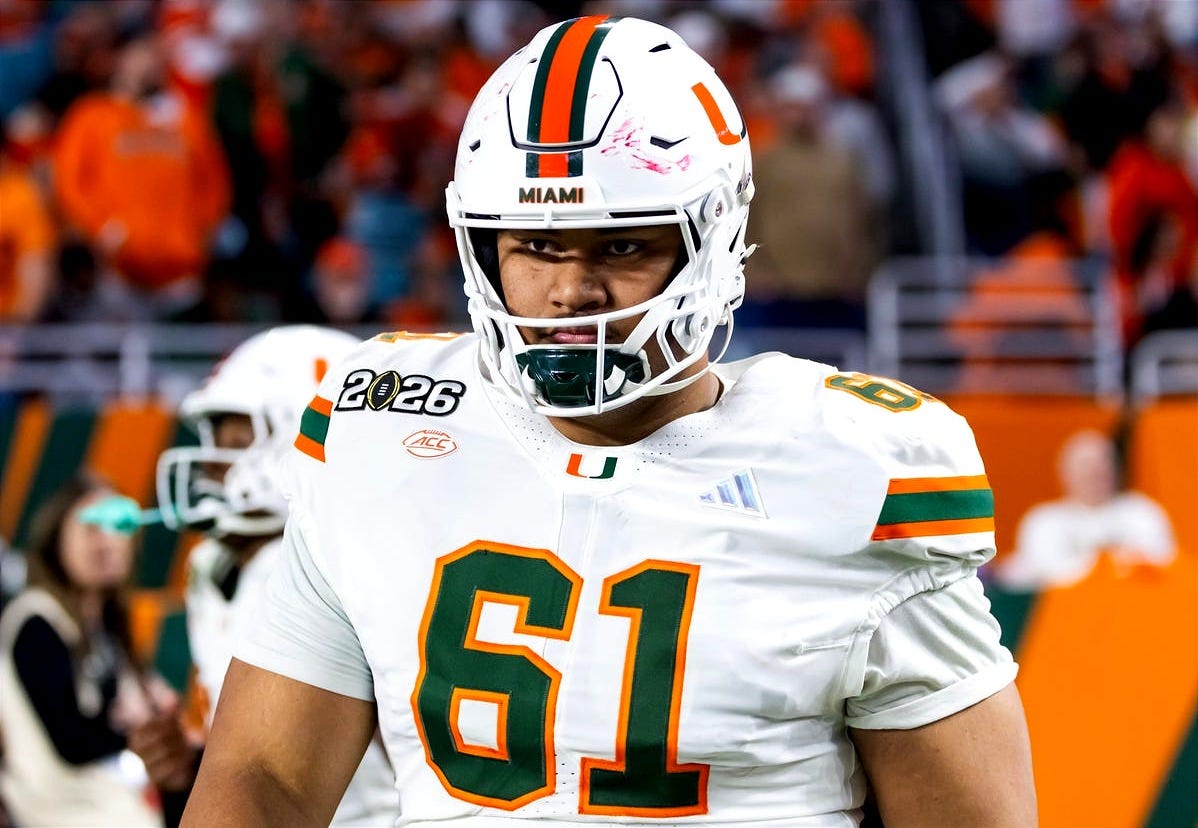
#7 | OT/G | Francis Mauigoa | Miami
Ht: 6’ 5-1/2” (6054) | Wt: 329 | Hand: 10.625” | Arm: 33.25” | Wing: 80.75” | Ape: 1.04
2025 Stats: 1034 Snaps | 3 Hits | 2 SKs Allowed | 9 Hurries | 5 PENs (16 Games)
Key Stats: 74.5 Gap Grade | 74.3 Zone Grade
Draft Stock: ⬇️1 | Previous Top-25 Rank #6 | SIS Big Board #6
Francis Mauigoa is a 21-year-old offensive lineman at 6’6”, 329 pounds with rare mass, balance, and play strength that immediately show up in pass protection and downhill run blocking. He played 1,034 snaps in 2025 at right tackle, allowing just two sacks while anchoring Miami’s pro-style offense with consistent protection integrity. His game is built on a violent, well-timed hand punch, strong contact balance, and a naturally heavy base that absorbs power and resets the rep once engaged. Miami trusted him as a true every-down right tackle, but his broad frame and movement profile also project cleanly inside where his power can fully take over. He profiles as a power-first blocker with immediate starter value and scheme versatility.
The concern is whether teams view him as a long-term tackle or a cleaner interior projection, especially with recent back-related medical buzz entering the process. His 33¼-inch arms tighten the margin for error on the edge, and he can be a beat late sorting stunts or leave soft space inside when his feet stall at the top of the set. Those issues are far less damaging at guard, where his anchor, hand strength, and leverage become defining traits. The latest reporting around a herniated disc creates some risk of a modest slide, but it does not erase how pro-ready the tape looks. If the medicals check out, he still carries one of the safer floors in the class.
ROCK’S TAKE:
Kick him inside, and you’re getting a plug-and-play guard with Pro Bowl to All-Pro upside who can stabilize a line immediately. Leave him at right tackle, and you’re betting his power, timing, and balance can continue to hold up against NFL speed and interior games. For me, the value is still strong because this is one of the safer blockers in the class when viewed correctly. The back issue may push him down a few spots, but the tape still says early-impact starter with top-15 caliber value.
Previous Top-25 Ranking #6

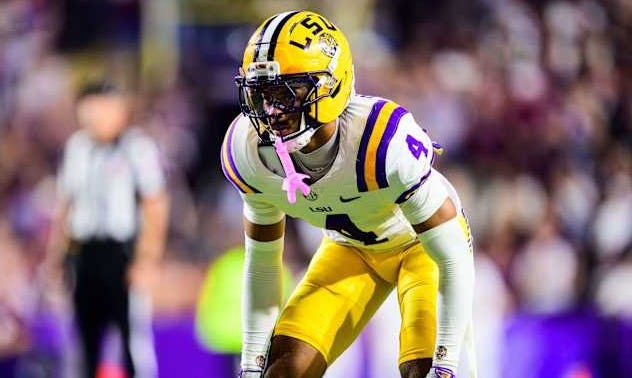
#8 | CB | Mansoor Delane | LSU
Ht: 5’ 11-3/4” (5116) | Wt: 180 | Hand: 8.875” | Arm: 31” | Wing: 74.5” | Ape: 1.04
2025 Stats: 45 Tackles (26 Solo) | 2 INTs | 11 PBUs
Key Stats: 89.1 Man CG | 76.7 Zone CG | 40% CRA | 31.3 PRWT
PFF: 74.4 Run DG | 66.40 Pass RG | 90.7 Coverage | 90.5 Overall
Draft Stock: ⬆️ 1 | Previous Top-25 Rank #9 | SIS Big Board: #8
Mansoor Delane is a 22-year-old cornerback at 5’11¾”, 180 pounds with elite coverage instincts and fluid movement skills that consistently put him in-phase against SEC receivers. He produces with 45 tackles, 11 PBUs, and 2 interceptions while posting a 90.7 PFF coverage grade and an 89.1 man-coverage mark. His game is built on calm footwork, route anticipation, and controlled transitions, allowing him to mirror releases and close windows without panic. LSU deploys him across boundary, field, and slot alignments, maximizing his versatility in both man and zone structures. He profiles as a technique-driven cover corner who wins with timing, leverage, and processing over raw physical traits.
The concern centers on his weight and overall length limitations. His 31-inch arms are a positive when compared to the class—his ability to consistently disrupt at the line—particularly against true “X” receivers is questionable. He can be displaced early in routes and lacks elite recovery speed when initially beaten. The gifts in his game are anticipation, footwork, mirroring and competitive toughness—which consistently offset his constraints. He understands leverage, plays through hands at the catch point, evidenced by 26 pass breakups the last two seasons—he rarely loses positioning cleanly. With added strength and continued refinement versus physical press looks, he projects as a high-level starter.
Rock’s Take:
Delane is one of the cleanest cover corners in this class, and I trust the tape over the measurables. He’s not built like a prototype, but he consistently erases routes with technique and awareness. This is a Day 1 starter who gives you alignment flexibility and coverage stability. In a league that values coverage versatility, he’s a top-10 caliber defender with immediate impact and long-term reliability.
Previous Top-25 Ranking #9

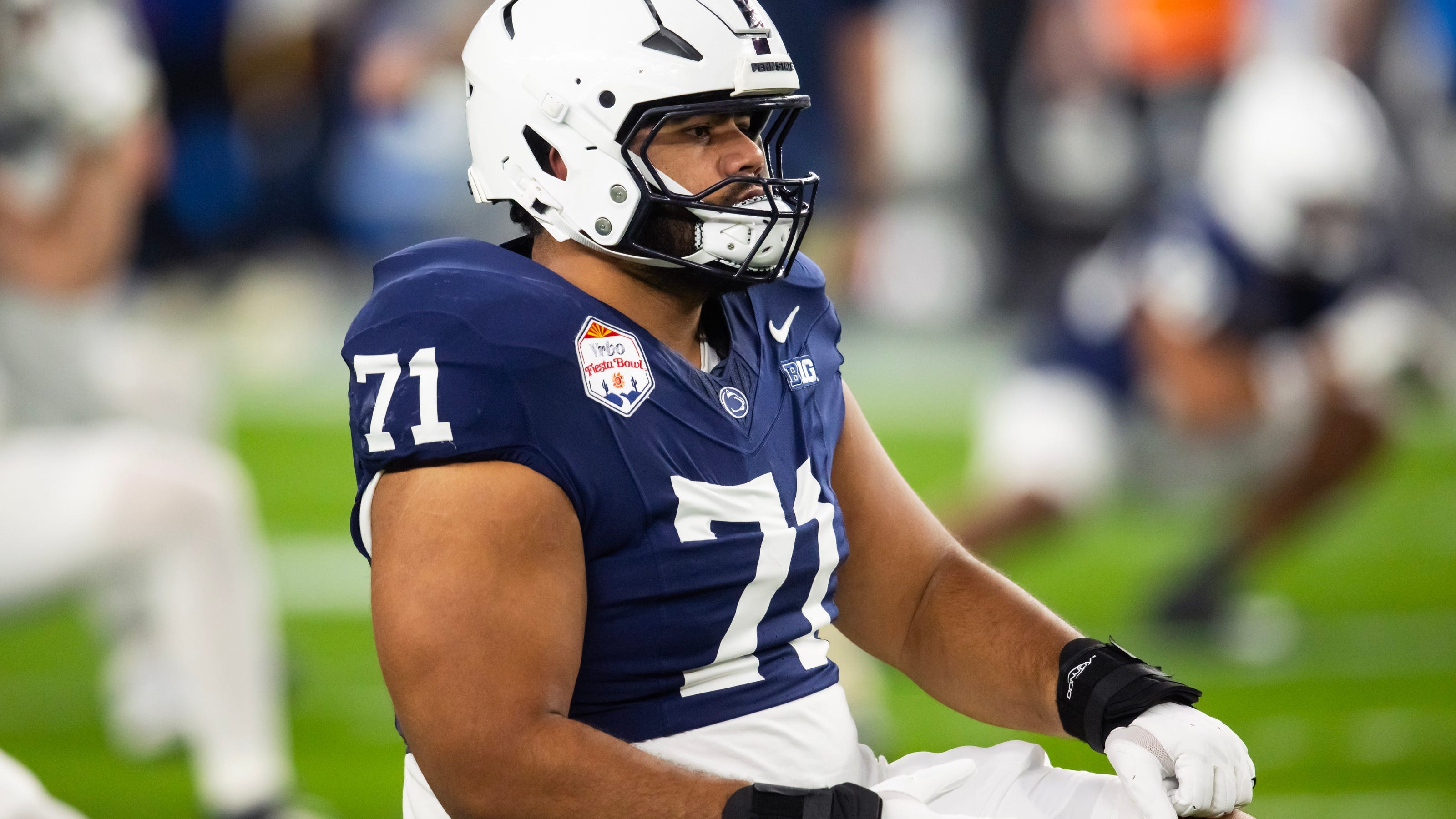
#9 | OL | Olaivavega Ioane | Penn St
Ht: 6’4-1/4” (6042) | Wt: 320 | Hand: 10.5” | Arm: 32.75” | Wing: 80.675” | Ape: 1.06
2025 Stats: 614 Snaps | 0 Hits | 0 Sacks | 4 Hurries | 1 Pen (12 Starts)
Key Stats: 38 Pancakes | 73.6 Gap Grade | 72.2 Zone Grade | 90.9 True Pass BG
Draft Stock: ⬆️5 | Previous Top-25 Rank: #14 | SIS Big Board: #13
Olaivavega “Vega” Ioane is a 22-year-old interior offensive lineman at 6’4¼”, 320 pounds with dense mass, heavy hands, and elite contact balance that consistently stabilize the pocket. He allowed zero sacks and zero hits across 614 snaps in 2025, pairing a 90.9 true pass-block grade with the kind of grip strength, anchor, and body control that show up immediately on tape. Penn State used him as a tone-setting left guard in both gap and zone concepts, but his best work comes in condensed space where he can latch, torque, and bury defenders through the whistle. His game is built on short-area power, synchronized hands and feet, and the ability to re-center reps once contact is established. He profiles as a plug-and-play starting guard with the temperament and technique to eventually offer center flexibility.
The limitation shows up in range and recovery. Ioane does not have elite foot speed, and that can expose him against quick interior penetration or force him into recovery situations when stunts and late movement hit fast. He is far more comfortable winning early in tight quarters than playing with width and space, which makes wide-zone-heavy projection a little less clean. Still, his hand strength, balance, and leverage consistently calm down the rep once squared, and he rarely loses cleanly when he gets to his spot. With continued refinement versus movement fronts, he projects as one of the safer interior starters in the class with possible cross-training value at center.
Rock’s Take:
Ioane is one of the most dependable interior blockers in this class because the game already looks pro-ready snap after snap. He is not a flashy projection built on upside alone — he is a physically mature, technically sound guard who can step into a lineup and help immediately. For me, the value starts with how stable he is in pass protection and how much nastiness he brings in the run game. If a team wants tone-setting, plug-and-play interior help, this is one of the cleanest answers on the board. Center versatility only adds to the appeal.
First: elite interior floor — zero sacks, zero hits, and a 90.9 true pass-block grade give him one of the cleanest pass-pro résumés among interior blockers.
Second: scheme fit matters — he can function in zone, but his best football comes in tighter quarters where power, leverage, and hand strength drive the rep.
Third: center flexibility adds value — guard is still the primary projection, but his leverage, intelligence, and interior temperament give him a legitimate secondary pathway.
Best Team Fits & Picks
New York Giants #10: The right guard spot is one of the clearest holes on the roster, and this would be a direct answer to a starting vacancy rather than a luxury pick.
Baltimore Ravens #14: Guard play has been a real need, and this is the kind of pick that would give the offense a more physical interior presence immediately—especially after the loss of Linderbaum to the Raiders.
Tampa Bay Buccaneers #15: Left guard has been a clear spot to upgrade, and this would be about dropping a day-one starter into a veteran offense adding more edge to the run game.
Draft Range: Round 1 — most likely between picks 10 and 15. If teams push tackles and defensive premium positions early, he still looks like one of the safest interior line bets to come off the board in the middle of the first.
Previous Top-25 Ranking #14


JOIN ME LIVE FOR THE NFL DRAFT!
VISIT ROCKED ON DETROIT LIONS ON YOUTUBE - LINK HERE
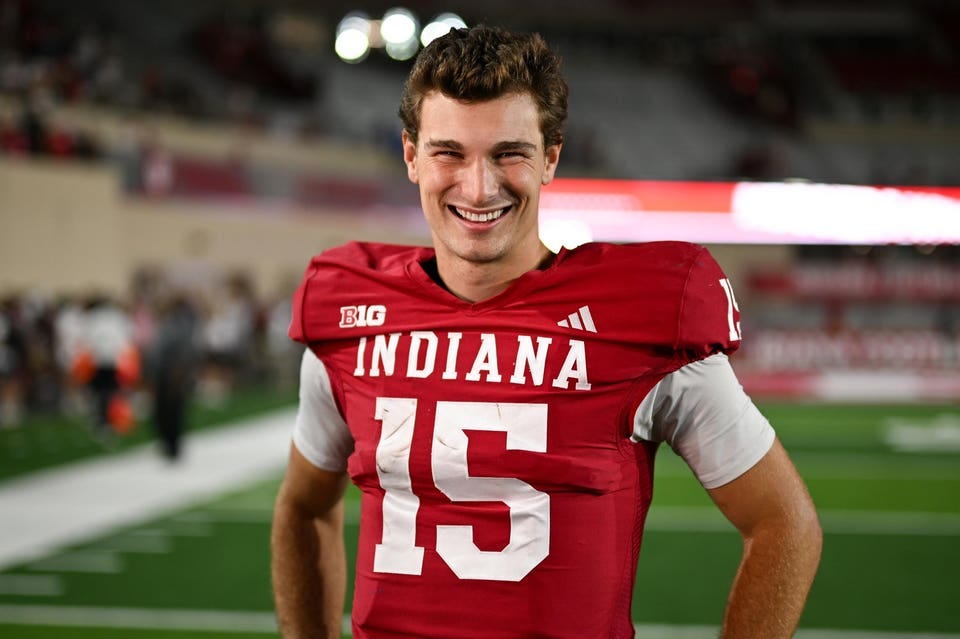
#10 | QB | Fernando Mendoza | Indiana
Ht: 6’ 4-3/4” (6046) | Wt: 236 | Hand: 9.5” | Arm: 31.875” | Wing: 76.75” | Ape: 1.06
2025 Stats: 3,535 Passing Yds (72% Comp) | 41 TD | 6 INT | 90/276 Rushing | 7 TD
Key Stats: 15.8% Pressure Sack Rate | 93.4 Deep | 92.2 Intermediate | 2.63 Avg TTT
Draft Stock: ⬆️2 | Previous Top-25 Ranking: #12 | SIS Big Board: #25
Fernando Mendoza is a 22-year-old quarterback at 6’4¾”, 236 pounds with high-level command of structure, timing, and defensive manipulation that defines his game. He produces elite efficiency with 3,535 passing yards, 41 touchdowns to 6 interceptions, and a 72% completion rate, supported by a 2.63 time-to-throw and 15.8% pressure-to-sack rate. His play style is built on pre-snap control, quick processing, and rhythmic footwork, allowing him to consistently deliver on time and in phase. Indiana deploys him in a timing-based, play-action system that emphasizes defined reads and spacing. He profiles as a precision-driven operator who wins with anticipation, accuracy, and control of the offense.
The limitation centers on physical ceiling and off-script creation. Mendoza lacks elite arm strength, and when forced off-platform, his velocity and drive into tight windows diminish. His mechanics can break down under pressure, leading to fades and reduced ball placement consistency. He also operated within a structured system, limiting exposure to full-field progression reads. However, his processing speed, poise, and accuracy consistently offset those concerns within structure. With continued mechanical discipline and expanded progression responsibility, he projects as a high-efficiency starter in timing-based offenses.
Rock’s Take:
While he lacks the sheer arm talent to elevate an offense off-script, Mendoza is the best pure operator in this class, and that matters in today’s league. He’s not going to wow you outside structure, but within rhythm and timing, he’s as clean as it gets. This is a quarterback who keeps offenses on schedule, protects the football, and maximizes what’s called. In the right system, he’s a high-end starter with long-term stability and top-15 value built on processing and precision. His ranking reflects how advanced he is as a quarterback, not a claim that he carries the rare physical profile of a No. 10 overall football player.
Previous Top-25 Ranking #5

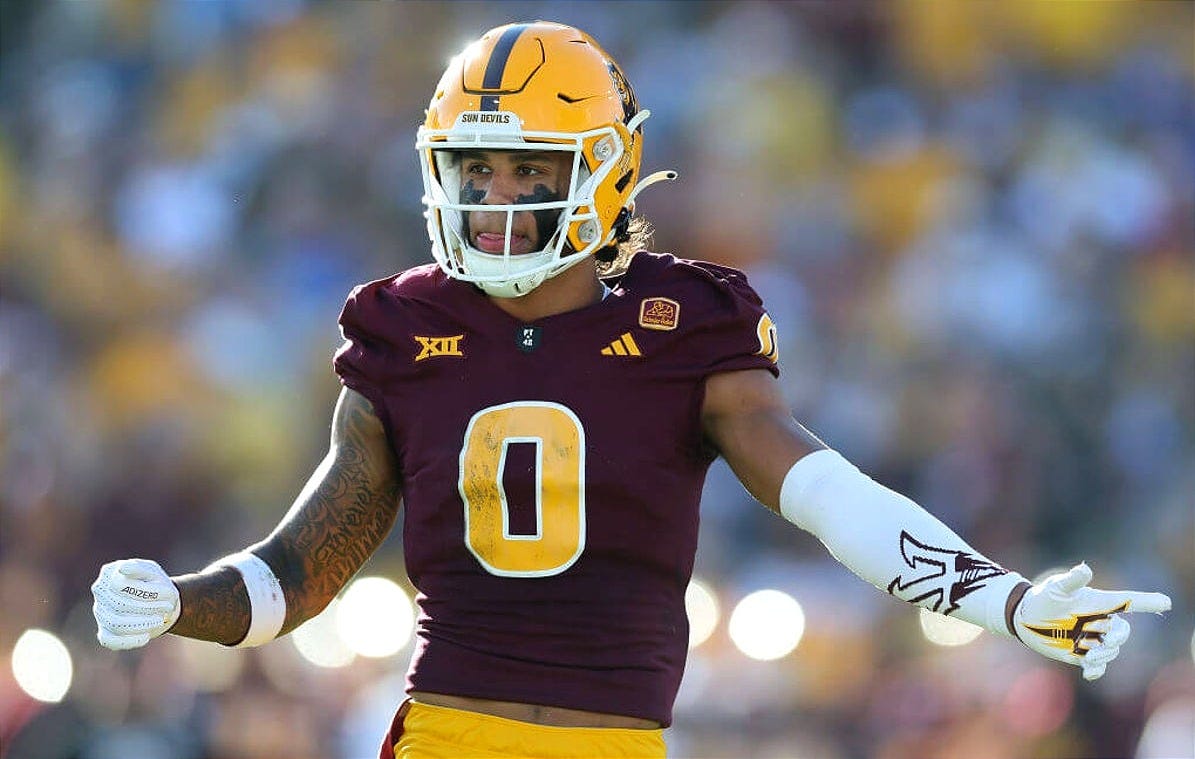
#11 | WR | Jordyn Tyson | Arizona State
Ht: 6’2-1/8” (6021) | Wt: 203 | Hand: 9.125” | Arm: 30.25” | Wing: 75.25” | Ape: 1.02
2025 Stats: 324 Snaps | 61 Rec | 711 Yds (11.7 Y/R) | 8 TDs | 1 Drop (9 Games)
Key Stats: 43.8% CCR | 1.6% Drop Rate | 108.2 PRWT | 89.0 GVM
Red Flags: Recurring Injury History Is Significant
Draft Stock ⬆️11 | Previous Top-25 Rank #22 | SIS Big Board: #9th
Jordyn Tyson is a 21-year-old wide receiver at 6’2⅛”, 203 pounds with polished release work, sudden foot quickness, and one of the cleaner separation profiles in the 2026 class. In just nine games, he caught 61 passes for 711 yards and 8 touchdowns, pairing strong production with an 85.3 PFF receiving grade, 108.2 passer rating when targeted, and just one drop. His game is built on route pacing, leverage manipulation, and sharp intermediate breaks, allowing him to consistently uncover and stay quarterback-friendly on timing throws. Arizona State moved him across the formation, but his best work comes outside where he can attack corners with cadence, body control, and late hands. He profiles as a polished perimeter target who wins with detail, reliability, and competitive toughness.
The concern is durability first, then ceiling. Tyson’s medical history is significant, with major knee damage, a fractured collarbone, and recurring soft-tissue issues creating real availability concerns. On tape, he can lean too heavily into contested situations against longer defenders, and he does not offer much true pull-away speed or dynamic run-after-catch juice. There are also moments where he is late getting his second hand to the ball, creating tougher finishes than necessary. Still, his footwork, release package, strong hands, and clutch-down reliability give him a very stable skill foundation. If the medicals hold, he projects as an immediate starting-caliber outside receiver with dependable chain-moving value.
Rock’s Take:
Tyson’s tape says starter, plain and simple. He is one of the most refined route runners in this class, and he wins with the kind of detail that translates quickly on Sundays. The swing factor is the medical file, because the talent is easy to buy. If he stays healthy, you are getting a high-level WR2 with enough polish and ball-winning ability to flash as a featured target in the right offense.
Previous Top-25 Ranking #22

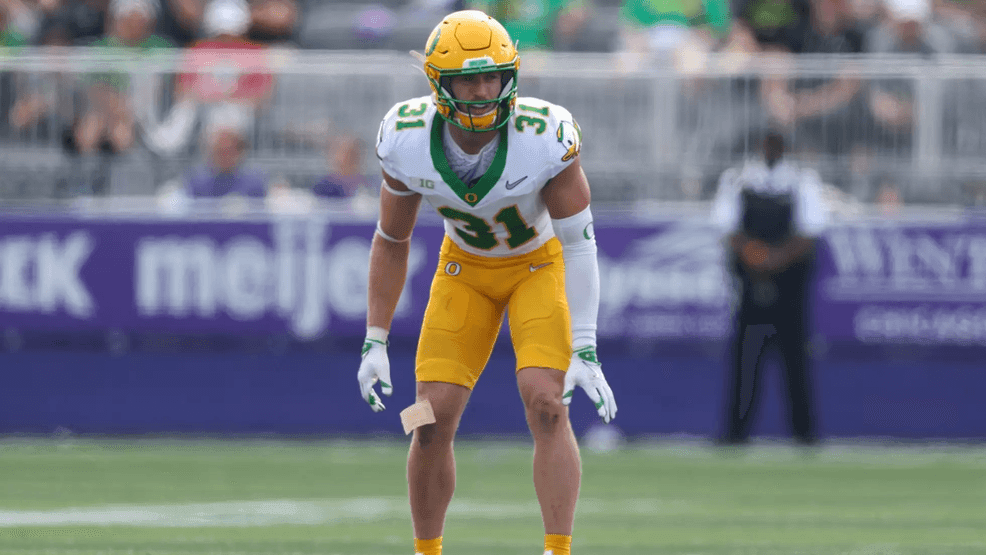
#12 | Safety | Dillon Thieneman | Oregon
Ht: 6’ 1/8” (6001) | Wt: 201 | Hand: 9” | Arm: 31.375” | Wing: 78.125” | Ape: 1.08
2025 Stats: 96 tackles (44 Solo) | 3.5 TFLs | 1 Sack | 5 PBUs | 2 INTs (15 Games)
Key Stats: 17.2% Forced IR / 8.3% MTR / 66.2 PRWT
Draft Stock ⬇️1 | Previous Top-25 Rank #11 | SIS Big Board: #18
Dillon Thieneman is a 21-year-old safety at 6’0⅛”, 201 pounds with elite range, verified explosiveness, and one of the cleaner coverage résumés in the 2026 class. He backed the tape with a 4.35 forty and 1.52 split, then put up 96 tackles, 2 interceptions, 5 PBUs, a 90.5 PFF coverage grade, and a 66.2 passer rating allowed in 2025. Oregon moved him across single-high, split-field, slot, and rotational alignments, but his best work comes when he can read from depth, trigger downhill, and close throwing windows before quarterbacks can react. His game is built on anticipation, communication, route recognition, and controlled urgency rather than pure intimidation. He profiles as a coverage-first safety with true starting value on the back end.
The concern is whether his box value and play strength ever match the coverage impact. Thieneman is willing against the run and improved his tackling efficiency, but he is not built to consistently deconstruct blocks or play like a true tone-setter in heavy traffic. He can also tighten up against quicker man-match assignments, which is why his best projection still leans zone and deep-half/deep-middle usage more than constant slot exposure. The good news is his angles, processing, and reliability keep him out of bad positions, which is exactly why he continues to be viewed as one of the safer safety projections in the class.
ROCK’S TAKE:
Thieneman is one of the smartest defensive backs in this class, and the combine erased any lingering questions about whether the range was real. He is not a box hammer, and teams that try to turn him into one are missing the point. This is a backend organizer who sees concepts early, covers ground fast, and gives a defense structure on every snap. For me, he is a Day 1 starting free safety with first-round value because he raises the floor of the entire secondary the moment he walks into the building.
First: elite coverage profile — 90.5 coverage grade, 66.2 passer rating allowed, and high-end testing give him one of the cleanest free-safety projections in the draft.
Second: the limitation is physical tone-setting — he is reliable, but he is not a true box enforcer or block-destroyer, which narrows the best version of his role.
Third: the league clearly values him — he keeps showing up as a first-round target in current mocks, especially for teams needing a deep safety with intelligence and range.
Best Team Fits & Picks
Minnesota Vikings — This is the cleanest fit on the board. He has become a near-consensus pairing for Minnesota as a logical long-term answer on the back end and a transition away from Harrison Smith.
Carolina Panthers: Carolina has openly previewed safety as a real need, and Thieneman’s range and discipline fit a defense that could benefit from a steadier backend structure.
Dallas Cowboys: The appeal is obvious: smart, rangy, versatile enough to play from depth while helping stabilize a defense going through structural change.
Draft Range: Round 1, most likely picks 17–20, with Minnesota at 18 looking like the strongest consensus landing spot right now–could easily go top 12
Team To Watch: Should Kadyn Proctor or Monroe Freeling go early mixed with Thieneman landing at #17-Detroit gets an upgrade that will stabilize the secondary. The Lions MUST secure the backend of the secondary-with Branch likely missing large amounts of time into week 8 and the unknown with Kerby Joseph.
Previous Top-25 Ranking #11

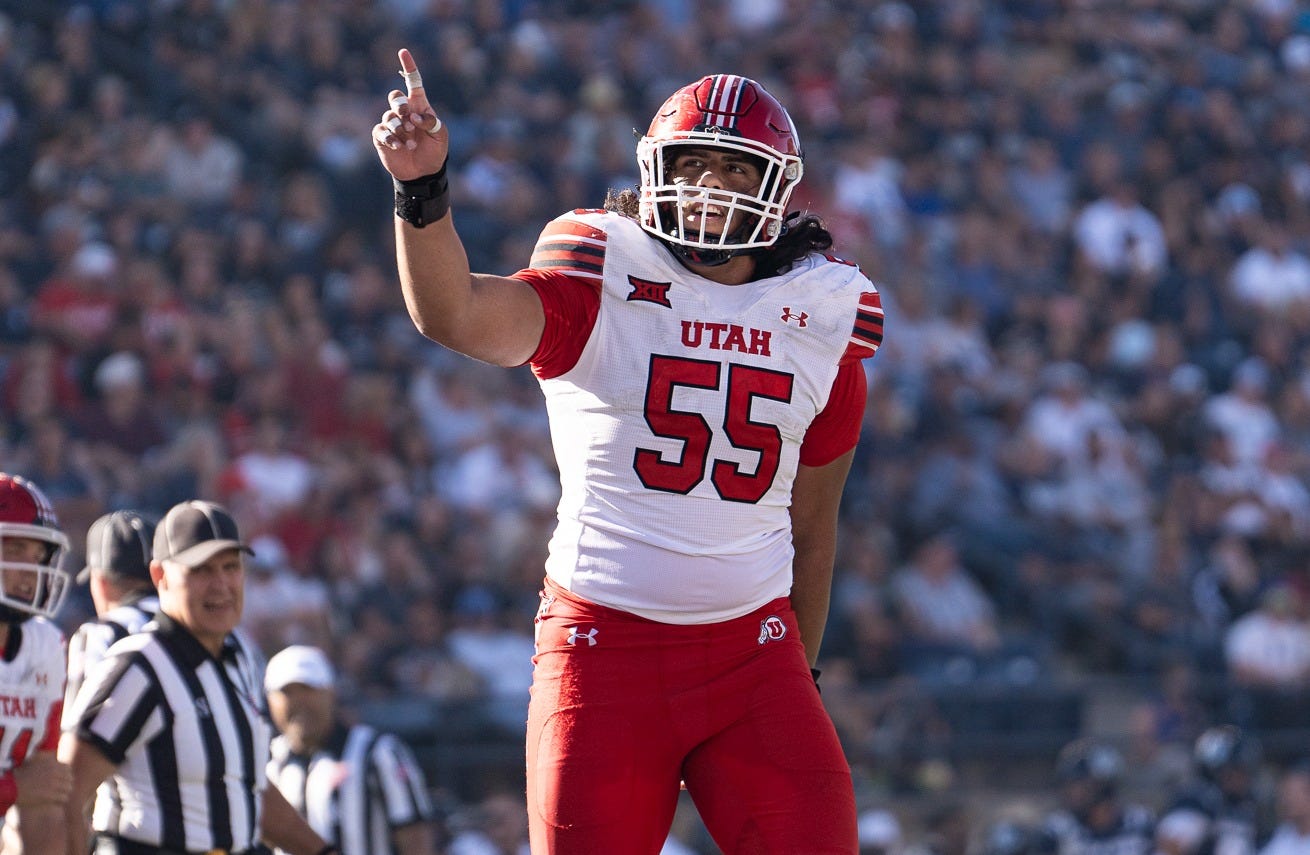
#13 | OT | Spencer Fano | Utah
Ht: 6’ 5-1/2” (6054) | Wt: 311 | Hand: 9” | Arm: 32.125” | Wing: 80.25” | Ape: 1.04
2025 Stats: 822 Snaps | 0 Hits/Sacks Allowed | 5 Hurries | 5 Penalties (12 Games)
Key Stats: 80.0 Gap Grade | 79.4 Zone Grade
Draft Stock: ⬆️5 | Previous Top-25 Rank #18 | SIS Big Board: #12
Spencer Fano is a 21-year-old offensive tackle at 6’5½”, 311 pounds with elite movement skills, clean footwork, and one of the stronger pass-protection profiles in the class. He logged 822 snaps in 2025, allowed zero sacks and zero quarterback hits, and paired that with strong overall blocking efficiency in a heavy-volume role. Utah used him at both left and right tackle during his career, and his game is built on balance, leverage, and independent hand usage that let him stay square, redirect late, and recover when rushers counter inside. He moves easily in space, handles pulls and reach blocks naturally, and plays with the kind of body control that gives him a real floor outside. He profiles as a starting-caliber tackle with early value and long-term flexibility.
The concern is still functional power and anchor consistency. Fano’s sub-33-inch arms tighten the margin for error against longer NFL rushers, and his lighter frame can show up when defenders get into his chest or convert speed to power. He also opens his hips a little early at times, which can expose inside counters and stress his recovery more than it should. Still, he rarely loses cleanly, and the blend of feet, balance, and hand usage consistently keeps the rep alive. If he adds lower-body mass and firms up the anchor, the ceiling climbs even higher.
Rock’s Take:
Fano is one of the cleaner projection bets in this class because the hardest part of tackle play already looks natural to him. He protects space, stays under control, and gives a line coach real flexibility because he has worked both sides and wins with technique instead of panic. He is not the heaviest tackle in the group, and that is where the projection gets tested, but the pass-protection floor is strong enough that he can help early while the body keeps developing. For me, this is a high-level starter bet with real long-term value.
First: elite pass-protection floor — zero sacks and zero hits allowed over 822 snaps is real production, not projection.
Second: anchor and length are the swing factors — the lighter frame and shorter tackle margin are the clearest reasons some teams may prefer other linemen first.
Third: versatility adds value — left tackle experience, right tackle experience, and movement ability give him multiple pathways to becoming a long-term starter.
Best Team Fits & Picks
Cleveland Browns #6: Cleveland makes a lot of sense because the offensive line still needs a long-term answer, and the roster has enough age, injury wear, and instability up front to justify using a premium pick on tackle help. Fano fits naturally in that range because the Browns need a starter, not a stash project.
New York Giants #5: The Giants fit because tackle remains one of the most important long-term decisions on the roster, and this range is exactly where solving that problem makes sense. This would be about stabilizing the line with a player who can stay outside and grow into a featured role rather than patching the spot again later.
Baltimore Ravens #14: Baltimore makes sense because tackle is a clean long-term need, and this slot lines up naturally for a starting-caliber lineman if the top of the board breaks elsewhere. This would be about maintaining stability up front before the need becomes urgent.
Draft Range: Round 1 — most likely between picks 3 and 14, with the strongest landing band sitting in the top half of the first round.
Previous Top-25 Ranking #18

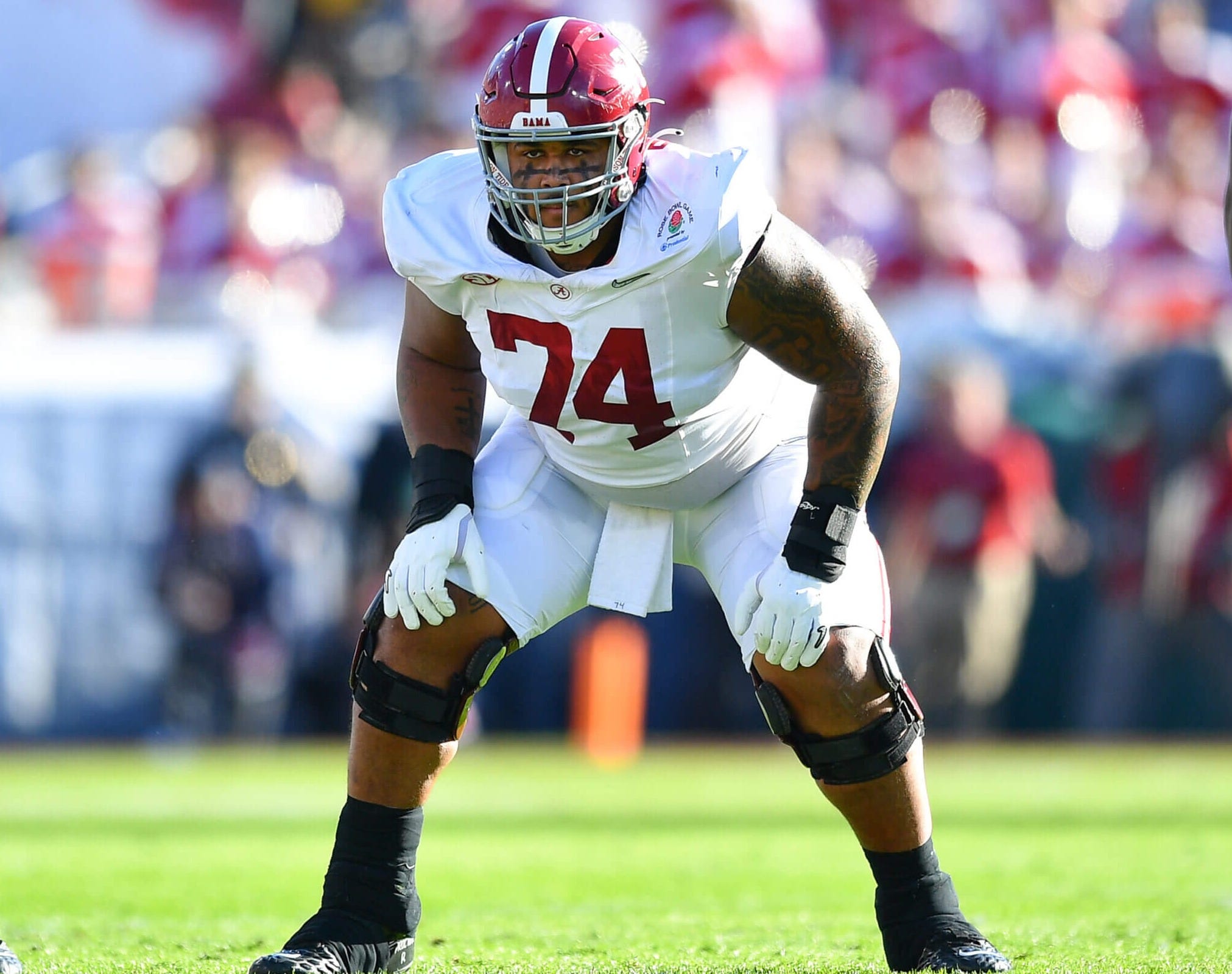
#14 | OT | Kadyn Proctor | Alabama
Ht: 6’ 6-5/8” (6065) | Wt: 352 | Hand: 9.75” | Arm: 33.375” | Wing: 81.625” | Ape: 1.04
2025 Stats: 985 Snaps | 4 Hits | 2 Sacks | 2 PEN | 19 Pressures (15 Games)
Key Stats: 70.3 Gap Grade | 83.6 Zone Grade
Draft Stock ⬆️ 3 | Previous Top-25 Rank #17 | SIS Big Board: 11th
Kadyn Proctor is a 21-year-old offensive tackle at 6’6⅝”, 352 pounds with rare size, length, and movement ability that can completely distort the edge when his timing is right. He logged 985 snaps in 2025 with just 2 sacks and 19 pressures allowed, and Alabama trusted him at left tackle in a pro-style offense because his wide anchor, grip strength, and recovery athleticism can erase rushes once he gets engaged. His game is built on overwhelming mass, heavy hands, and surprising ease in space for a player his size, with enough lower-body power to displace defenders in the run game and enough movement skill to survive outside. The flashes are not subtle — there are reps where he looks like a long-term cornerstone because defenders simply cannot get through him once he settles. He profiles as a high-ceiling power tackle with real position flexibility and one of the more imposing tool sets in the class.
The concern is still consistency versus speed and the technical discipline required to stay at tackle full-time. Proctor can be late into his set against wide-9 rushers, his hands can drift outside his frame, and there are snaps where he plays too tall or too casual early, creating stress that does not need to be there. That is what keeps the evaluation honest: the body type is rare, but the foot urgency and hand timing still need refinement. The good news is that once he lands and regains control, he is extremely difficult to beat, and the lower-body power gives him a very real interior fallback if a team ever decides tackle volatility is too high. This is a tools-and-technique equation, not a talent question.
Rock’s Take:
Proctor is one of the purest traits bets in this class, but this is not blind projection because the tape already shows starting-caliber NFL moments. The size, movement, and raw power are all there, and when the set pace and hand timing line up, defenders have almost no answers. For me, the evaluation comes down to whether a staff believes it can clean up the early-set urgency enough to keep him at tackle full-time. If it can, this is a long-term cornerstone. If it cannot, he still has the makeup of a high-level guard with Pro Bowl upside.
First: rare tackle profile — 6’6⅝”, 352 pounds with legitimate movement skill gives him one of the highest physical ceilings in the class.
Second: speed stress is the issue — wide-9 rushers and early hand-timing lapses create the most vulnerable reps on his tape.
Third: the floor matters — even if tackle consistency never fully arrives, his power, pad level, and lower half give him a strong interior fallback.
Best Team Fits & Picks
New York Giants #5: The Giants make sense because tackle remains one of the biggest long-term roster questions, and this is the kind of premium slot where finally solving the edge of the offensive line is worth it. This would be about locking down a premium position instead of continuing to patch it.
Cleveland Browns #6: Cleveland fits because the offensive line still has enough instability, age, and wear that a major investment at tackle is easy to justify. This would be a long-term protection move for an offense that still needs more certainty up front.
Detroit Lions #17: Detroit is one of the strongest natural fits because tackle succession planning is very much in play, and current Lions-specific mock coverage has repeatedly tied Proctor to this pick. This would be about protecting the future of the line before the need becomes urgent and keeping a strength of the roster from slipping. For what it’s worth I predicted Kadyn Proctor to the Lions back in December 2025.
Draft Range: Round 1 — most likely between picks 5 and 17. The top-six range makes sense on talent, but Detroit at #17 looks like one of the clearest natural landing spots if he gets past the first wave.
Previous Top-25 Ranking #15

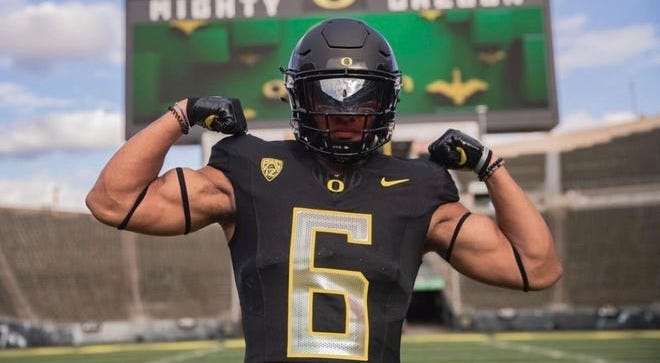
#15 | TE | Kenyon Sadiq | Oregon
Ht: 6’ 3-1/8” (6031) | Wt: 241 | Hand: 10” | Arm 31.5” | Wing: 78.25” | Ape: 1.04
2025 Stats: 51 Rec | 560 Yds (11.0 Y/R) | 8 TDs (14 Games)
Key Stats: 58.3% Contested CR | 145.5 PRWT
PFF: 72.1 Receiving Grade | 73.8 Overall | 66.3 Run Block Grade
Red Flags: 6 Drops | 10.5% Drop Rate
Draft Stock ⬇️1 | Previous Top-25 Rank #14 | SIS Big Board: #26
Kenyon Sadiq is a 21-year-old tight end at 6’3⅛”, 241 pounds with rare vertical speed, verified by a 4.39 forty that immediately stresses coverage angles and linebacker leverage. He produces as a dynamic receiving threat with 51 catches for 560 yards and 8 touchdowns, generating a 145.5 passer rating when targeted. His game is built on burst, seam acceleration, and spatial awareness, allowing him to separate vertically and adjust to the football with body control in contested situations. Oregon deploys him as a movable weapon—slot, H-back, and detached alignments—to isolate matchups and attack space. He profiles as a vertical mismatch tight end who threatens defenses down the seam and forces coverage adjustments.
The concern centers on reliability and in-line functionality. Sadiq posted a 10.5% drop rate, exposing lapses in concentration and a tendency to body-catch in traffic. As a blocker, his 66.3 grade reflects limited play strength and inconsistent hand placement, particularly when asked to anchor against defensive ends. However, his effort, intelligence, and movement skills provide a foundation for growth. He competes as a blocker in space and understands leverage, even if execution lags. With improved hand consistency and added strength, he projects as a more complete offensive piece.
Rock’s Take:
Sadiq is the most explosive tight end in this class, and that speed changes how defenses align. You’re drafting a mismatch weapon first, not a traditional in-line “Y.” If the hands stabilize, he becomes a nightmare down the seam and a true offensive stress point. I see an immediate sub-package contributor with the upside to grow into a featured receiving tight end in a modern offense.
Previous Top-25 Ranking #8

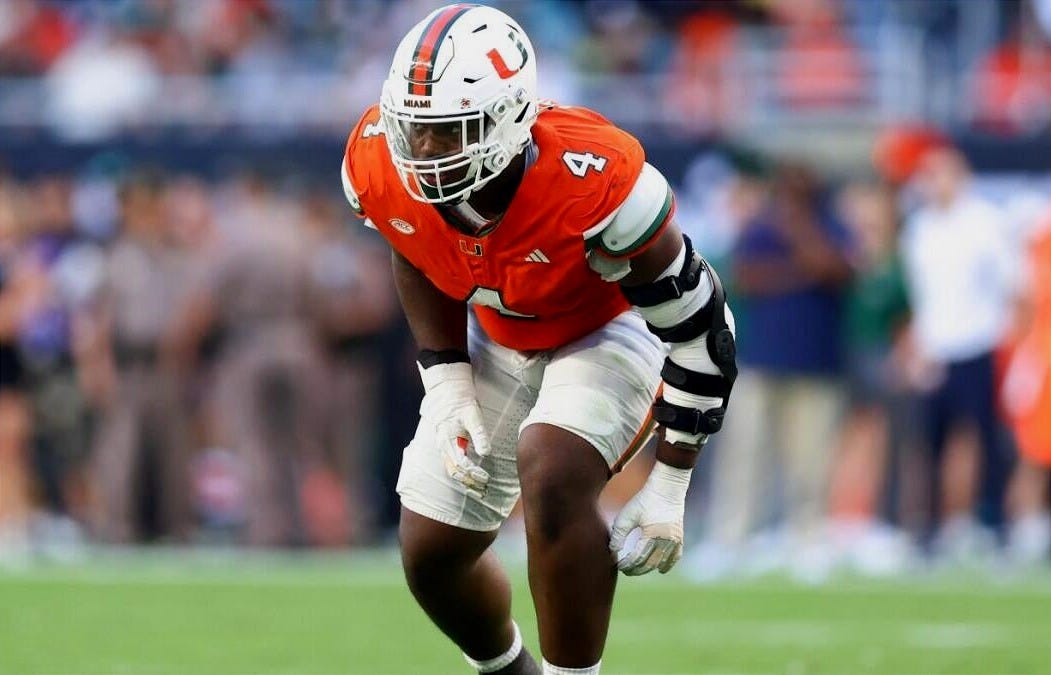
#16 | EDGE | Rueben Bain Jr | Miami
Ht: 6’ 2-1/4” (6022) | Wt: 263 | Hand: 9.125” | Arm: 30.875” | Wing: 77.625” | Ape: 1.05
2025 Stats: 54 Tackles (29 Solo) | 15.5 TFL | 9.5 SKs | 67 PRS | 1 PBU | 1 INT | 2 FF
Key Stats: 23.5% Pass Rush WR | 6.9% Run Stop | 31 Stops | 54 Hurries
Red Flags: 18.8% MTR 2025 | 0% Percentile Arm Length
Draft Stock: ⬇️10 | Previous Top-25 Rank #6 | SIS Big Board: #7
Rueben Bain Jr. is a 21-year-old EDGE at 6’2¼”, 263 pounds with explosive get-off, compact power, and violent hands that consistently stress protection early in the rep. He produces at a high level with 9.5 sacks, 15.5 TFLs, and 67 pressures, backed by a 23.5% pass-rush win rate and a 91.8 PFF pass-rush grade. His game is built on leverage, burst, and hand quickness, allowing him to win inside or outside despite size limitations. Miami deploys him across the front—5-tech, wide-9, and interior sub-package alignments—to maximize matchup creation. He profiles as a disruption-first rusher who wins with urgency and play strength.
The concern centers on length and finishing consistency. Sub-31-inch arms severely limit his ability to control first contact, allowing longer tackles to engage and steer him off his path. This shows up in an elevated 18.8% missed-tackle rate and occasional stalls when his initial rush is neutralized. However, his motor, balance, and hand speed consistently keep him in plays. He counters with leverage and effort, and his effectiveness increases significantly when reduced inside. With refined counters and usage, he projects as a disruptive, alignment-versatile defender.
Rock’s Take:
Bain is a high-risk, high-reward projection, and the arm length is real—it changes the evaluation. But the tape doesn’t lie—this kid can rush. For me, the key is deployment. Keep him outside full-time and you’re fighting an uphill battle; move him around and let him attack guards, and he becomes a problem. I see a Day 1 impact rusher with inside-out versatility and real disruptive upside in the right system.
Previous Top-25 Ranking #13

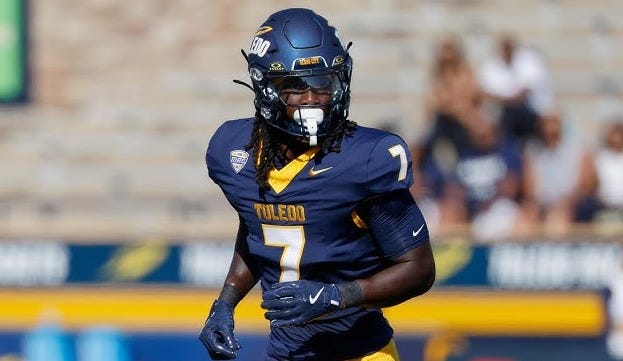
#17 | Safety | Emmanuel McNeil-Warren | Toledo
Ht: 6’ 3-1/2” (6034) | Wt: 201 | Hand: 9.25” | Arm: 32.125” | Wing: 78.25” | Ape: 1.04
2025 Stats: 77 Tackles (36 Solo), 5 PBUs, 2 INTs, 5.5 TFLs, 1 Sack (13 Games)
Key Stats: 33.3% Forced IR / 15.5% MTR / 50.3 PRWT
Draft Stock ⬆️4 | Previous Top-25 Rank #21 | SIS Big Board: #22nd
Emmanuel McNeil-Warren is a 22-year-old safety at 6’3½”, 201 pounds with rare length, explosion, and closing range that immediately jump off the tape. He produced 77 tackles, 5.5 tackles for loss, 2 interceptions, and 5 pass breakups in 2025, while pairing a 91.8 coverage efficiency mark with a 33.3% forced incompletion rate that confirms the disruption. Toledo trusted him as a versatile nickel safety with box, split-field, and rotational duties, and his game is built on violence, urgency, and playmaking instincts whether he is driving on throws, ranging off the hash, or exploding through contact in the alley. He can match tight ends, challenge the catch point, and arrive from depth with the kind of burst that changes throwing windows. He profiles as a high-upside safety with real role flexibility and tone-setting physical tools.
The concern is control, consistency, and finish discipline. McNeil-Warren’s 15.5% missed-tackle rate reflects a player who can overrun angles, hunt kill shots, and lose efficiency in space instead of arriving balanced and under control. He is not a true twitch-mirror defender against smaller slot types, and his block deconstruction can run inconsistent when he has to sort traffic near the box. Still, his range, burst, and instincts give him real recovery margin, and the ball production is not a fluke. Clean up the pursuit angles and tackling mechanics, and both the floor and ceiling rise quickly.
Rock’s Take:
McNeil-Warren has the kind of size-speed violence defensive coaches chase because it gives them multiple ways to get him on the field early. The flashes are loud — big hits, sideline range, and real ball disruption — and when he plays under control, he looks like a starting-caliber backend piece with impact value. For me, this is a traits-and-disruption bet with legitimate starter upside, but the projection only cashes if the tackling becomes more disciplined and the aggression gets better harnessed. He is one of the more interesting first-round safety swings because the ceiling is easy to see and the volatility is easy to find.
First: high-end playmaking profile — 91.8 coverage efficiency, 33.3% forced incompletion rate, and tape full of ball production make him one of the more explosive safeties in the class.
Second: range and burst are real — he can range off the hash, drive downhill on throws, and finish at the sideline with the kind of closing ability that changes passing windows.
Third: the volatility shows up too — the missed-tackle rate, overaggressive angles, and uneven space finishing are still the biggest obstacles between flashes and consistent starting value.
Best Team Fits & Picks
Minnesota Vikings #18: Minnesota makes a lot of sense because the safety position has been one of the clearest draft pressure points on the roster, and the fit in the middle of Round 1 keeps coming up for a reason. This would be about adding a long-term backend answer to a room that still needs stability and range.
Carolina Panthers #19: Carolina fits because the roster still has uncertainty at safety behind Tre’von Moehrig, with Nick Scott back only on a one-year deal and the position still being openly examined as a draft need. This would be a value-and-roster fit pick rather than a luxury swing.
San Francisco 49ers #27: San Francisco makes sense because the safety spots remain unsettled, with Ji’Ayir Brown struggling and Malik Mustapha returning from a prior ACL injury. If the 49ers want to stabilize the backend without forcing a corner or edge pick, this is a clean match in their range.
Draft Range: Round 1 — most likely between picks 18 and 29, with the strongest natural cluster in the late teens to late twenties.
Lions Lens
Detroit makes real sense here, even if safety is not the flashiest need on paper. The Lions’ own draft coverage has already acknowledged that the position becomes a serious issue depending on how Kerby Joseph’s knee responds after costing him the final 11 games last season and how quickly Brian Branch returns from the Achilles tear he suffered in December. Detroit has numbers in the room, but not certainty, and that is the difference. Chuck Clark gives them professionalism and steadiness, but he is not Branch or Joseph at full strength, and a win-now defense cannot just assume health solves everything. If Brad Holmes wants to protect the secondary from becoming a weak link, McNeil-Warren is exactly the kind of versatile safety who would make sense at Detroit Lions #17.
Previous Top-25 Ranking #16

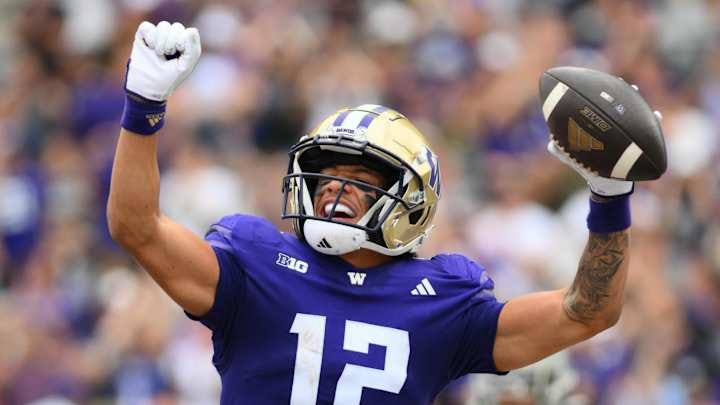
#18 | WR | Denzel Boston | Washington
Ht: 6’3-5/8” (6035) | Wt: 212 | Hand: 9.625” | Arm: 32” | Wing: 77.375” | Ape: 1.02
2025 Stats: 62 Rec | 881 Yds (14.2 Y/R), 11 TDs (12 Games)
Key Stats: 76.9 % Contested CR | 3.1% Drop Rate | 112.3 Passer Rate
PFF: 86.6 Receiving Grade | 89.7 Vs Man | 87.7 Overall
Draft Stock ⬆️1 | Previous Top-25 Rank #19 | SIS Big Board: #14
Denzel Boston is a 21-year-old wide receiver at 6’3⅝”, 212 pounds with prototypical boundary size, strong hands, and advanced ball-tracking ability that consistently wins at the catch point. He produces efficiently with 62 receptions for 881 yards and 11 touchdowns, posting a 76.9% contested-catch rate and an 89.7 PFF grade versus man coverage. His game is built on body control, leverage manipulation, and physical positioning, allowing him to create late separation and dominate in tight windows. Washington deploys him primarily as an “X” receiver, isolating him on the perimeter to win one-on-one matchups. He profiles as a possession-driven boundary target who thrives in contested situations and high-leverage downs.
The concern centers on vertical separation and dynamic playmaking. Boston lacks verified top-end speed, limiting his ability to consistently stack corners or generate explosive separation downfield. His 4.98 YAC average reflects limited creativity after the catch, and longer defenders can crowd his frame at the line. However, his strength, hands, and route awareness consistently offset those limitations. He understands how to position his body, finish through contact, and win in traffic. With continued refinement in releases and added explosiveness, he projects as a reliable perimeter option.
Rock’s Take:
Boston is a classic boundary receiver who wins with size, control, and toughness. He’s not going to separate with speed, but he doesn’t need to—he wins at the catch point and on critical downs. This is a high-floor “X” who gives quarterbacks trust in tight windows. I see a Day 1 contributor with long-term WR2 value, especially in offenses that lean on physicality and timing.
Previous Top-25 Ranking #19

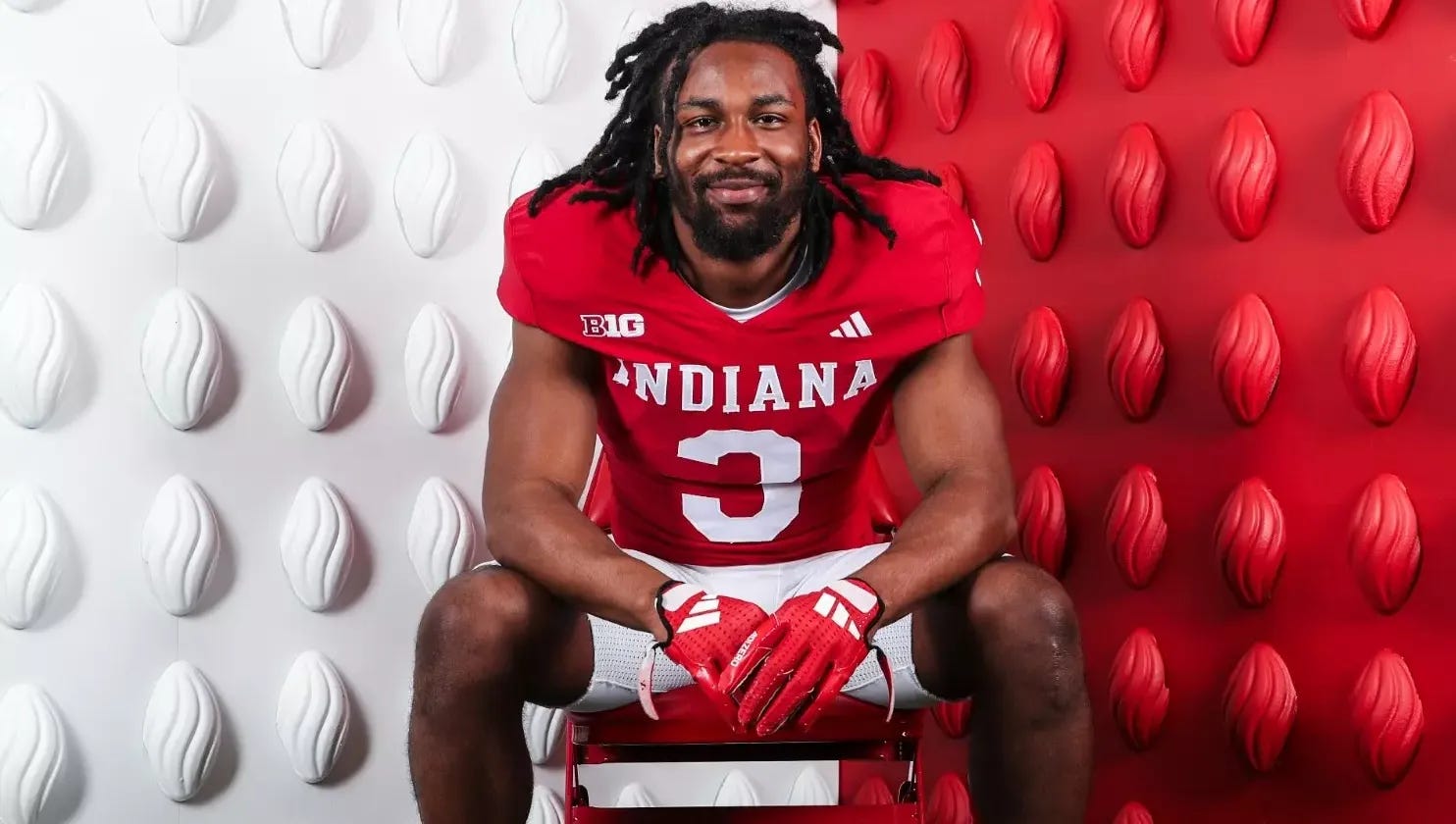
#19 WR | Omar Cooper Jr. | Indiana
Ht: 6’ 0-1/8” (6001) | Wt: 196 | Hand: 9.625” | Arm: 30.25” | Wing: 75.25” | Ape: 1.04
2025 Stats: 69 Rec / 804 YDs (7.1 Y/R) | 13 TDs | 3 Drops (16 Games)
Key Stats: 50% CCR | 73.8 Grade VS Man | 145.2 PRWT | 4.2% Drop Rate
Draft Stock: ⬆️ 30 | Previous Top-50 Rank: #49 | SIS Big Board: #38
Omar Cooper Jr. is a 21-year-old wide receiver at 6’0⅛”, 196 pounds with strong body control, reliable hands, and route efficiency that consistently creates workable separation. He produces with 69 receptions for 804 yards and 13 touchdowns, generating a 145.2 passer rating when targeted and an 85.9 PFF receiving grade. His game is built on pacing, leverage manipulation, and catch-point toughness, allowing him to win through contact and finish in tight windows. Indiana deploys him across the formation with heavy motion usage, maximizing his ability to attack space and adjust post-snap. He profiles as a versatile, chain-moving target who thrives on timing and situational reliability.
The concern centers on release consistency and overall explosiveness. Cooper can struggle against press coverage, lacking the initial burst and hand usage to consistently clear early contact. His route tree leans toward short-to-intermediate concepts, and he doesn’t possess elite vertical speed to consistently threaten over the top. While competitive after the catch, he’s not a true creator in space. However, his hands, toughness, and spatial awareness consistently offset those limitations. He understands how to uncover and finish plays. With improved release mechanics and added strength, he projects as a dependable multi-alignment option.
Rock’s Take
Cooper is a steady, reliable receiver who does the small things right, and that translates quickly. He’s not a traits-driven prospect, but he wins with consistency, toughness, and trust at the catch point. This is the type of player quarterbacks lean on in key moments. I see a high-floor WR3 with the ability to outplay that role in the right system and become a consistent contributor early.
Previous Top-50 Ranking #49


JOIN ME LIVE FOR THE NFL DRAFT!
VISIT ROCKED ON DETROIT LIONS ON YOUTUBE - LINK HERE
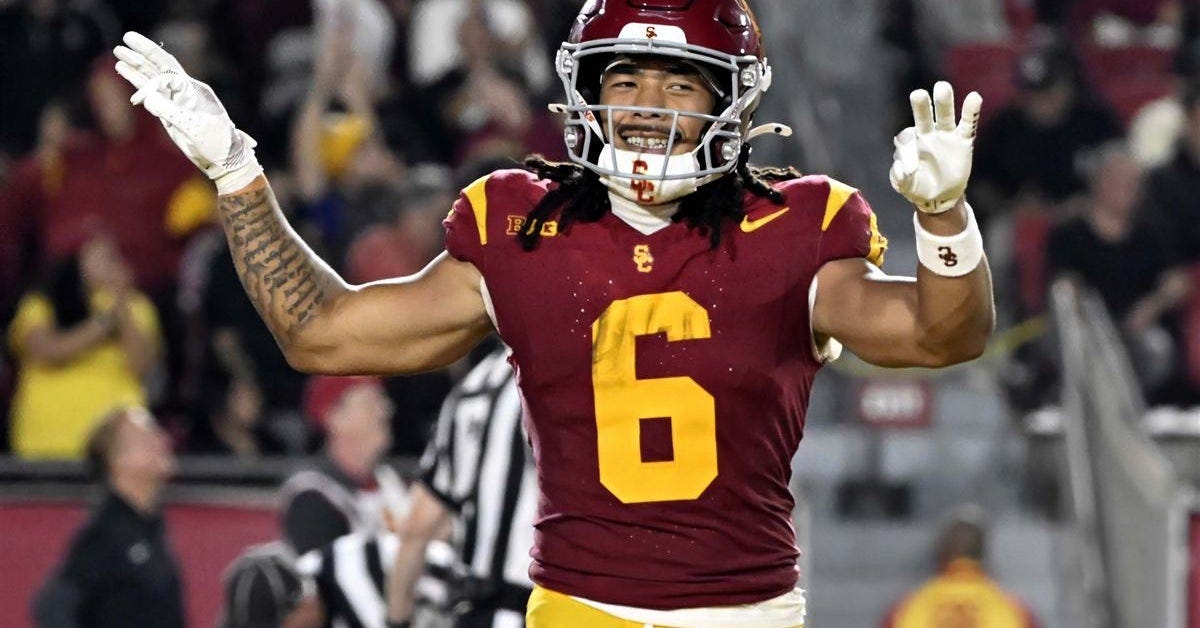
#20 | WR | Makai Lemon | USC
Ht: 5’ 11-1/8” (5111) | Wt: 192 | Hand: 8.75” | Arm: 30.5” | Wing: 73.25” | Ape: 1.03
2025 Stats: 79 Rec | 1,156 Yds (14.6 Y/R) | 11 TDs (12 Games)
Key Stats: 66.7% Contested CR | 2.5% Drop Rate | 130.0 PRWT
Draft Stock: ⬇️10 | Previous Top-25 Grade: #10 | SIS Big Board: #17
Makai Lemon is a 21-year-old wide receiver at 5’11⅛”, 192 pounds with elite short-area quickness, route precision, and spatial awareness that consistently stresses coverage structure. He produces at a high level with 79 receptions for 1,156 yards and 11 touchdowns, earning a 91.4 PFF grade with a 130.0 passer rating when targeted. His game is built on tempo variation, leverage manipulation, and advanced feel for zone windows, allowing him to separate through timing rather than pure speed. USC deploys him primarily inside while moving him across formations to exploit matchups and coverage rules. He profiles as a high-volume, chain-moving receiver who thrives in rhythm-based passing attacks.
The limitation centers on physical profile and play strength. Lemon lacks ideal length and top-end speed, which compresses his margin for error against press-man and limits vertical separation. He can be rerouted early and struggles to consistently win through contact at the catch point against longer defenders. However, his route detail, hands, and competitive toughness consistently offset those concerns. He understands how to uncover, finishes through traffic, and rarely wastes opportunities. With added strength and refined release counters, he projects as a reliable volume target with defined role stability.
Rock’s Take:
Lemon is one of the most quarterback-friendly receivers in this class, and his tape demands touches. He’s not built to win on traits, but he consistently wins on execution and feel. This is a plug-and-play slot who elevates third-down efficiency and keeps offenses on schedule. I see a high-floor starter with immediate impact and long-term value as a volume-driven target in the right system.
Previous Top-25 Ranking #10

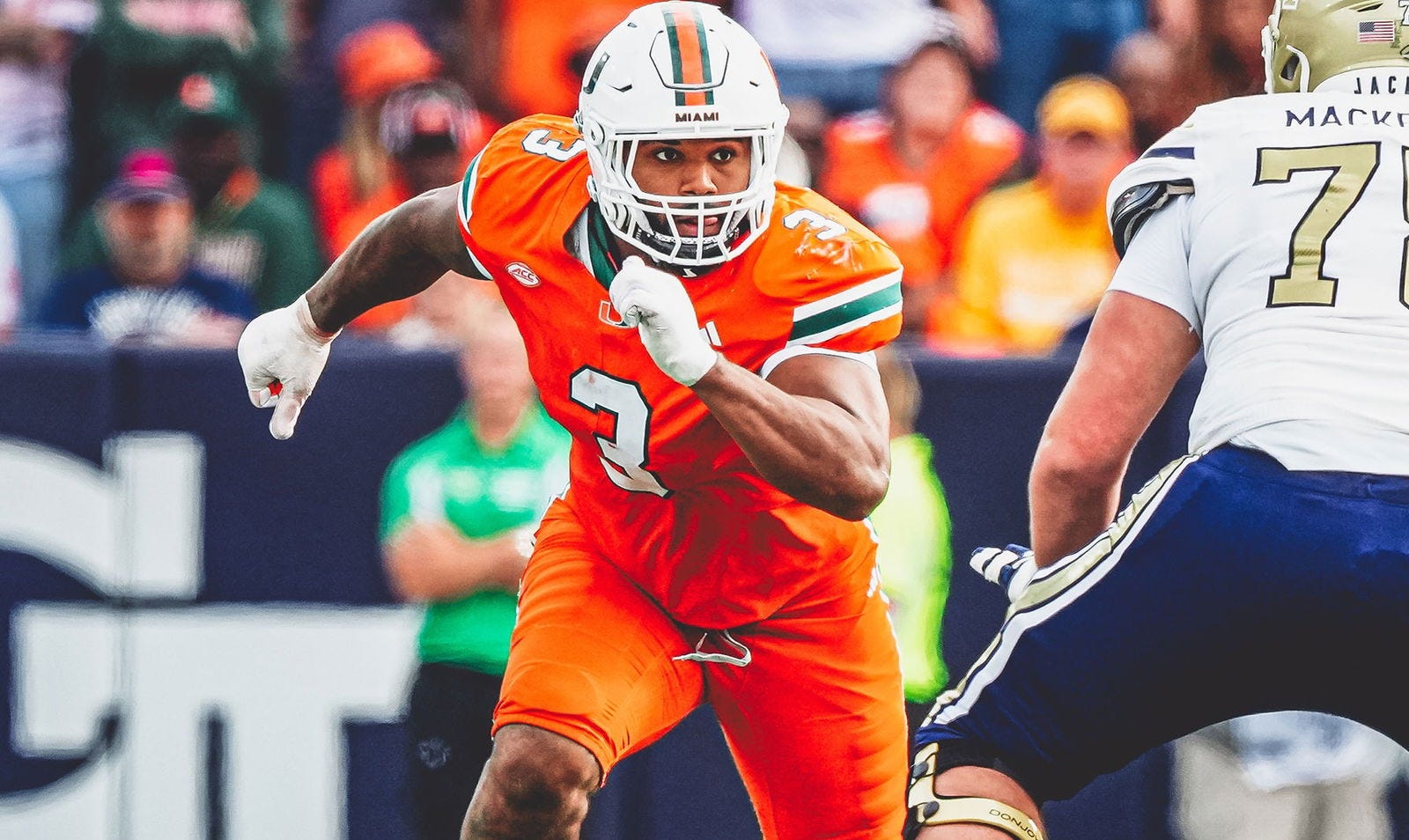
#21 | DE | Akheem Meridor | Miami
Ht: 6’ 3” (6030) | Wt: 259 | Hand: 10” | Arm: 32.125” | Wing: 78.68” | Ape: 1.05
2025 Stats: 648 Snaps | 63 Tackles (38 Solo) | 12.5 Sks | 17.5 TFLs | 4 FF | 15 Games
Key Stats: 20.8% PRWR | 55 Pressures | 42 Hurries | 21 Stops
Red Flags: Arms Measured In A Bit Shorter Than Expected
Draft Stock ⬆️4 | Previous Top-25 Rank #25 | SIS Big Board: #16
Akheem Mesidor is a 25-year-old edge defender with a compact 6’3”, 265-pound build, advanced hand work, and one of the more complete pass-rush plans in the 2026 class. He exploded in 2025 with 12.5 sacks and 17.5 tackles for loss, and current draft reporting continues to treat him as a real first-round possibility because the tape already looks pro-ready. Miami moved him across the front — wide, reduced, and inside on passing downs — but his best work comes with his hand in the dirt, where his get-off, violent swipes, and interior counters can take over a rep. His game is built on polish, urgency, and a mature understanding of rush sequencing rather than rare bend or pure traits alone. He profiles as a win-now 4-3 defensive end who can reduce inside and help a contending front immediately.
The concern is not whether he can rush, but how much developmental runway is left and how comfortable teams are with the medical history. Mesidor will be 25 as a rookie, and the foot injury history continues to be one of the biggest variables in his projection. He also wins more with technique, effort, and counters than overwhelming length or top-tier perimeter bend, which narrows the margin for error against longer NFL tackles. That makes him a different kind of edge evaluation: less about raw upside and more about immediate usefulness. The appeal is obvious, but the age and foot history are why he is not a universal lock in the top half of the round.
Rock’s Take:
Mesidor is the kind of player win-now teams talk themselves into quickly because the tape already looks professional. He is not a projection-based edge; he is a refined disruptor with real three-down utility and passing-down flexibility inside. For me, the question is not talent — it is whether a team is comfortable spending premium capital on an older rusher with a notable foot-injury history. If it is, this is one of the safer plug-and-play defensive line fits in the class.
First: elite production and polish — 12.5 sacks, 17.5 tackles for loss, and a deep rush bag give him one of the most NFL-ready pass-rush profiles in the class.
Second: age matters — he will be 25 as a rookie, which shortens the developmental runway and changes how some teams will value the upside.
Third: medicals are the swing factor — the foot history is the clearest reason a player with this level of polish could get pushed down some boards.
Best Team Fits & Picks
Arizona Cardinals #3: Arizona makes sense because the roster still needs more pass-rush juice and defensive front help near the top of the board. If the Cardinals want a player who can help now rather than wait on a longer developmental edge, Mesidor fits that urgency.
Detroit Lions #17: Detroit fits because the edge room still needs another true disruptor opposite Aidan Hutchinson, especially after not bringing back Al’Quadin Muhammad and still leaning on patchwork depth. This would be about adding immediate pass-rush help to a contender that does not need a redshirt pick.
San Francisco 49ers #27: San Francisco makes sense because edge keeps surfacing as a live need, and this is exactly the kind of team that could justify taking an older, more polished rusher who can contribute quickly. If they want help now instead of a longer-burn project, Mesidor fits that window.
Draft Range: Round 1 — most likely between picks 17 and 27, with Detroit at #17 feeling like one of the cleanest natural landing spots if he lasts into the second half of the round.
Lions Lens
Detroit makes a lot of sense here because the edge room still feels unfinished. The Lions found patchwork answers last season, but they did not bring back Al’Quadin Muhammad and current team analysis still points to a need for another true difference-maker opposite Hutchinson. Mesidor fits that lens because he is older, polished, and ready to help immediately rather than needing two years of development. For a team trying to win now, that matters. This would not be about chasing traits alone — it would be about adding a pass rusher who can step into the rotation early and give the front more finishing ability right away.
PREVIOUS TOP-50 RANKING #25

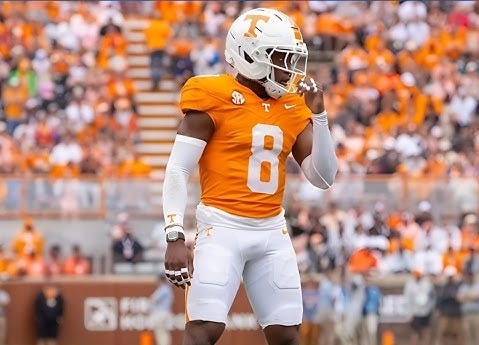
#22 | CB | Colton Hood | Tennessee
Ht: 5’ 11-5/8” (5115) | Wt: 193 | Hand: 9” | Arm: 31.38” | Wing: 74.88” | Ape: 1.05
2025 Stats: 50 tackles (34 Solo) | 1 INT | 8 PBUs | 4.5 TFLs | 1 FF (16 Games)
Key Stats: 69.5 PRWT | 20 Stops | 4 Missed Tackles
PFF: 63.8 RDG | 66.9 PRG | 80.3 Coverage Grade | 79.2 Overall
Draft Stock ⬆️ 22 | Previous Rank: #44 | SIS: 15th
Colton Hood is a 22-year-old cornerback with a press-man temperament, NFL-caliber speed, and the kind of physical edge that shows up at the line and the catch point. Tennessee used him primarily outside in a nickel structure, and his game is built on disruption, timing, and aggression, whether he is suffocating releases, closing on in-breakers, or forcing his way into contested catch space. He plays with a box-safety mentality in coverage, pairing long speed with a disruptive punch and enough ball production to back up the film. At his best, he looks like a tone-setting perimeter defender who can shrink the field in a press-heavy system. He profiles as an outside corner with real CB2 upside for a defense that wants length, edge, and vertical competitiveness.
The concern is twitch, instincts, and run-game buy-in. Hood can get leggy changing direction, and sudden NFL route runners will test how well he can transition once the release phase is over. He also gets grabby when he loses phase, can lose the ball late downfield, and his effort against the run can run too passive for a player with this kind of physical profile. That inconsistency matters because it keeps him from being a clean shutdown projection despite the traits. Still, the press ability, catch-point violence, and boundary mentality give him a strong developmental foundation if a coaching staff can sharpen the discipline and urgency.
Rock’s Take:
Hood is the kind of corner defensive coaches talk themselves into because the first and last phases of the rep already look NFL-ready. He may never be the smoothest transition athlete in the class, but he brings the length, speed, and physical temperament to survive outside in a press-oriented system. For me, the key is whether a team can coach the instincts and run-game consistency hard enough to let the tools take over. If that happens, this is a starting-caliber outside corner with real edge to his game.
Lions Lens:
Detroit makes real sense if the Lions want to keep adding competition and long-term stability at corner. Their own draft preview has already pointed to question marks behind D.J. Reed, with uncertainty around how much Ennis Rakestraw Jr. gives them and how settled the room really is beyond the top names. Terrion Arnold is a huge question mark and not just for his play—but for his legal mess. Hood would fit the kind of outside profile Detroit could still use more of, especially if the staff wants another physical boundary corner who can challenge for snaps early and protect against the position becoming thinner than it looks on paper.
Previous Top-50 Ranking: #44
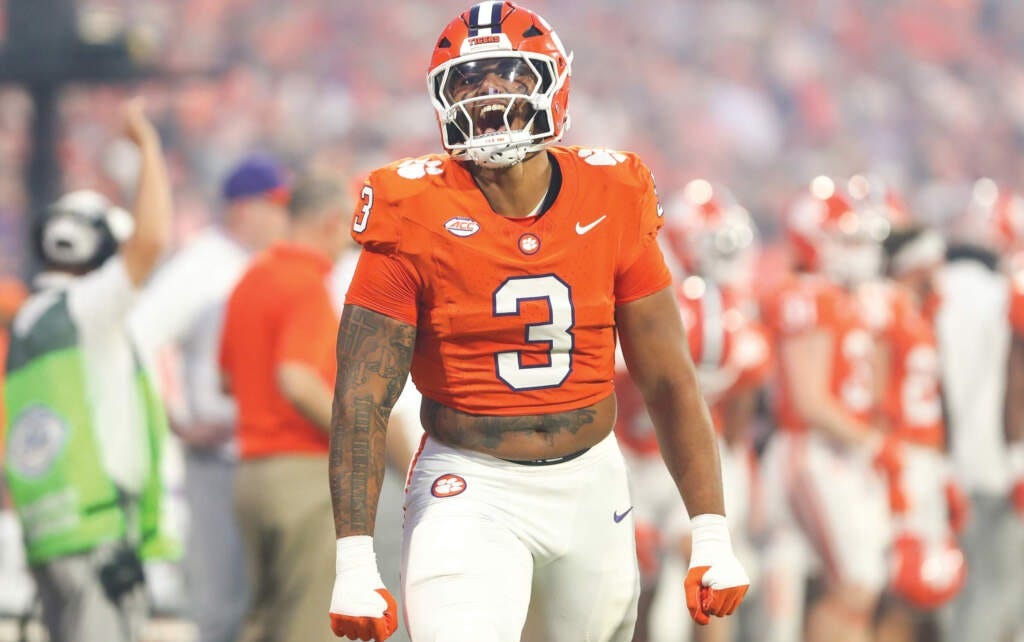
23. T.J. Parker, EDGE, Clemson
Ht: 6’ 3-1/2” (6034) | Wt: 263 | Hand: 9.50” | Arm: 33.125” | Wing: 79” | Ape: 1.05
2025 Stats: 37 Tackles (19 Solo) | 5 SKs, 9.5 TFLs | 11 HITs (12 Games)
Key Stats: 41 Pressures | 24 Hurries | 22 Stops | 15.5% PRWR | 7.6% RSWR
Draft Stock ⬆️ 12 | Previous Top-50 Rank: #35 | SIS Big Board: #27
T.J. Parker is a 21-year-old edge rusher at 6’3½”, 263 pounds with strong length, heavy hands, and the kind of down-to-down competitiveness that gives him real starter appeal. He backed a quieter 2025 sack total with 41 pressures, 24 hurries, 22 stops, and a 15.5% pass-rush win rate, which reinforces that the disruption stayed more consistent than the raw finish. Clemson used him from both two- and three-point alignments, but his best work comes when he can play through contact, attack with leverage, and use power to condense the edge rather than win on pure bend alone. His game is built on long-arm power, hand violence, and enough closing burst to punish tackles who lose the rep early. He profiles as a pro-ready even-front defensive end with clear starting upside and enough versatility to stand up when needed.
The concern is ceiling versus polish. Parker wins with power, effort, and hand usage, but he does not have elite twitch or consistent bend, which narrows the ways he can win early against NFL tackles. He can still be a little linear as a rusher, and while the production is real, the pass-rush bag needs more counters if he is going to become a true third-down problem. There are also some contain lapses when he gets too eager chasing from the backside. Still, the run-defense floor, tackle-to-tackle effort, and reliable disruption profile give him a cleaner projection than a lot of younger edge prospects.
Rock’s Take:
Parker is the kind of edge prospect teams trust because the floor is built on traits that already translate — length, strength, leverage, and a hot motor. He may never be the most explosive speed rusher in the class, but he brings enough disruption and enough edge-setting value to play early while the pass-rush plan keeps growing. For me, this is a strong bet on a starting-caliber defensive end who can help on all three downs if the counter game takes another step.
First: strong disruption profile — 41 pressures, 24 hurries, and a 15.5% pass-rush win rate say the tape is better than the 2025 sack total.
Second: the rush ceiling is the question — he wins more with power and polish than rare bend or elite twitch, which could cap the upside.
Third: the run-defense floor helps — he can set an edge, tackle, and stay useful even when the pure rush does not fully take over.
Best Team Fits & Picks
Atlanta Falcons #13: Atlanta makes a lot of sense because the pass rush still needs more long-term juice even after recent investments, and this is the kind of range where adding another starting-caliber edge remains justified. Parker fits a team that still needs more reliable disruption off the edge.
Detroit Lions #17: Detroit fits because the edge room still needs another long-term answer opposite Aidan Hutchinson, especially after patching the position with shorter-term options. This would be about adding a young, sturdy every-down end to stabilize a spot that still feels one player short.
Los Angeles Chargers #22: The Chargers make sense because edge remains one of the cleaner upgrade paths on the roster, and Parker sits naturally in that range as a player who could help early without needing a long developmental runway. (stormcloud.blog)
Draft Range: Round 1 — most likely between picks 13 and 22, with the strongest natural fit band in the middle of the round.
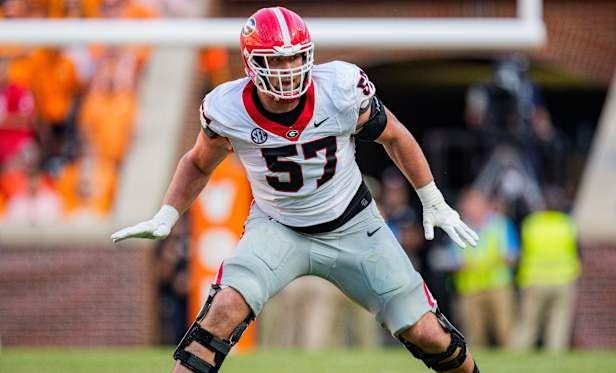
#24 | OT | Monroe Freeling | Georgia
Ht: 6’ 7-3/8” (6073) | Wt: 315 | Hand: 10.75” | Arm: 34.75” | Wing: 84.5” | Ape: 1.06
2025 Stats: 891 Snaps | 3 SK | 2 Pen | 0 Hits | 6 Hurries (13 Starts)
Key Stats: 6 Pressures | 53.5 Gap Grade | 54.7 Zone Grade
Red Flags: Gap Grade Is Very Low 53.5 | Previous Shoulder Surgery
Draft Stock: ⬇️1 | Previous Top-25 Rank: #23 | SIS Big Board: #42
Monroe Freeling is a 21-year-old offensive tackle at 6’7⅜”, 315 pounds with rare length, elite movement ability, and one of the cleanest pass-protection profiles in the class. He played 891 snaps in 2025, allowed 3 sacks and 0 quarterback hits, and paired that with high-end pass-blocking efficiency that matches the film. Georgia trusted him at left tackle in a pro-style offense, where his smooth kick slide, recovery balance, and range in space consistently showed up against speed. His game is built on foot quickness, reach, and mirror ability, giving him a real blindside projection in a movement-friendly system. He profiles as a pass-first tackle with high-end starter upside and one of the better developmental ceilings in the round.
The concern is still play strength, leverage, and how much lower-body power he can add to his frame. Freeling’s high-waisted build naturally raises his pads, and that shows up in the run game, where his gap efficiency lags because he can struggle to sustain leverage and generate true vertical movement. He can also lunge post-punch, which opens his chest and creates stress against stronger rushers who can convert speed to power. The good news is his feet, balance, and length give him recovery margin most tackles do not have, and he already handles twists and games with mature control. If the anchor improves, the ceiling jumps fast.
Rock’s Take:
Freeling is one of the better long-term tackle bets in this class because the premium traits already show up in the hardest part of the job: protecting the edge. He is not a finished run blocker, and selling him as a plug-and-play power presence would miss the point of the evaluation. But if a team values blindside traits, patience, and developmental runway, this is exactly the kind of player worth investing in. The pass-protection foundation is already starter quality. The question is whether the strength and leverage growth let him become more than that.
First: premium tackle frame — 6’7⅜” with 34¾-inch arms and elite movement gives him one of the best physical pass-protection foundations in the class.
Second: run-game concern is real — the high pads, uneven leverage, and lack of consistent displacement are the clearest reasons teams may hesitate early.
Third: toughness helps the projection — he played through shoulder and ankle issues, and that matters for a young left tackle still growing into his frame.
Best Team Fits & Picks
Cleveland Browns #6: Cleveland makes sense because tackle remains one of the clearest long-term pressure points on the roster, and there has already been meaningful late-cycle draft buzz connecting Freeling to the Browns at this slot. This would be about locking in a premium position rather than patching it again later.
Detroit Lions #17: Detroit makes a lot of sense because offensive tackle has become one of the cleanest Round 1 needs on the roster. This would be about succession planning and keeping the offensive line from slipping as an organizational strength.
Pittsburgh Steelers #21: Pittsburgh fits because current draft discussion still frames offensive line as a major team priority, and this range lines up with where a pass-first tackle with starter upside naturally comes off the board. If they want a long-term answer rather than another stopgap, this is the kind of value range that makes sense.
Draft Range: Round 1 — most likely between picks 17 and 23, though a team prioritizing left tackle traits could push him higher. Detroit at #17 is one of the clearest natural landing spots right now, if Proctor is already gone.
Previous Top-50 Ranking

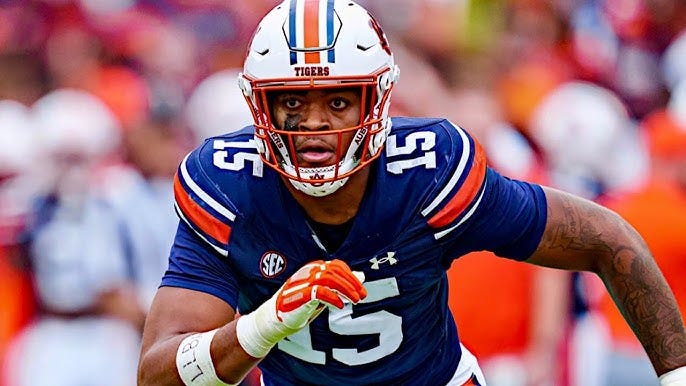
#25 | DE | Keldric Faulk | Auburn
Ht: 6’ 5-7/8” (6057) | Wt: 276 | Hand: 9.75” | Arm: 34.375” | Wing: 82.25” | Ape: 1.06
2025 Stats: 29 Tackles (23 Solo) | 5 TFLs | 2.0 SKs | 30 PRs | 4 PBUs | FR 1
Key Stats: 11.6% PRWR | 8.6% Run Stop | 27 Hurries | 23 Stops
Red Flags: 2025 Missed Tackle Rate - 10% - (Highest Rate Over 3 Seasons)
Draft Stock: ⬇️5 | Previous Top-25 Rank #20th | SIS Big Board: #30
Keldric Faulk is a 21-year-old defensive end at 6’5⅞”, 276 pounds with elite length, lower-body power, and the kind of frame NFL teams still covet on the edge. He plays primarily as a hand-in-the-dirt end, but Auburn moved him across the front, and the flashes are easy to find when he fires off with purpose. His game is built on extension, raw strength, and edge-setting force, giving him a real run-defense floor that shows up snap after snap. The production does not scream premier pass rusher, but league-facing draft coverage still keeps him in the first-round conversation because the tools, frame, and early-down value are real. He profiles as a power-based 4-3 end with scheme versatility and starting-caliber upside.
The concern is whether the pass-rush ceiling ever fully catches up to the body type. Faulk’s upright pad level, inconsistent first-step urgency, and limited bend can flatten his rush before it ever becomes dangerous, and recent scouting reports keep circling back to the same issue: he flashes a lot more than he finishes. He can run cold for stretches, and when the first move stalls, the counter game and play-to-play urgency are not always there. That is why his profile feels more stable as a run-defending edge than a true pressure-tilter right now. The floor is useful, but the projection only really jumps if the rush plan gets more intentional and more violent from snap to snap.
ROCK’S TAKE:
Faulk is one of those players where the frame and the flashes can make you dream bigger than the current tape. I see a strong-side end with a real NFL run-defense floor and enough athletic ability to become more disruptive if the pass-rush approach sharpens. He is not a finished edge rusher, and I would not sell him as one. But if you are drafting for power, length, and long-term front-line value, this is still a bet worth making because the body type and early-down impact translate immediately.
First: elite frame and run-defense utility — his size, arm length, and power make him one of the sturdier edge-setting prospects in the class.
Second: pass-rush production lags the tools — current scouting consensus keeps pointing to flashes, upright pads, and inconsistent finish as the biggest barrier to a true breakout.
Third: the league still values the upside — he is widely viewed as a first-round or fringe first-round prospect despite the developmental rush profile, which tells you teams still believe in the traits.
Previous Top-50 Ranking #11

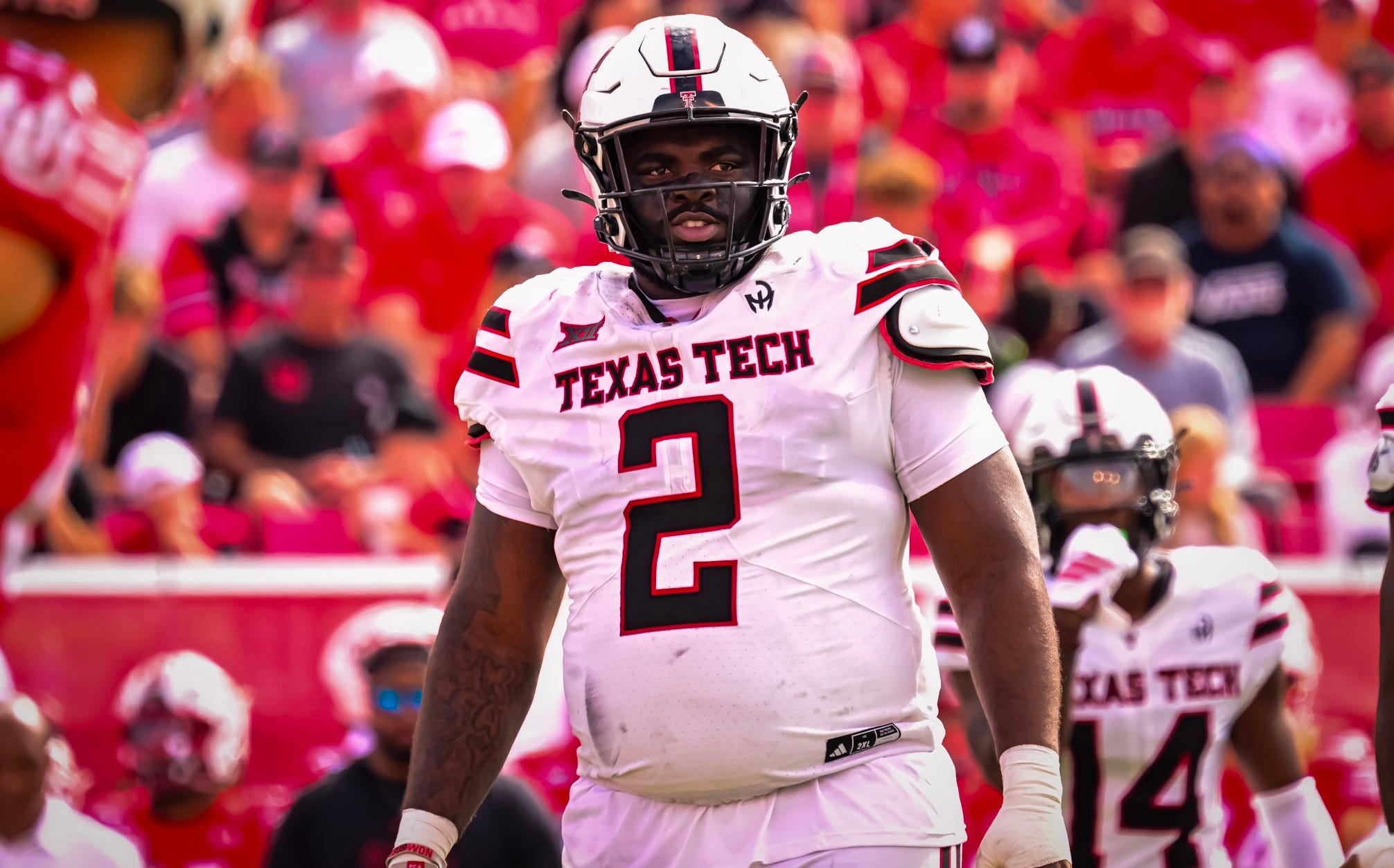
#26 | DT | Lee Hunter | Texas Tech
Ht: 6’ 3-1/2” (6034) | Wt: 318 | Hand: 9.25” | Arm: 33.25” | Wing: 80.675” | Ape: 1.07
2025 Stats: 41 Tackles (16 Solo), 10.5 TFLs, 2.5 Sacks, 1 FF (14 Games)
Key Stats: 10.6% PRWR, 11.9% RSWR, 25 PRs, 16 Stops, 19 Hurries
Draft Stock: ⬇️1 | Previous Ranking #25 | SIS #24th
Lee Hunter is a 23-year-old defensive tackle at 6’3½”, 318 pounds with a broad, powerful frame and rare short-area quickness for a nose tackle-sized body. He produced 41 tackles, 10.5 tackles for loss, 2.5 sacks, 25 pressures, and 16 stops in 2025, backed by an 11.9% run-stop rate and strong run-defense efficiency that matches the film. His game is built on violent hands, natural power, and immediate interior knock-back, allowing him to cave the line of scrimmage and stress blocking schemes before the play fully develops. Texas Tech used him as a base-heavy interior anchor, where his first-step burst and grip strength made him a constant problem for guards and centers in one-on-one situations. He profiles as a run-first interior disruptor who can control early downs and create enough pocket compression to stay useful on passing downs.
The concern is stamina, pad-level consistency, and pass-rush refinement. Hunter can wear down on longer drives, and when his pads rise, double teams can get into his hips and move him off balance more than they should. His pass-rush plan is still more effort and force than sequencing, with the swim and speed-to-power showing promise but not yet defining his game. He also does not change direction especially well once he is moving at full speed. Still, the blend of raw strength, violent hands, and interior burst gives him a dependable floor with more pass-rush upside than a typical space-eater.
Rock’s Take:
Hunter is the kind of interior defender every front needs because he changes the texture of the run game immediately. He is not just a block-eater — he is a disruptive run-plugger who can reset the line and make life easier on the second level. If the conditioning and pad level improve, he has the tools to become more than a two-down player. At minimum, this is a sturdy early-down starter with real value as a pocket compressor.
Previous Top-50 Ranking #25
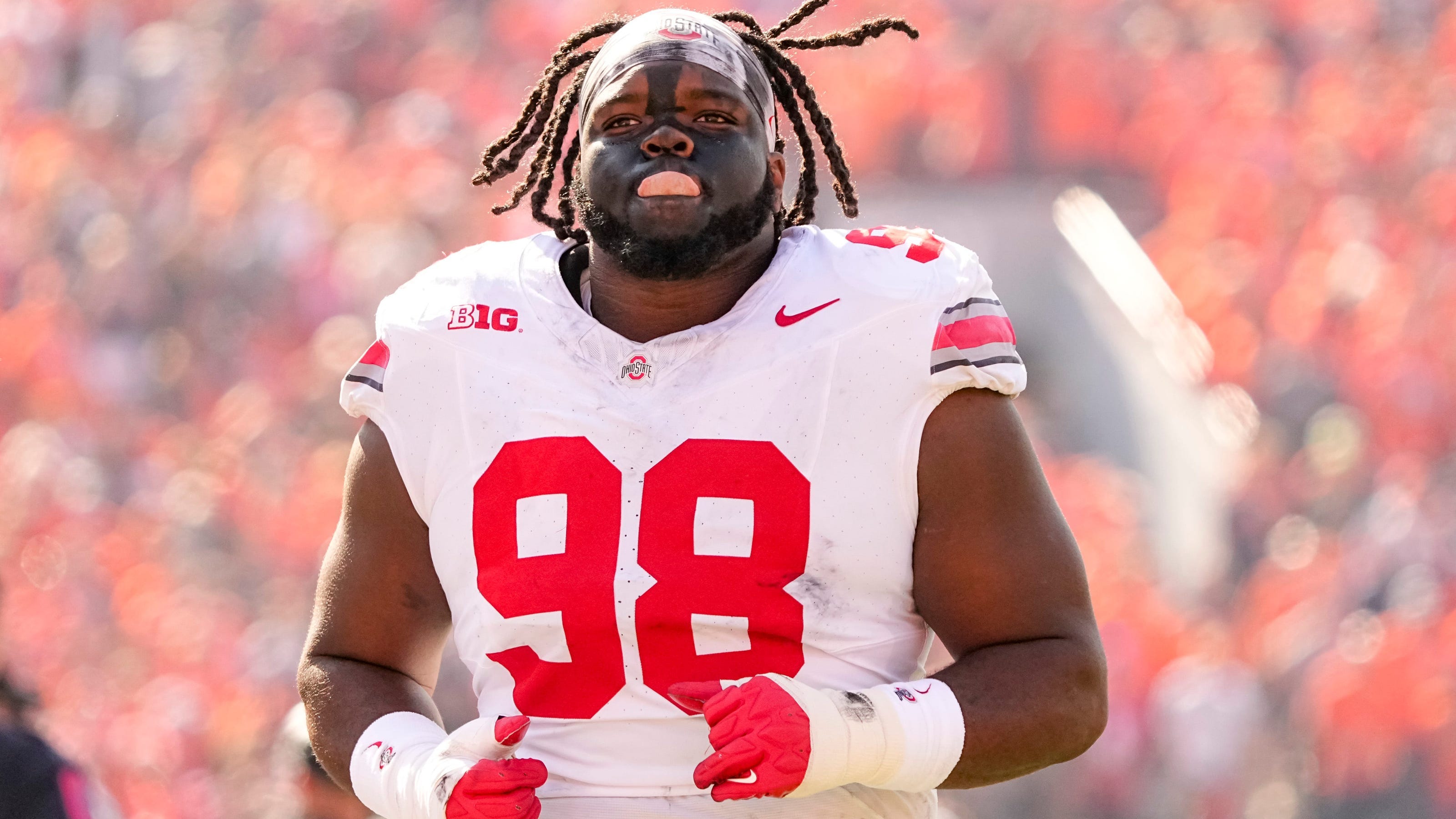
27. Kayden McDonald, DT, Ohio State
Ht: 6’ 2-1/8” (6021) | Wt: 326 | Hand: 9.675” | Arm: 32.25” | Wing: 78.125” | Ape: 1.05
2025 Stats: 65 tackles (31 Solo) | 3 SKs, 9 TFLs | 3 PBUs | 2 FF (14 Games)
Key Stats: 26 Stops | 13.8% Run Stop Rate | 4% PRWR
Draft Stock: ↙️↗️ | Previous Ranking: #27 | SIS #21st
Kayden McDonald is a 21-year-old defensive tackle at 6’2⅛”, 326 pounds with a dense, compact build and the kind of raw interior strength that immediately changes the line of scrimmage. He produced 65 tackles, 9 tackles for loss, 3 sacks, 2 forced fumbles, and 26 stops in 2025, pairing that output with a dominant 13.8% run-stop rate and a 92.0 run-defense efficiency mark. His game is built on leverage, first-step pop, and violent hand usage, allowing him to win underneath pads, absorb double teams, and muddy interior run tracks before they develop. Ohio State trusted him as a true 0/1-technique in odd fronts and a penetrating 3-technique in even looks, which highlights his scheme flexibility. He profiles as a power-based interior defender who can anchor a front early and force offenses to account for him snap to snap.
The concern is pass-rush ceiling and overall polish on passing downs. McDonald’s 4.0% pass-rush win rate reflects a player who still relies too heavily on brute force, and his pad level can climb high enough to let blockers neutralize his power before the rep really starts. He does not yet bring a deep counter package, and his body control can get loose when contacted from the side, which shows up in balance and late-down fatigue. Still, the run-defense floor is real, and the first-step quickness, hand violence, and natural power give him a workable developmental baseline as a pocket compressor. Long term, he projects as a high-level early-down nose with upside to become a true three-down presence.
Rock’s Take:
McDonald is one of the safest run defenders in this class because the core trait that matters most for a nose tackle already translates. He is not a finished interior rusher, and anyone selling him that way is getting ahead of the tape. But if a defense wants a tone-setting 0- or 1-technique who can eat doubles, reset the interior, and make life easier on the second level, this is the kind of player worth betting on. The pass rush is still mostly projection, but the foundation is starting-caliber.
Previous Top-50 Ranking #27

#28 | CB | Avieon Terrell | Clemson
Ht: 5’ 10-3/4” (5106) | Wt: 186 | Hand: 8.675 | Arm: 31” | Wing: 75.5” | Ape: 1.07
2025 Stats: 48 Tackles (30 Solo) | 4.5 TFLs | 0 INT | 5 FF | 3 SK | 11 PBU (12 Games)
Key Stats: 56.9% CR | 66.7 MCG | 96.9 PRWT | 74.9 ZCG
PFF: 85.2 RDG | 84.1 PRG | 76.9 CG | 66.7 MCG | 83.5 Overall
Red Flags: Could Use Another 5lbs Added Strength
Draft Stock: ⬇️4 | Previous Top-25 Rank: #24 | SIS Big Board: #19
Avieon Terrell is a 21-year-old cornerback with a sudden, high-urgency game built on speed, reactive athleticism, and disruptive versatility. At 5’11”, 180 pounds, he lacks ideal mass for a full-time boundary projection, but his 2025 tape still produced 48 tackles, 4.5 tackles for loss, 3 sacks, 11 pass breakups, and a school-record 5 forced fumbles. Clemson trusted him outside and in the slot, and his game is built on quiet feet, fluid hips, and disciplined eyes that let him mirror through breaks and drive downhill on throws. He plays with real recovery speed, clean transitions, and the kind of click-and-close burst that shrinks windows fast. He profiles as a movement-based cover defender whose best NFL value comes from versatility and disruption rather than pure size.
The concern is play strength, durability, and tackle reliability. Bigger receivers can box him out at the catch point, and his lighter frame limits how much disruption he can create at the line in true press situations. Against the run, he can hunt strips instead of securing finishes, which shows up in an 11.5% missed-tackle rate and some uneven physical commitment. The injury profile also deserves real attention after missed time for a concussion, ankle issue, quad injury, and a hamstring problem that resurfaced during the pre-draft process. Recent reporting around that hamstring has added some draft-day volatility to the profile.
Rock’s Take:
Terrell’s size keeps me from projecting him as a true every-down boundary answer against bigger NFL receivers, but the movement skills and coverage instincts are too good to ignore. The cleanest path is inside, where his speed, click-and-close ability, and route recognition can take over. If he adds strength and stays healthy, he has immediate starter potential in a nickel or star role. That is where the value lives — not as a prototype outside corner, but as a fast, disruptive interior coverage piece.
Previous Top-25 Ranking #24

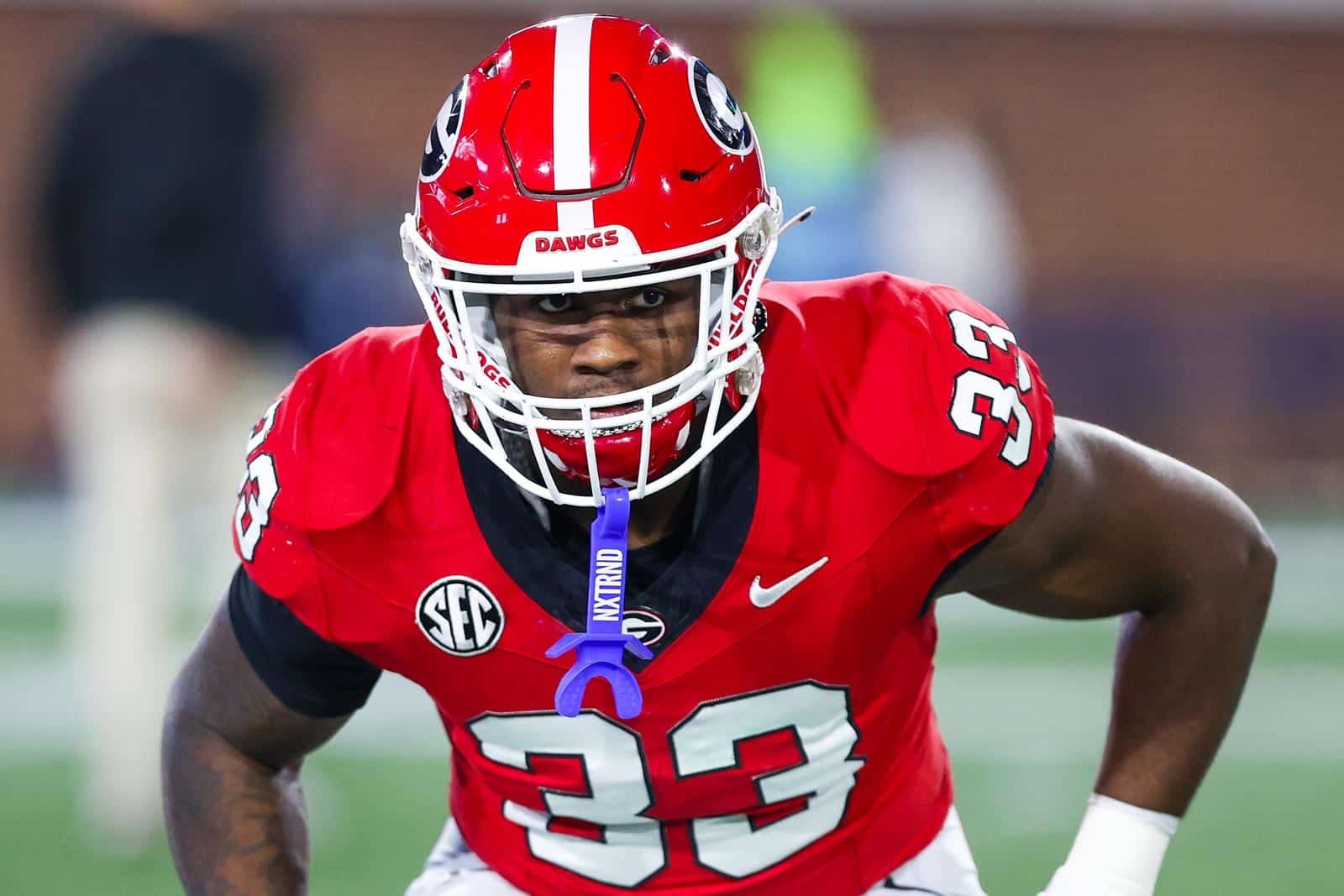
29. CJ Allen, LB, Georgia
Ht: 6’ 3/4” (6006) | Wt: 230 | Hand: 10.125” | Arm 31.5” | Wing: 75.5” | Ape: 1.04
2025 Stats: 88 Tackles (47 Solo), 6 TFLs, 3.5 SKs, 4 PBUs, 2 FF (13 Games)
Key Stats: 36 Stops | 68.2 CRA | 87.8 PRWT
Red Flags: Well below average coverage grades
Draft Stock: ↙️↗️ | Previous Top-50 Rank: 29 | SIS Big Board: #20
CJ Allen is a 21-year-old linebacker with a compact, sturdy build, high-end processing, and the kind of command presence that keeps a defense structurally sound snap after snap. He finished 2025 with 88 tackles, 6 tackles for loss, 3.5 sacks, 4 pass breakups, 2 forced fumbles, and 36 stops, backed by elite run-defense efficiency and strong overall efficiency that match the tape. His game is built on trigger speed, clean angles, violent hands, and diagnostic confidence, allowing him to beat blockers to spots and consistently keep the front seven organized. Georgia trusted him as the on-field signal caller, and that leadership shows up in how quickly he aligns, reacts, and fits the run. He profiles as a tone-setting Mike linebacker with immediate early-down value and enough versatility to stay involved in pressure packages.
The concern is coverage ceiling and overall range in space. His lower coverage efficiency shows up when he is forced to open and run against quicker targets, and his lack of ideal length narrows the margin for error at the catch point and as a finisher. He is instinctive in zone and useful as a blitzer, but he can still be a step behind downfield and does not have the same recovery gear as the more dynamic linebackers in the class. The November meniscus injury also deserves mention, even though his quick return reinforced how tough he is. Still, his intelligence, play strength, and reliability versus the run give him one of the cleaner floors among off-ball linebackers.
Rock’s Take:
Allen is the kind of linebacker defensive coaches trust quickly because the game already makes sense to him. He is not a traits-first projection, and he is not going to win with rare space athleticism, but he plays fast because he sees it early and arrives with purpose. That gives him real starter value in the middle of a defense. If the coverage technique sharpens, he has three-down staying power. If it does not, he still projects as a high-floor early-down leader who raises the run-defense standard immediately.
Previous Top-50 Ranking #29

JOIN ME LIVE FOR THE NFL DRAFT!
VISIT ROCKED ON DETROIT LIONS ON YOUTUBE - LINK HERE
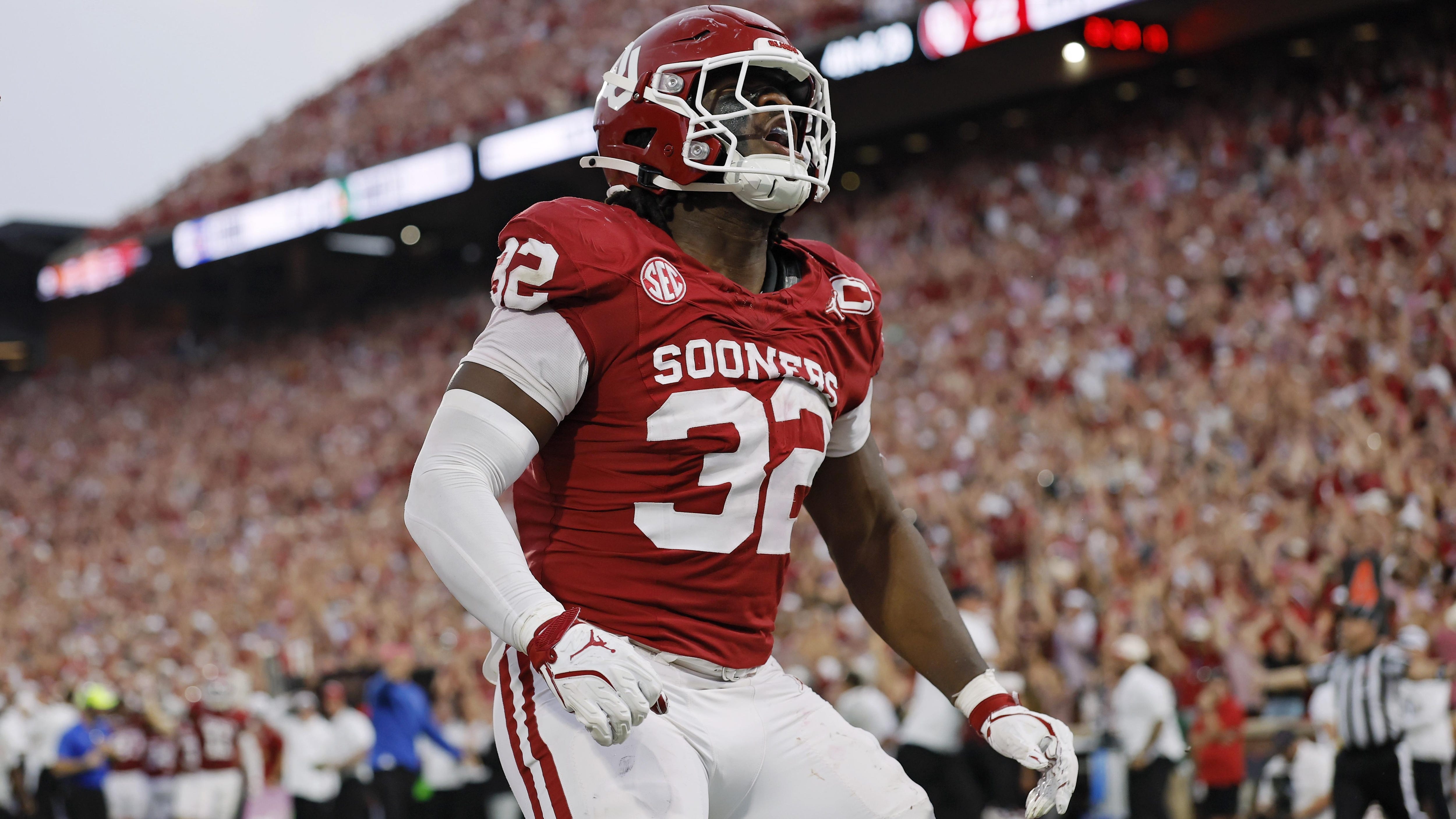
#30 | EDGE | R. Mason Thomas | Oklahoma
Ht: 6’2-1/4” (6062) | Wt: 240 | Hand: 8.78” | Arm: 31.58” | Wing: 78.125” | Ape: 1.05
2025 Stats: 26 Tackles (18 Solo) | 6.5 SK | 9.5 TFLs | 1 PBU | 2 FF | 3 Hits (10 Games)
Key Stats: 28 Pressures | 19 Hurries | 19 Stops | 20.3% PRWR
PFF: 79.4 RDG / 90.4 PRG / 85.3 Overall
Draft Stock ⬆️10 | Previous Rank: #40 | SIS Big Board: #40
R. Mason Thomas is a 21-year-old edge defender with electric first-step burst, natural bend, and the kind of relentless motor that makes him a problem on every passing down. He finished 2025 with 26 tackles, 9.5 tackles for loss, 6.5 sacks, 28 pressures, 19 hurries, and a 20.3% pass-rush win rate, backed by elite pass-rush efficiency that confirms how often he wins early in the rep. Oklahoma deployed him from both two- and three-point alignments, and his game is built on sudden get-off, heavy hands, and backside pursuit speed that let him flatten fast and stress tackles before they can settle. He does not need a lot of runway to win, and the urgency shows up immediately at the snap. He profiles as a high-end pressure specialist with real starting upside in an odd-front role.
The concern is size, anchor, and pass-rush depth beyond the first move. Thomas lacks ideal mass and length for a full-time hand-in-the-dirt projection, and that shows up against longer tackles who can get into his chest and hold him off the edge in the run game. His rush bag is still more burst-and-hands than fully developed sequencing, so when he does not win early, the counters can flatten out into effort more than plan. The recent quad injury that cost him the final three regular-season games in 2025 also adds a mild durability note on top of his prior high-ankle history, even though he returned for the playoff game. Still, the explosive get-off and hot-motor pressure profile give him a very real sub-package floor.
Rock’s Take:
Thomas is the kind of edge prospect defensive coaches want in the room because the speed, urgency, and disruption already translate. He may never be built to live as a heavy every-down end against NFL size, but that is not where his best value comes from anyway. This is a stand-up rusher with real juice, real effort, and enough movement skill to create havoc in the right structure. If a team keeps him in space, lets him rush, and does not overload him with jobs that fight his frame, he has the makeup of a highly productive NFL edge weapon.
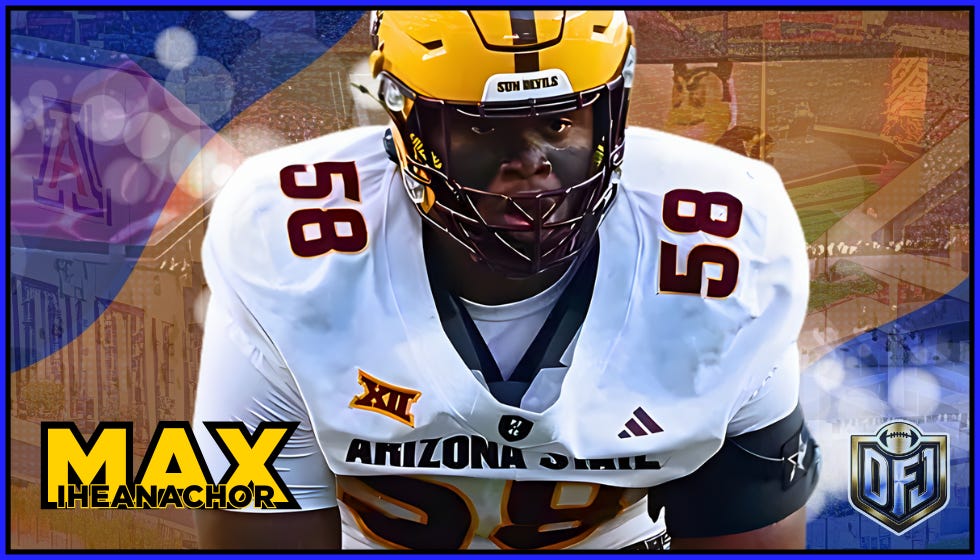
#31 | OL | Max Iheanachor | Arizona State
Ht: 6’ 5-7/8” (6057) | Wt: 321 | Hand: 9” | Arm: 33-7/8” | Wing: 83.25” | Ape: 1.07
2025 Stats: 860 Snaps | 0 SKs | 3 Hits | 8 Pen | 14 Pressures (12 Games)
Key Stats: 70.8 True Pass BG | 68.1 Zone BG | 0 Sacks
Draft Stock: ⬆️ 7 | Previous Top-50 Rank: #38 | SIS Big Board #47
Max Iheanachor is a 22-year-old offensive tackle with a massive 6’5⅞”, 321-pound frame, 33⅞-inch arms, and rare lateral quickness that shows up immediately in pass protection. He allowed 0 sacks and just 3 quarterback hits across 860 snaps in 2025, using easy kick-slide range, mirror ability, and recovery athleticism to consistently shut down the edge. Arizona State deploys him in a zone-heavy structure that highlights his foot speed and wide engagement radius, letting him survive on an island against speed. A late football convert who only began playing in 2021, he still wins more with raw movement traits than refined technique. He profiles as a high-upside boundary tackle built for zone-based NFL systems.
The concern is still technical refinement, and it shows up down after down. Iheanachor’s hands can fire late and wide, exposing his chest and forcing him to recover with athleticism instead of control. He can be slow to sort out stunts, twists, and shifting fronts, while his high pad level saps run-game displacement and limits vertical movement at the point of attack. His penalty history and inconsistent leverage reflect how raw he still is. Still, the combination of length, foot quickness, and developmental runway makes him one of the more moldable tackle bets in the class.
ROCK’S TAKE:
Drafting Iheanachor requires real patience, but the traits are too big to ignore. This is a Day 2 bet on size, movement, and long-term tackle upside, with early value potentially coming at guard while the technique catches up.
First: elite pass-protection production. Zero sacks allowed across 860 snaps says his athletic profile already neutralizes collegiate edge speed at a high level.
Second: rare tackle foundation. His frame, length, and foot quickness give him the kind of biomechanical profile offensive line coaches can’t manufacture.
Third: developmental ceiling. With only four years of organized football under his belt, his rise from JUCO to high-level pass protector points to a prospect whose best football is still ahead of him.
Previous Top-50 Ranking #38

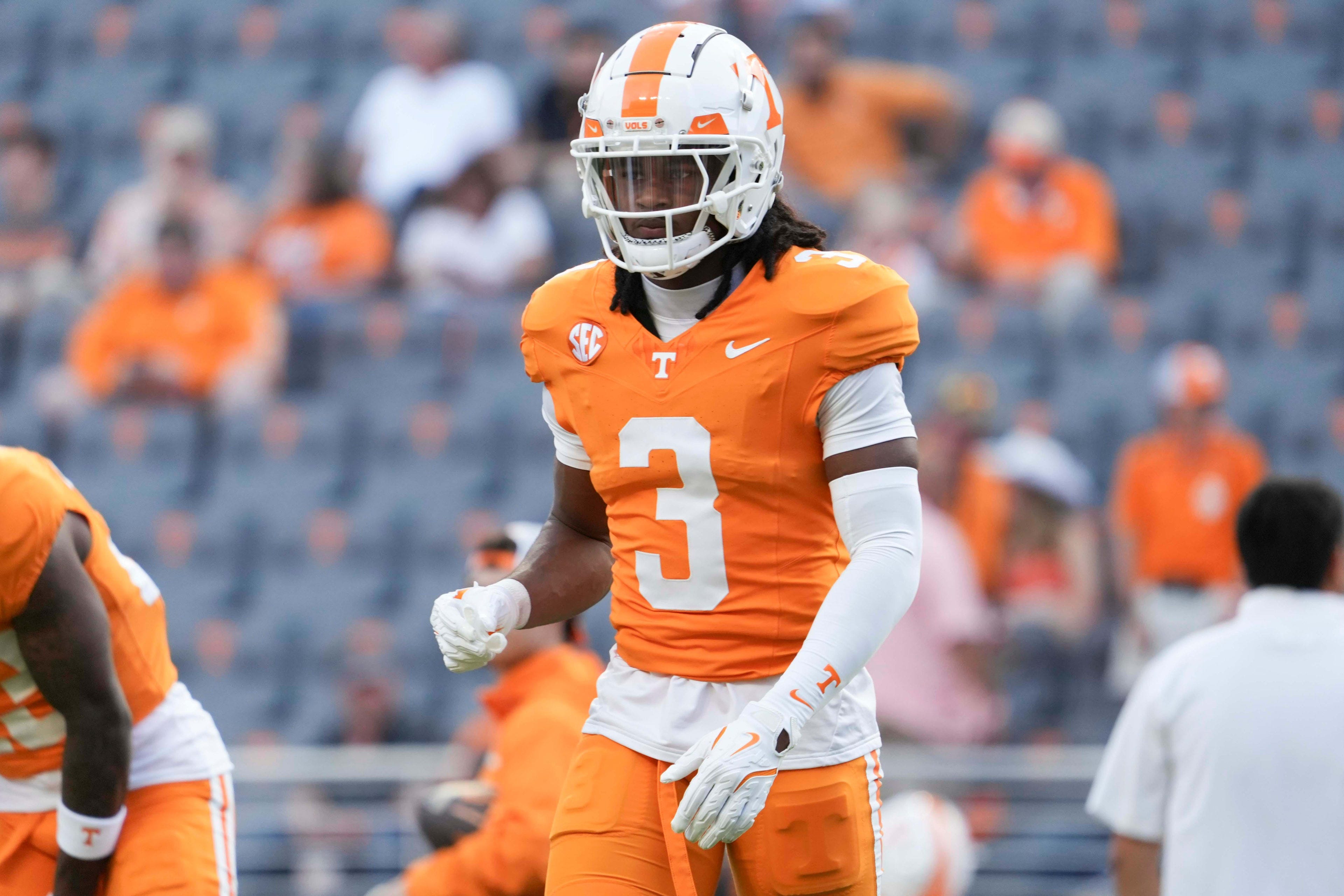
#32 | CB | Jermod McCoy | Tennessee
Ht: 6’ 3/4” (6006) | Wt: 188 | Hand: 9” | Arm: 31.25” | Wing: 77” | Ape: 1.06
Career Stats: 75 Tackles (42 Solo) | 1 TFL | 6 INTs | 16 PBUs
Red Flag: Who Is He In 2026? Hasn’t Played Since 2024
Draft Stock: ⬇️ 15 | Previous Top-25 Rank: #17 | SIS Big Board: #29
Jermod McCoy is a 21-year-old cornerback at 6’0¾”, 188 pounds with quality length, press-man tools, and proven ball production that still jumps off the pre-injury tape. Across his career he totaled 75 tackles, 6 interceptions, and 16 PBUs, while his 2024 tape earned an 89.6 PFF coverage grade and showed real route anticipation, downhill burst, and outside-corner instincts. Tennessee used him primarily outside in a nickel structure, where his length, jam timing, and ability to close windows gave him clear CB1 flashes. His game is built on press disruption, recovery speed, and ball skills, with enough versatility to survive some inside usage. On talent alone, he still looks like one of the better cover corners in this class.
The issue is no longer tape—it is projection, durability, and how much of the old player is still there. McCoy has not played since tearing his ACL in January 2025, and the long layoff already creates an evaluation gap. On top of that, recent reporting says some NFL teams have concerns about the condition of the knee beyond standard recovery, with degenerative-knee chatter becoming a real draft ability issue in league circles and among analysts. Even before the injury, there were technical questions: he can get grabby at the stem, lose balance when his jam misses, and his run support and tackling willingness run inconsistent. That combination makes him one of the harder medical-risk evaluations in the class.
Rock’s Take:
McCoy is a first-round caliber talent sitting inside a medical-risk profile, and that is what makes this evaluation so volatile. The length, press ability, and ball production say outside starter with real CB1 upside, but the knee is now the center of the entire conversation. For me, this is the kind of player a team either fully commits to after clean medical conviction or fades entirely. If the knee checks out, the value could be a steal. If the degenerative concern holds weight, the board drop is justified.
First: premium coverage tape — 6 INTs, 16 PBUs, and an 89.6 PFF coverage grade show real top-tier ball production and starting traits.
Second: major draft ability concern — he has not played since January 2025, and current analyst/team discussion around possible degenerative knee issues is a real red flag.
Third: some film volatility remains — inconsistent run support, grabby route-stem habits, and the uncertainty of his post-injury movement profile widen the projection.
Verified Intel:
Some teams have reportedly removed McCoy from draft boards completely after the lackluster pro day performance—that doctors are concerned that he will need another surgery to replace a bone plug used to repair a cartilage defect in his knee. ~ Per sources
Previous Top-50 Ranking #16

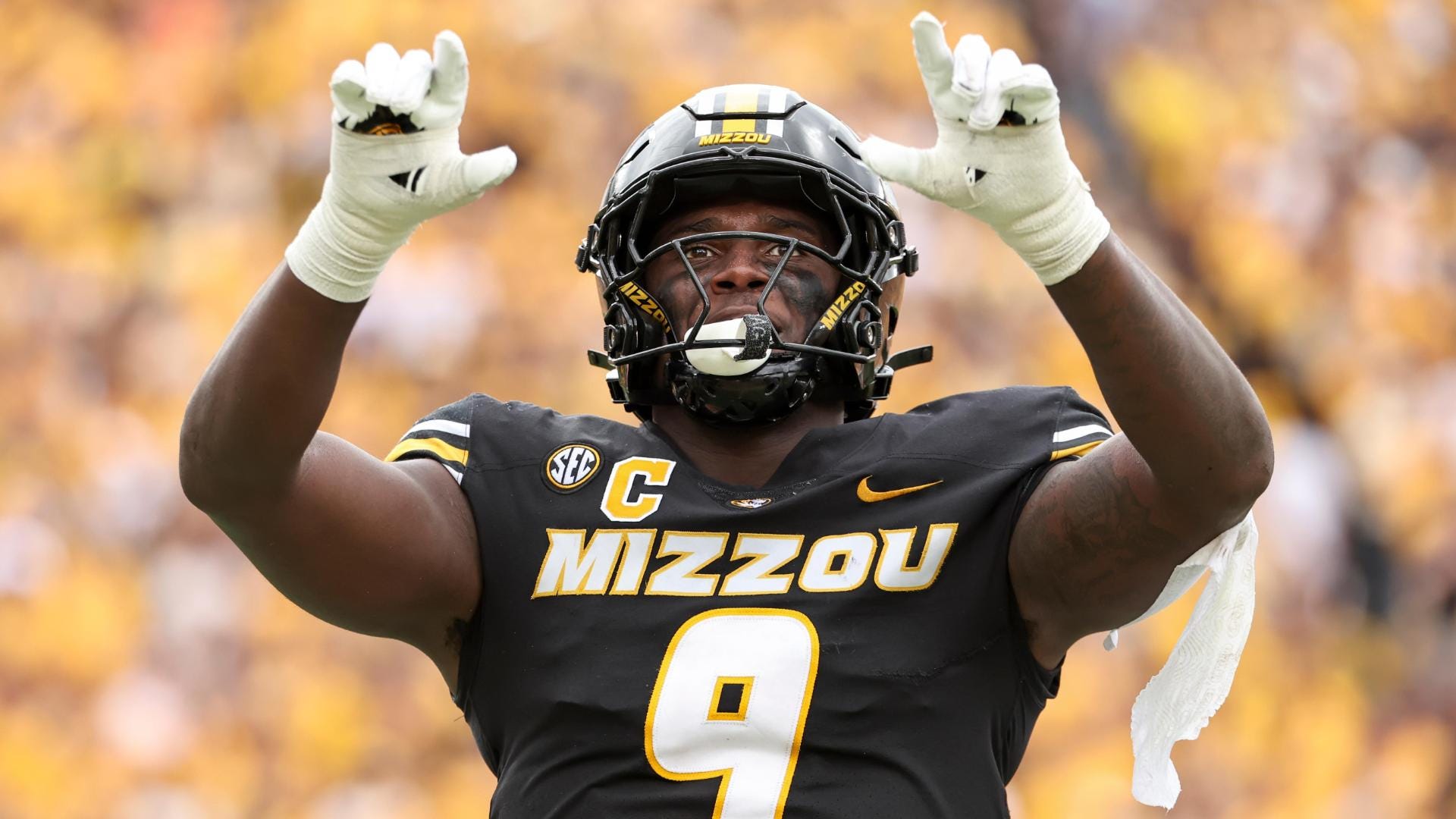
33. Zion Young, DE, Missouri
Ht: 6’ 6” (6060) | Wt: 262 | Hand: 9.5” | Arm: 33” | Wing: 81.38” | Ape: 1.04
2025 Stats: 42 Tackles (20 Solo), 6.5 SKs, 16.5 TFLs, 2 PD, 2 FF (13 Games)
Key Stats: 27 Stops / 29 Hurries / 52 Pressures / 17.4% PRWR / 9.3% RSWR
Red Flags: MSU Tunnel Altercation | DWI Dec 2025 | Prior Assault Charge
Draft Stock: ⬇️1 | Previous Top-50 Rank: #32 | SIS Big Board: #46
Zion Young is a 22-year-old defensive end at 6’6”, 262 pounds with NFL-caliber length, heavy hands, and a power-based game that consistently shows up at the point of attack. He produced 42 tackles, 16.5 TFLs, 6.5 sacks, and 52 pressures in 2025, pairing a 17.4% pass-rush win rate with strong run-defense output and clear disruption value. His game is built on knock-back power, edge-setting strength, and relentless effort, with enough versatility to reduce inside over guards in sub-package situations. Missouri deploys him primarily as a hand-in-the-dirt edge, where his size, physicality, and backside pursuit give him real early-down impact. He profiles as a sturdy, scheme-friendly strong-side end with developmental three-down value.
The concern is whether his pass-rush ceiling ever fully matches his frame and production. Young is not an elite first-step athlete, and his tighter hips and average bend can stall the rush once tackles get into his chest first. His best wins come through power, effort, and finishing feel rather than pure arc speed or dynamic counters. Still, he is firm versus the run, overwhelms tight ends at the point of attack, and his strong Senior Bowl showing helped reinforce the NFL utility on his tape. The bigger issue for teams is trust, with the 2022 tunnel incident and December 2025 DWI creating real off-field scrutiny.
Rock’s Take:
Young has starter traits and the kind of rugged edge presence defensive coaches will value immediately. He may never be a true high-end speed rusher, but the size, power, run-defense floor, and inside-out usage give him a real path to three-down value. The talent says Day 2 starter projection. Whether he reaches that value will come down to how comfortable a front office is with the background and how much pass-rush growth they still believe is in there.
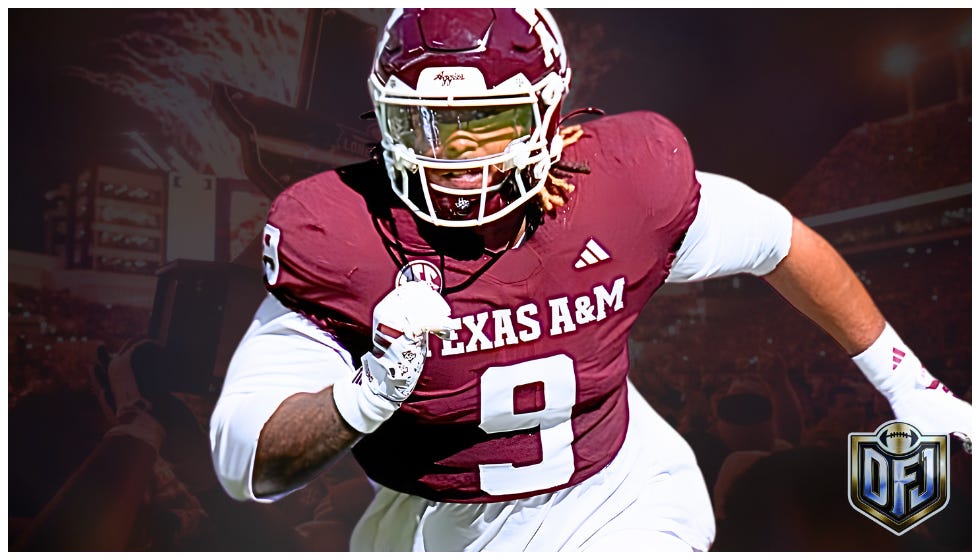
#34 | Edge/ILB | Cashius Howell | Texas A&M
Ht: 6’ 2-1/2” (6024) | Wt: 253 | Hand: 9.25” | Arm: 30.25” | 74.25” | Ape: .99
2025 Stats: 31 Tackles (20 Solo) | 11.5 sacks | 14 TFLs | 6 PBUs | 1 FF (13 Games)
Key Stats: 19.9% Pass Rush WR | 41 Pressures | 3 BPs | 27 Hurries | 21 Stops
Red Flags: Short Arms | .99 Ape Index | Struggles Vs The Run | 3.1% Run Stop
Draft Stock: ⬇️ 6 | Previous Top-50 Rank: #28 | SIS Big Board: #36
Cashius Howell is a 22-year-old EDGE at 6’2”, 253 pounds with elite first-step burst and natural bend, producing 11.5 sacks, 14 TFLs, and 41 pressures in a dominant 2025 campaign. Operating as a stand-up Jack in Texas A&M’s hybrid front, he attacks from wide alignments to maximize angle stress and immediate upfield pressure. His rush profile is built on sudden get-off, ankle flexion, and a polished inside spin counter that punishes oversets and compresses the pocket fast. He also flashes active hands and strong disruption instincts, creating pressure even when he doesn’t finish. He profiles as a pressure-first edge built to hunt space and force tackles into survival mode.
The concern is length, anchor strength, and every-down viability. Howell’s sub-31-inch arms severely limit his margin for error, allowing longer tackles to access his chest, achieve lockout, and erase his counters once contact is established. That same reach deficiency shows up in the run game, where he struggles to set a hard edge and can be washed inside by power tackles and base tight ends. His rush plan can flatten out when he leans too heavily on speed and doesn’t vary tempo or hand sequencing. Still, his burst, motor, and counter feel give him real pass-rush utility. With specialized deployment, he projects as a dangerous situational weapon.
Rock’s Take
Howell’s entire evaluation turns on the arm length. The data is brutal—sub-31-inch edge rushers simply have not produced double-digit sack seasons in the NFL for decades, and the tape shows why. Offensive tackles get to his frame too easily and can shut the rep down once they land first contact. That’s why viewing him as a full-time traditional edge is a mistake. Move him around, create interior rush lanes, and let him attack as a sub-package hunter—because that’s where his burst, bend, and disruption become hardest to handle.
Previous Top-50 Ranking #28

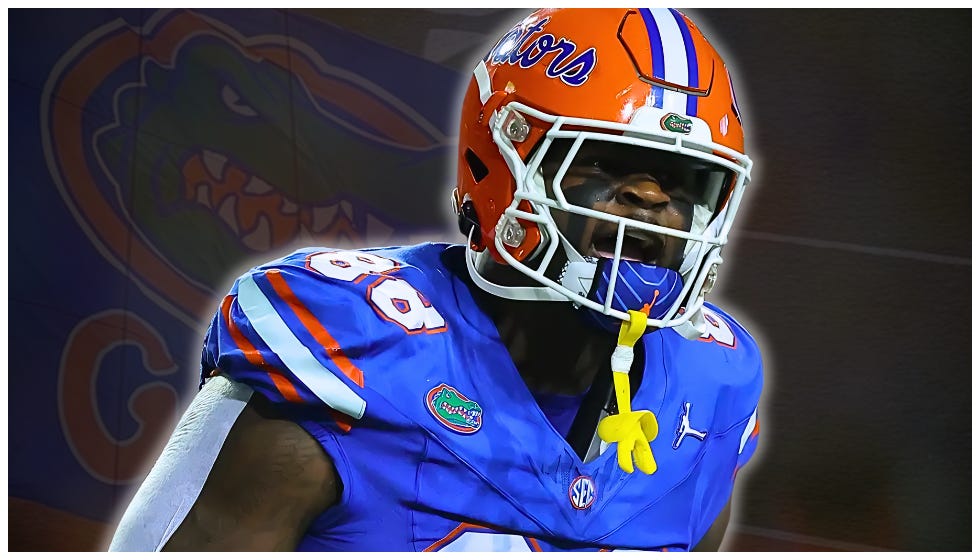
#35 | DT | Caleb Banks | Florida
Ht: 6’ 6-1/4” (6062) | Wt: 327 | Hand: 10.875” | Arm: 35” | Wing: 85.75” | Ape: 1.10
2024 Stats: 21 Tackles (10 Solo) | 7 TFLs | 4.5 SKs | 2 FF | 1 BP (12 Games)
Key Stats: 29 Pressures | 21 Hurries | 13 Stops | 8.3% PRWR
Red Flags: Foot Injury | Consistency Concerns | Missed Tackles
Draft Stock: ⬆️ 2 | Previous Rank: #37 | SIS Big Board: #34
Caleb Banks is a 21-year-old defensive tackle at 6’6¼”, 327 pounds with rare length, explosiveness, and disruptive first-step quickness that immediately stresses interior blocking structure. He produces flashes of high-end impact with 29 pressures and 4.5 sacks, using 35-inch arms and heavy hands to win early and collapse gaps. His game is built on initial burst, violent hand usage, and alignment versatility, allowing him to attack from 3-tech, 4i, and 5-tech across multiple fronts. Florida deploys him as a movable interior disruptor to create mismatches and penetrate quickly. He profiles as a traits-driven defensive lineman who wins at the snap and disrupts run schemes before they develop.
The concern centers on leverage, finishing, and durability. Banks plays too upright, exposing his chest and allowing blockers to neutralize his power, while his inconsistent processing leads to late reactions against misdirection. His inability to finish—highlighted by missed tackles and poor body control in space—limits production relative to his disruption. Most critically, a significant foot injury history, including multiple surgeries and a lost 2025 season, raises long-term availability concerns. However, his burst, length, and raw power remain rare. With improved pad level, discipline, and health stability, he projects as a high-upside rotational disruptor.
Rock’s Take:
Banks is one of the most intriguing boom-or-bust bets in this class. The traits jump off the tape—size, length, and first-step explosion—but the inconsistencies and medicals are real. You’re drafting flashes and betting on development. If he gets healthy and cleans up his pad level, this is a disruptive interior force. If not, he’s a rotational piece. Drafting Banks requires absorbing significant medical risk, but if his fractured foot forces a slide into Day 2, he instantly becomes a premium draft steal.
Confirmed Source Intel:
“I have tremendous respect for him. He hurt his foot in camp, tried to play through it and then had to have surgery in September. Most guys who are top-50 (prospects) would have just shut it down but he busted his tail to make it back for the last two games. That says something about his character.” -- AFC national scout
Previous Top-50 Ranking #37

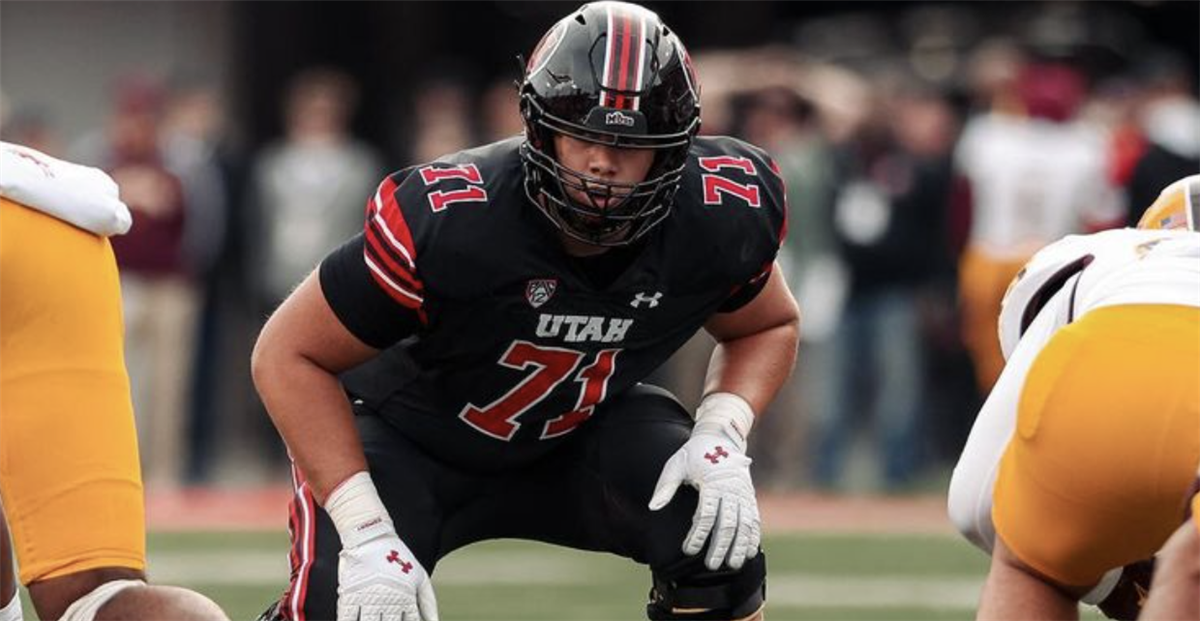
#36 | OT | Caleb Lomu | Utah
Ht: 6’6-1/4” (6062) | Wt: 313 | Hand: 9.5” | Arm: 33.38” | Wing: 82.75” | Ape: 1.06
2025 Stats: 823 Snaps | 2 Hits | 0 Sacks | 4 Pen | 8 Pressures (12 Games)
Key Stats: Low Pressure Rate - 0 Sacks - Solid Pass Block Grade
Red Flags: 58.6 Gap Grade - Overall run blocking is poor
Draft Stock ⬇️ 13 | Previous Rank: #23 | SIS Big Board: #32
Caleb Lomu is a 21-year-old offensive tackle at 6’6¼”, 313 pounds with prototype length, loose lower-body movement, and one of the cleanest pass-protection profiles in the class. He logged 823 snaps in 2025 and allowed 0 sacks, just 2 hits, and only 8 total pressures, while posting an 82.1 PFF pass-blocking grade that matches what shows up on tape. Utah trusted him at left tackle, where his independent hand usage, balance, and ability to stay square helped him consistently cut off edge speed and rework late in the rep. His pass sets look advanced for a young player, and multiple analysts have highlighted his athletic profile and left-tackle traits as NFL-starter caliber.
The issue is whether the run-game floor and play strength are good enough right now to match the pass-pro upside. Lomu’s run-blocking profile is the drag on the evaluation, with a 62.0 PFF run-blocking grade, a 65.6 zone mark, and an especially concerning 58.6 gap grade, which tracks with tape that shows limited knock-back power and trouble sustaining leverage when his pads rise. Recent analyst evaluations also note he can play a little upright and needs added strength, even while praising his feel, hand usage, and awareness. That creates a nuanced projection: high-floor pass protector, but not yet a complete tackle.
Rock’s Take:
Lomu is one of the easier pass-projection bets in this class, and that matters because true left-tackle candidates are hard to find. I see a player with starting tackle feet, mature hand independence, and the kind of pass-game consistency that can get him on the field early. But this is not a fully finished product. If you drop him into a wide-zone system and let the body keep developing, you could get a long-term blindside answer. If you ask him to uproot people in a power-heavy world right now, you’re going to see the limitations.
First: elite pass-pro floor — 0 sacks allowed over 823 snaps with strong independent hand usage and true left-tackle movement traits.
Second: run-game concern is real — the 58.6 gap grade and overall run-blocking metrics point to current issues with displacement, pad level, and power.
Third: projection hinges on system fit — zone-heavy teams will value him higher than gap/power teams because his game is
JOIN THE NFL DRAFT LIVE HERE
➡️➡️ LINK HERE ⬅️⬅️

⬇️ DIRECT LINK TO THE CHANNEL ⬇️
Jeremiyah Love | 2026 NFL Draft Profile Snapshot Top-50 Players Post NFL Combine

#1 | RB | Jeremiyah Love | N. Dame


David Bailey | 2026 NFL Draft Profile Snapshot Top-50 Players Post NFL Combine

#4 | EDGE | David Bailey | Texas Tech
Fernando Mendoza | 2026 NFL Draft Profile Snapshot Top-50 Players Post NFL Combine

#5 | QB | Fernando Mendoza | Indiana
Francis Mauigoa | 2026 NFL Draft Profile: Post-Combine Top-50 Snapshot

#6 | OT/G | Francis Mauigoa | Miami
Carnell Tate | 2026 NFL Draft Profile Snapshot Top-50 Players Post NFL Combine

#7 | WR | Carnell Tate | Ohio State
Kenyon Sadiq | 2026 NFL Draft Profile Snapshot Top-50 Players Post NFL Combine

#8 | TE | Kenyon Sadiq | Oregon
Mansoor Delane | 2026 NFL Draft Profile Snapshot Top-50 Players Post NFL Combine

#9 | CB | Mansoor Delane | LSU
Makai Lemon | 2026 NFL Draft Profile Snapshot Top-50 Players Post NFL Combine

#10 | WR | Makai Lemon | USC
Dillon Thieneman | 2026 NFL Draft Profile Snapshot Top-50 Players Post NFL Combine

#11 | Free Safety | Dillion Thieneman | Oregon
Caleb Downs | 2026 NFL Draft Profile: Post-Combine Top-50 Snapshot

#12 | Box Safety | Caleb Downs | Ohio State
Rueben Bain Jr | 2026 NFL Draft Profile: Post-Combine Top-50 Snapshot

#13 | EDGE | Rueben Bain Jr | Miami |
Olaivavega Ioane | 2026 NFL Draft Profile Snapshot Top-50 Players Post NFL Combine

#14 | OL | Olaivavega Ioane | Penn St
Kadyn Proctor | 2026 NFL Draft Profile: Post-Combine Top-50 Snapshot

#15 | OT | Kadyn Proctor | Alabama
Emmanuel McNeil-Warren | 2026 NFL Draft Profile Snapshot Top-50 Players Post NFL Combine

#16 | Strong Safety | Emmanuel McNeil-Warren | Toledo
Jermod McCoy | 2026 NFL Draft Profile Snapshot Top-50 Players Post NFL Combine

#17 | CB | Jermod McCoy | Tennessee
Spencer Fano | 2026 NFL Draft Profile Snapshot Top-50 Players Post NFL Combine

#18 | OT | Spencer Fano | Utah
Denzel Boston | 2026 NFL Draft Profile Snapshot Top-50 Players Post NFL Combine

#19 | WR | Denzel Boston | Washington
Keldric Faulk | 2026 NFL Draft Profile Snapshot Top-50 Players Post NFL Combine

#20 | DE | Keldric Faulk | Auburn
Peter Woods | 2026 NFL Draft Profile Snapshot Top-50 Players Post NFL Combine

#21 | DT | Peter Woods | Clemson
Jordan Tyson | 2026 NFL Draft Profile Snapshot Top-50 Players Post NFL Combine

#22 | WR | Jordyn Tyson | Arizona State
Monroe Freeling | 2026 NFL Draft Profile Snapshot Top-50 Players Post NFL Combine

#23 | OT | Monroe Freeling | Georgia
Avieon Terrell | 2026 NFL Draft Profile Snapshot Top-50 Players Post NFL Combine

#24 | CB | Avieon Terrell | Clemson
Akheem Mesidor | 2026 NFL Draft Profile Snapshot Top-50 Players Post NFL Combine

#25 | DE | Akheem Mesidor | Miami

2026 NFL Draft Profile: EDGE David Bailey (Texas Tech)

Now that the Lions are firmly out of the playoffs. The expected 2026 1st round draft pick will end up somewhere between picks 14-17. Exactly where the way too early projections have David Bailey slotted to be picked at the moment.


Lions’ Thrilling Victory Over Cowboys Marred By The Emergence Of A Structural Crisis

DETROIT —Thursday Night Football between the Detroit Lions and the Dallas Cowboys delivered one of the most exhilarating spectacles for Thursday Night Football in a long time. For Lions fans, the eventual 44–30 dismantling of the Cowboys—a critical “must-win”
NFL Week 11: Eagles Exposed - What The Detroit Lions Learned From MNF

What’s up, Lions Nation! Will Rock here with Rocked On Detroit Lions and Detroit Football Journal. Bringing you the most comprehensive breakdown of the Lions vs. Eagles matchup you’ll find anywhere. This weeks keys to the game submission will be three separate pieces with a bonus feature.
HANK FRALEY: THE PERFECT INTERNAL SOLUTION FOR DETROIT LIONS' OFFENSIVE COORDINATOR

While the Detroit Lions could chase big-name offensive coordinator candidates like Brian Daboll, the perfect solution to their play-calling crisis might already be in the building. Hank Fraley—the architect of the NFL’s most dominant offensive line and a coach who turned down the Seattle Seahawks to stay in Detroit—represents the safest, most seamless path forward for a Lions team in their Super Bowl window.

Why Brian Daboll Could Be Detroit's Next Offensive Coordinator

The New York Giants just fired Brian Daboll after a catastrophic 2-8 start, and the Detroit Lions are facing their own offensive coordinator crisis with Dan Campbell stripping play-calling duties from John Morton. Could the former NFL Coach of the Year be the answer to Detroit’s offensive struggles? An in-depth analysis reveals why Daboll’s track record with Josh Allen and the Buffalo Bills makes him an intriguing—but complicated—candidate for the Lions’ OC position should it open up in 2026.