


OCTOBER 31ST 2026 | 1:13PM
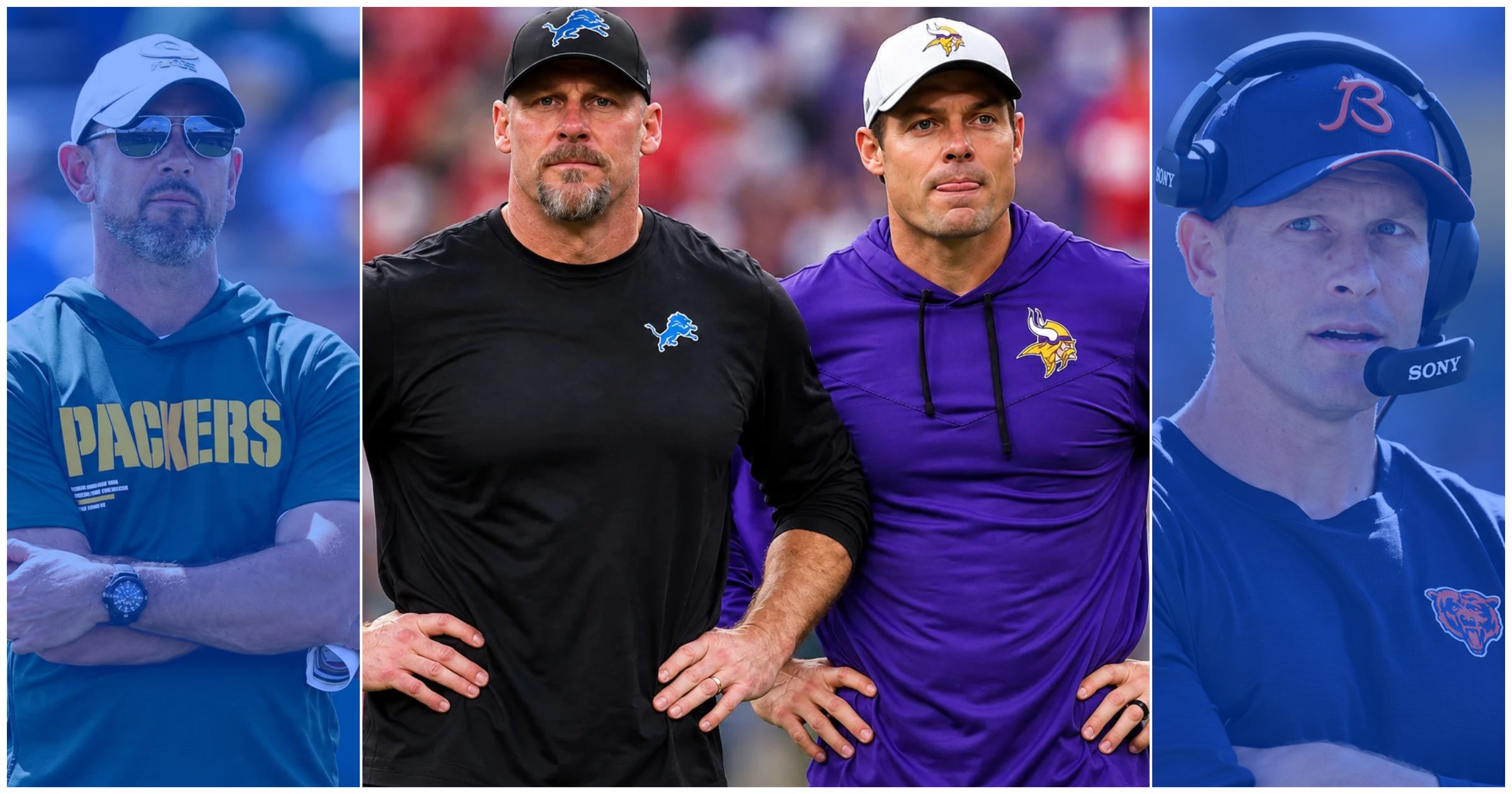
The NFC North has become a wonderfully unreasonable neighborhood. Every locker room has a case for January, and every coaching staff has a problem it would rather not discuss at the podium. Each contender is convinced the guy next door is about to crack. The weather is changing, the excuses are getting old, and nobody can afford to watch the other three from a comfortable distance. This division has enough talent to frighten the rest of the NFL, and enough flaws to keep its own fans awake at night. Welcome the best division in football, the NFC North.
WEEK 7 NFC NORTH RECAP
MINNESOTA VIKINGS — BEAT INDIANAPOLIS 16–10
The Colts led into the fourth quarter before Kyler Murray turned a broken-looking possession into a 35-yard scramble and a touchdown pass to T.J. Hockenson. Blake Cashman was everywhere: 12 tackles, two sacks and four passes defended. PFF gave him Week 7’s highest grade, 94.3. Harrison Smith’s interception ended Indianapolis’ last chance. Minnesota won without much offensive rhythm, and O’Connell won’t enjoy watching his team spend another afternoon hunting for its first touchdown. The defense delivered. The offense kept it waiting.
CHICAGO BEARS — BEAT NEW ENGLAND 30–24
Caleb Williams threw for 308 yards, and Luther Burden III turned four catches into 130, including a third-and-long screen that became a touchdown behind excellent blocking. New England kept swinging: Drake Maye threw for 321 yards, and the Bears needed Cairo Santos’ 58-yard kick and an onside-kick recovery to finish it. Santos had missed from 53 earlier. The win also cost them Cole Kmet, who injured his knee. Johnson found big plays; Allen still has coverage issues to address.
DETROIT LIONS — BEAT GREEN BAY 20–17
Campbell went for fourth-and-one deep in his own territory with the score tied. It failed, and Detroit should have paid for it. Instead, D.J. Wonnum blocked Green Bay’s field-goal attempt, and Goff directed the possession that ended with Jake Bates’ winner. Goff threw for 303 yards and two touchdowns, St. Brown caught nine balls for 153, and Gibbs rushed for 116. Branch returned with an interception. The Lions survived Campbell’s gamble rather than vindicating it.
GREEN BAY PACKERS — LOST AT DETROIT 20–17
Four trips inside the Lions’ 20. One touchdown. There’s your frustration in two sentences. Love threw for 274 yards and two scores, but LaFleur passed on an earlier field-goal chance, Jacobs couldn’t finish a potential go-ahead catch, and Trey Smack missed one short kick before another was blocked. The defense had given Green Bay chances to win. Those empty possessions brought Green Bay another division loss.
STATE OF THE NFC NORTH
MINNESOTA VIKINGS — 6–0 | DIVISION 2–0 | FIRST
Minnesota has wins over Chicago and Green Bay banked, with two Detroit games and rematches left. The Vikings control the North for now. Are they a complete contender, or a terrific defense still on a scavenger hunt for an offense? Detroit is next on November 1. The remaining division games will test whether the defense can keep protecting such a thin offensive margin.
DEFENSE.
Flores has made scoring feel expensive. The Vikings allow a league-best 12.3 points per game; second-place Kansas City is nearly five points behind. FOX has this unit second in total and passing defense, and opponents convert just 28.2% of third downs. ESPN’s pass-rush win-rate figures put this front first in the NFL; opponents score touchdowns on only 23.1% of red-zone trips. Flores attacks protections without giving away easy scores. ESPN ranks the run-stop win rate 11th, not first. Still, this defense has earned its reputation instead of borrowing it from the win column.
OFFENSE.
The offense is the problem, and an unbeaten record doesn’t change it. This unit scores 20.8 points per game, with just 18.0 a week over the last three. Murray’s legs can rescue a play, but his limited passing touchdown production doesn’t force defenses to respect the passing game. Jones and Mason offer capable backs; Jefferson, Addison and Hockenson give O’Connell more receiving talent than these results suggest. ESPN ranks the line fourth in run-block win rate but 13th in pass protection, which helps explain why the backfield isn’t the only problem. The Vikings need touchdowns before Flores has to rescue another afternoon.
SPECIAL TEAMS.
The return game leads the NFL at 19.2 yards per punt return and 30.7 per kickoff return, and Reichard has made 18 of 19 field goals. When the offense can’t finish drives, those returns and dependable kicks are particularly valuable. Punting gives some of it back: 44.0 gross yards shrink to 39.3 net, near the league’s bottom. Returns shorten the field for Murray; the punt unit surrenders some of that advantage. Special teams help carry the scoring burden.
CHICAGO BEARS — 5–2 | DIVISION 0–2 | SECOND
Chicago has the second-best record and a +37 point differential, but the Bears have already lost to Minnesota and Green Bay. Their biggest standings problem isn’t a lack of wins; it’s who those losses came against. Two games with Detroit and rematches against Minnesota and Green Bay remain. The Bears can repair those losses, but chances are limited.
DEFENSE.
Allen’s defense is excellent at ending drives on third down. Opponents convert just 26.1%, best in football, and FOX ranks the run defense third at 87.6 yards allowed per game. Meanwhile, opponents still score touchdowns on 64.7% of red-zone trips. ESPN’s tracking ranks the pass rush ninth but run stopping 26th. Chicago can make an offense earn third down and still give up a chunk play before it arrives. Points allowed have climbed to 26.0 a game over the last three outings, so the coverage issues deserve more attention than the flattering third-down ranking.
OFFENSE.
Johnson’s original formula was clear: pound the football, own the clock, make the quarterback’s work easier. The Bears still average 154.3 rushing yards per game, but the last three have produced only 98.3. Williams is now doing more of the lifting through the air, and Burden gives him a receiver who can turn a short throw into a big play. ESPN ranks Chicago fourth in pass-block win rate, a useful reminder that every sack isn’t necessarily a quick loss by the line. With Kmet sidelined, Johnson must replace both his blocking and receiving without tipping defenses toward the run or pass.
SPECIAL TEAMS.
Chicago’s punting is doing its job: 49.7 gross yards, 43.4 net, and an 11.8-yard punt-return average among the NFL’s better marks. Kickoff returns produce a more ordinary 25.0 yards. The problem is Santos, who’s made only 11 of 15 field goals. That’s 73.3%, too many missed chances for a team already playing catch-up in its division. Opponents have returned nine Bears punts for 81 yards, so coverage hasn’t wiped out the punting advantage. The kicker is leaving points on the grass.
DETROIT LIONS — 4–2 | DIVISION 1–0 | THIRD
The Lions sit third partly because they’ve played fewer games. They’re already 1–0 in the North, and the defense is finally giving the offense something to work with. Detroit still plays Minnesota twice, Chicago twice and Green Bay once. The division race is sitting right there on its schedule.
DEFENSE.
Sheppard’s unit has allowed 38 points over its last two games after surrendering 127 in the first four. That’s 19.0 per game instead of 31.75—real progress on the scoreboard. But FOX still ranks the defense last in total yards and passing yards allowed, while opponents convert 47.7% of third downs and score touchdowns on 72% of red-zone trips. ESPN ranks the pass rush fourth and run-stop wins 22nd. Hutchinson can beat a blocker; that doesn’t mean the coverage behind him holds up. Branch is back, but the defense needs more than a couple of better Sundays before anyone declares the problem solved.
OFFENSE.
Petzing has the kind of problem coaches would happily steal: too many dangerous players to give everybody the ball. The Lions score 30.7 points per game, Goff has 14 touchdown passes without an interception, and the offense finishes more than 70% of its red-zone visits with touchdowns. Gibbs can attack inside, outside or as a receiver; St. Brown punishes underneath space while Jameson Williams demands help deep. The concern is less glamorous: Detroit converts only 39.1% of third downs. ESPN’s blocking figures show pass protection outperforming the run-blocking win rate, so don’t confuse Goff’s clean passing numbers with dominance up front in every phase. This attack is explosive, not invulnerable.
SPECIAL TEAMS.
Bates is perfect at 10-for-10 on field goals, and the punt-return unit averages a league-third 14.4 yards. Detroit gets 43.2 net yards per punt from 48.2 gross. Kickoff returns average a less impressive 25.0, and the team has a punt-return fumble. Punt coverage has allowed 65 yards on eight returns, keeping the net average respectable. Kicking and punt returns help turn field position into points without disguising ordinary kickoff production. Bates is giving the Lions a real edge.
GREEN BAY PACKERS — 4–3 | DIVISION 1–2 | FOURTH
Green Bay has a winning record and a minus-one point differential. Already carrying two division losses, the Packers don’t have the same cushion as the teams they’re chasing. Minnesota, Chicago and Detroit each remain on the schedule. The talent is there, but more division mistakes will hurt.
DEFENSE.
Gannon’s group is giving LaFleur chances to win. The Packers allow 20.7 points a game, down to 13.3 over their last three; FOX ranks their pass defense ninth. Opponents still convert 44.1% of third downs and run for 115 yards a game; 68% of their red-zone trips end in touchdowns. ESPN ranks their run-stop win rate 28th and pass-rush win rate 26th. Injuries have thinned the front seven and left fewer answers against the run. Green Bay is getting better results without having solved the down-to-down problems that make those results difficult to sustain.
OFFENSE.
The Packers can throw it. Love has 1,958 gross passing yards, Watson stretches the field, and Golden gives defenses another receiver to worry about. Yet this offense averages only 20.6 points. The rushing game produces a miserable 59.9 yards a week, and the red-zone touchdown rate sits at 46.2%. ESPN’s pass-block win-rate figures rank the line last in the league, though the actual sack rate is much better; Love is helping disguise some protection trouble. Inside the 20, the deep field disappears and the running game can’t reliably replace those explosive throws. LaFleur has enough receivers. He needs a way to finish drives.
SPECIAL TEAMS.
The punt game wins territory: 44.8 net yards per attempt, a league-second 15.5 yards per punt return, and 26.8 on kickoffs. Then the placekicking throws away the advantage. Smack is 11-for-16 on field goals, just 68.8%, with two missed extra points. Fourteen of 27 punts have landed inside the 20, and opponents average under eight yards on returned punts. Strong punting can’t turn a missed short kick into three points. The punter isn’t the problem. The kicker is.
NFC NORTH INJURY REPORT
AS OF 10.31.2026 - 1PM
MINNESOTA VIKINGS
Jones aggravated his knee against Indianapolis but finished the week practicing fully. O’Neill, Huber and Bartholomew are also cleared for Detroit; Ward is questionable. Mason is back from thumb surgery, and the earlier returns of Darrisaw, Addison and Hockenson leave O’Connell with nearly all his important offensive pieces. That’s encouraging for a unit short on touchdowns. The Vikings are healthier than they’ve been in weeks, although guard Donovan Jackson remains on injured reserve. With Detroit and Buffalo next, the offense is running out of reasons to look this ordinary.
CHICAGO BEARS
Kmet is done for the season after a serious knee injury, leaving Johnson without a dependable blocker and veteran tight end. Roush figures to get more work behind Loveland, who cleared his neck issue. Monangai is out at Seattle for a fourth straight game; Muhammad and Jackson are questionable. Edwards returns to direct the defense after missing two games, and Sweat is back from suspension. Newly acquired Simmons is expected to play Monday. Chicago is getting tougher up front, but its offensive depth isn’t getting healthier nearly as quickly.
DETROIT LIONS
Joseph is practicing again after his long knee recovery, but he’s ruled out against Minnesota. His return later in the season could give Sheppard another ball-hawking safety alongside Branch, who’s already back. McCreary is questionable with a foot injury, a concern against Jefferson and Addison. Gibbs and St. Brown practiced fully after shoulder and ankle issues, while Rakestraw is also available. Detroit is getting key offensive pieces back to full participation. The secondary still needs its available corners to hold up against Minnesota’s receivers while the pass rush gets home.
GREEN BAY PACKERS
Four players are done for the season: Cooper and Hargrave suffered Achilles injuries, Reed needed neck surgery, and Bako-Bewele injured his knee. Parsons is targeting the November 25 Rams game after ACL and meniscus surgery, but that’s not a medical clearance. Watson returned Thursday despite a broken rib, while Franklin and Rhyan missed the Carolina win. Those absences expose thin depth along the line and at linebacker. Parsons could transform the pressure packages after the bye, but he can’t replace the injured linebacker, defensive tackle and receiver on his own.
ROCKS READ
Minnesota leads, but I’m picking Detroit to win the North. Not because Flores’ defense is overrated. It’s been outstanding. The problem is the offense, and the schedule is about to expose whether that 6–0 start was built to last.
Forget Weeks 1 and 2 for a moment. From Weeks 3 through 7, the Vikings beat Tampa Bay, Miami, New Orleans and Indianapolis, teams sitting at a combined 7–20. They averaged just 19.25 points in those four wins. Now come the Lions twice, Bills, Packers, 49ers and Patriots. Flores can’t keep holding everybody to field goals while O’Connell searches for touchdowns. Minnesota finishes second in my book at 11–6, with five more wins. The defense is good enough for January; the offense has to prove it belongs there.
Detroit’s path looks different. The Lions already beat Green Bay and have five more games at Ford Field: Minnesota, Tampa Bay, Chicago, Tennessee and the Giants. The Patriots game in Munich is officially a neutral-site date, not another home crowd. Miami and Atlanta are winnable road trips. Goff, Gibbs, St. Brown, Williams and LaPorta give Petzing the division’s deepest collection of offensive answers. Hutchinson, Wonnum and McNeill can affect quarterbacks from multiple angles, and Branch is back. Detroit hasn’t run a gauntlet either, and Sheppard still has coverage busts to fix. Eight more wins are within reach. My call: 12–5, division champions.
Chicago is dangerous, not dependable yet. Williams and Burden have given Johnson explosive plays, while Simmons, Sweat and Jarrett could change the defensive front. Losing Kmet hurts an offense whose rushing production has cooled. Their early schedule was manageable. Now come road trips to Seattle and Buffalo, plus Detroit, Green Bay and Minnesota. That 0–2 division start is costly. I have Chicago third at 11–6, good enough for a wild card.
Green Bay could make every prediction look foolish. Love has receiving weapons and Green Bay has already faced tougher competition than Minnesota. Five of the final nine are at Lambeau, including Minnesota and Detroit. But a run game struggling for yards, missed kicks and season-ending injuries to Cooper, Hargrave and Reed leave too many weak spots. Parsons might return for the stretch run; nobody should count on him fixing everything. My projection is 10–7 and fourth, just outside the playoffs.