


DETROIT —Thursday Night Football between the Detroit Lions and the Dallas Cowboys delivered one of the most exhilarating spectacles for Thursday Night Football in a long time. For Lions fans, the eventual 44–30 dismantling of the Cowboys—a critical “must-win” game to maintain a shot at the NFC North Crown for the 3rd straight season—was a heart-stopping blend of thrilling emotions ending with agonizing pain and adversity - Lions fans know this feeling all too well.
The Good: Gibbs For MVP
Running back Jahmyr Gibbs once again proved to be the catalyst for the Lions’ explosive offense, lighting up the field with game-changing plays. He finished the night with three rushing touchdowns, a performance that tied him with the legend Barry Sanders for the most touchdowns by any player before the age of 24 with (47).
The Bad: Silence After the Roar
The high-octane affair was frequently disrupted by an unusually high number of questionable calls from the officiating crew, leading to a palpable sense of frustration and fueling whispers of “the fix was in” among the Ford Field faithful.
Then it happened, in the waning moments of the fourth quarter, Lions safety Brian Branch went down in the end zone, lying motionless and unable to stand. The collective gasp of the crowd was a familiar sound, ushering in the grim, recurring feeling that “this team is cursed.”
The silence at Ford Field was deafening, heavier than the roar that preceded it.
Branch was helped off the field and subsequently carted to the locker room. Reports soon began to fly: a devastating Achilles tendon injury was suspected. The mood in the locker room and among the fanbase instantly shifted from celebratory relief to of the season still going strong, to immediate and profound concern for the next game.
For a defense that relies heavily on the energy and cohesion of its secondary, losing a foundational player like Branch is a crippling blow—one that was tragically confirmed the following Friday as a season-ending Achilles tear.
The Blame: Holmes Under Scrutiny
This latest injury immediately reignited criticism of General Manager Brad Holmes. Fans, in their digital corners, piled on, blaming him for not possessing a crystal ball to predict the inevitable, season-altering injuries that every team faces. With the Lions positioning themselves as true Super Bowl contenders (now sitting at 8-5), the injury bill has finally come due, and many are demanding Holmes make a significant move to stabilize the collapsing secondary.
With safety Kerby Joseph already sidelined since Week 6 and starting cornerback Terrion Arnold on injured reserve, the loss of Branch is not merely a hurdle; it represents a structural crisis. Branch was the defensive unit’s skeleton key—a versatile star capable of erasing slot receivers, thumping against the run, and brilliantly disguising coverages.
Without his unique skill set and the deep range of Joseph, Lions Defensive Coordinator Kelvin Sheppard is left scrambling for practice squad elevations, forcing him to ask for complex communication and coverage checks against high-caliber playoff quarterbacks. This is a gamble a Super Bowl hopeful simply cannot afford to take.
Reserves and a Glimmer of Hope
The question remains: Do the Lions possess enough depth to keep their season alive and their Super Bowl aspirations intact?
Veteran slot corner Avonte Maddox remains a solid, dependable football player.
Cornerback Rock Ya-Sin has played admirably, arguably as well as, or even better than, the injured Arnold at times.
Amik Robertson has been a versatile utility player who has bailed the team out of multiple high-leverage situations.
Safety Daniel Thomas is also expected to return from injury before the critical upcoming matchup against the Rams.
Depth Tested, Hope Hanging On
Avonte Maddox remains a steady, reliable presence locking in at safety Thursday night. Rock Ya-Sin has played as well as, if not better than, Terrion Arnold before his injury. Amik Robertson’s versatility has repeatedly bailed the team out in high-leverage moments, and safety Daniel Thomas is expected back before the pivotal matchup against the Rams.
Meanwhile, D.J. Reed—still working his way back from a serious hamstring injury—has shown flashes of why he was acquired. His game-sealing interception in Week 14 erased memories of earlier struggles and reminded fans of his big-play potential.
Then, there’s the LEGION OF WHOM: the question is just who will step up this time?
The Emergency: Secondary on the Brink
Detroit’s defensive backfield is stretched to thin and breaking at the seams.
Kerby Joseph (knee): Out since Week 6
Terrion Arnold (shoulder): On Injured Reserve
Thomas Harper (concussion): Exited the Cowboys game
Brian Branch (Achilles): Season-ending tear
Lions DC Kelvin Sheppard, in his first year calling the defense, has done a masterful job navigating injuries, often relying on linebacker-heavy defensive looks to compensate for the thinning secondary. But with Branch gone, a unit that was merely bending is now threatening to break at the seams.
The Potential Solution: Or A Band-Aid?
Enter Justin Simmons—a rare December free agent, healthy and waiting for a contender to call. At 31 years old, Simmons is no longer the athletic marvel who entered the league in 2016, but his instincts and ball skills remain elite. After starting 16 games for Atlanta in 2024 and recording two interceptions, he now sits unsigned.
His résumé speaks for itself:
Experience: 134 career games across nine seasons
Production: 32 career interceptions, the most among safeties since 2016
Durability: A track record of answering the bell week after week
Simmons isn’t seeking a long-term deal. A one-year, incentive-laden contract in the $5–7M range would fit Detroit’s cap and give him the chance to chase a ring.
Why Simmons Fits Sheppard’s Defense
Detroit’s scheme relies heavily on single high safety man defense, a scheme that Simmons didn’t run primarily in Denver. Simmons built his reputation in Denver running split-safety shells (Quarters, Cover-4, Cover-6), and from my vantage point Sheppard is going to have to adopt more zone into the scheme and Simmons can help immediately, whereas a young player may not be able to keep up.
Simmons Thrives:
Zone instincts: Reads route combinations from top-down leverage, jumps seams, and baits quarterbacks.
Field general: Renowned communicator who keeps teammates aligned, preventing the coverage busts that lead to explosive plays.
Robber role: At 6’2”, 202 lbs, Simmons is ideally suited to erase tight ends on third down, even if he no longer has elite recovery speed.
Risks vs. Rewards
Critics point to his age and late-season availability. But Detroit doesn’t need Simmons to run a 4.3 forty—they need him to stabilize a secondary on the verge of collapse. The risk of signing him is minimal compared to the risk of relying on unproven depth in January, when 12-win seasons can unravel in the Wild Card round.
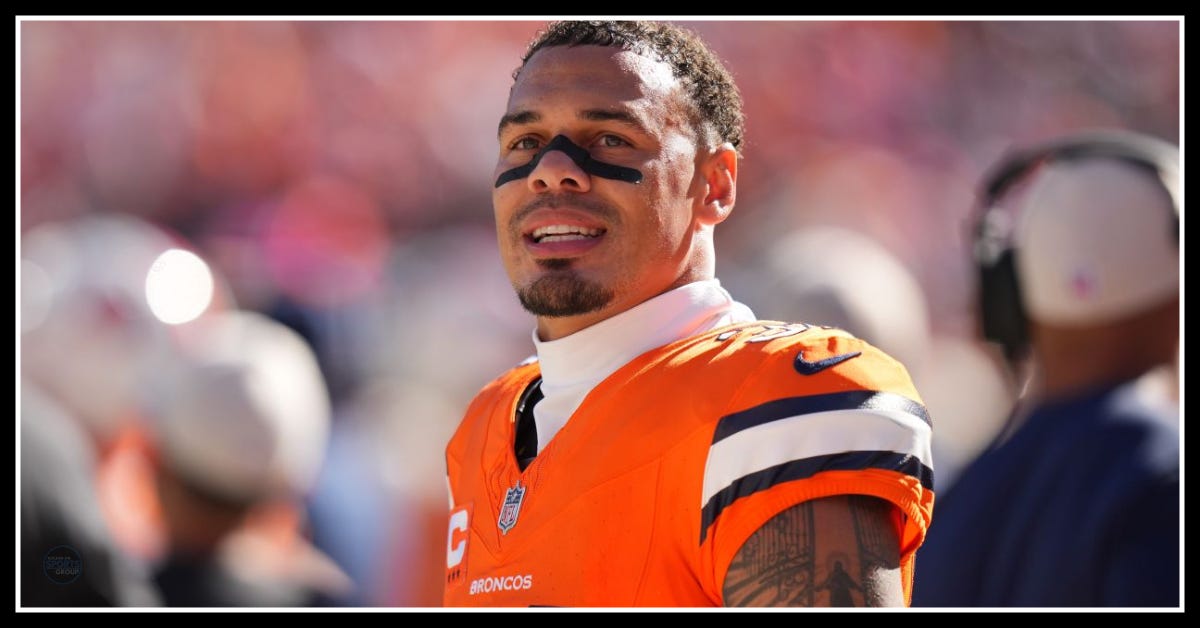
The biggest question is if Simmons is even interested. After watching several of his appearances on various shows, including; Up & Adams With Kay Adams and DNVR Sports. One would speculate that Simmons is still a Bronco at heart and would be more apt to join the Broncos for a late season run versus joining a team that has too many questions.
Conclusion: Make the Call?
Great general managers don’t just build rosters in April; they salvage them in December. The loss of Brian Branch is devastating, but it clarifies the mission.
Justin Simmons offers veteran composure, elite ball skills, and offers a schematic fit that the Lions can adopt. He is the stabilizing presence Kelvin Sheppard’s young secondary desperately needs. If the Lions are serious about a Super Bowl run, Brad Holmes must pick up the phone—but if you think the missing piece is waiting or available you are gravely mistaken. No matter how good Simmons is or can be, this team is not one player away right now and never will be, no team is.
For as much as we want to see the Lions finish the season with a Lombardi, this potential move won’t be the reason why the Lions do just that. No, the answer is that Aidan Hutchinson needs to step up and the rest of the defense needs to carry their weight equally and then some. The Lions have yet to play a complete game and they still have plenty of playmakers to carry the torch, but will they?

Join The Detroit Football Journal Daily Podcasts Below
LATEST STORIES

NFL Week 11: Eagles Exposed - What The Detroit Lions Learned From MNF

What’s up, Lions Nation! Will Rock here with Rocked On Detroit Lions and Detroit Football Journal. Bringing you the most comprehensive breakdown of the Lions vs. Eagles matchup you’ll find anywhere. This weeks keys to the game submission will be three separate pieces with a bonus feature.
HANK FRALEY: THE PERFECT INTERNAL SOLUTION FOR DETROIT LIONS' OFFENSIVE COORDINATOR

While the Detroit Lions could chase big-name offensive coordinator candidates like Brian Daboll, the perfect solution to their play-calling crisis might already be in the building. Hank Fraley—the architect of the NFL’s most dominant offensive line and a coach who turned down the Seattle Seahawks to stay in Detroit—represents the safest, most seamless path forward for a Lions team in their Super Bowl window.

Why Brian Daboll Could Be Detroit's Next Offensive Coordinator

The New York Giants just fired Brian Daboll after a catastrophic 2-8 start, and the Detroit Lions are facing their own offensive coordinator crisis with Dan Campbell stripping play-calling duties from John Morton. Could the former NFL Coach of the Year be the answer to Detroit’s offensive struggles? An in-depth analysis reveals why Daboll’s track record with Josh Allen and the Buffalo Bills makes him an intriguing—but complicated—candidate for the Lions’ OC position should it open up in 2026.


What did you think about the article? Let me know!