October 11, 2026 | 11:50 PM ET
DETROIT LIONS 45 | ARIZONA CARDINALS 21 | LIONS RECORD: 3-2 | NFL WEEK 5
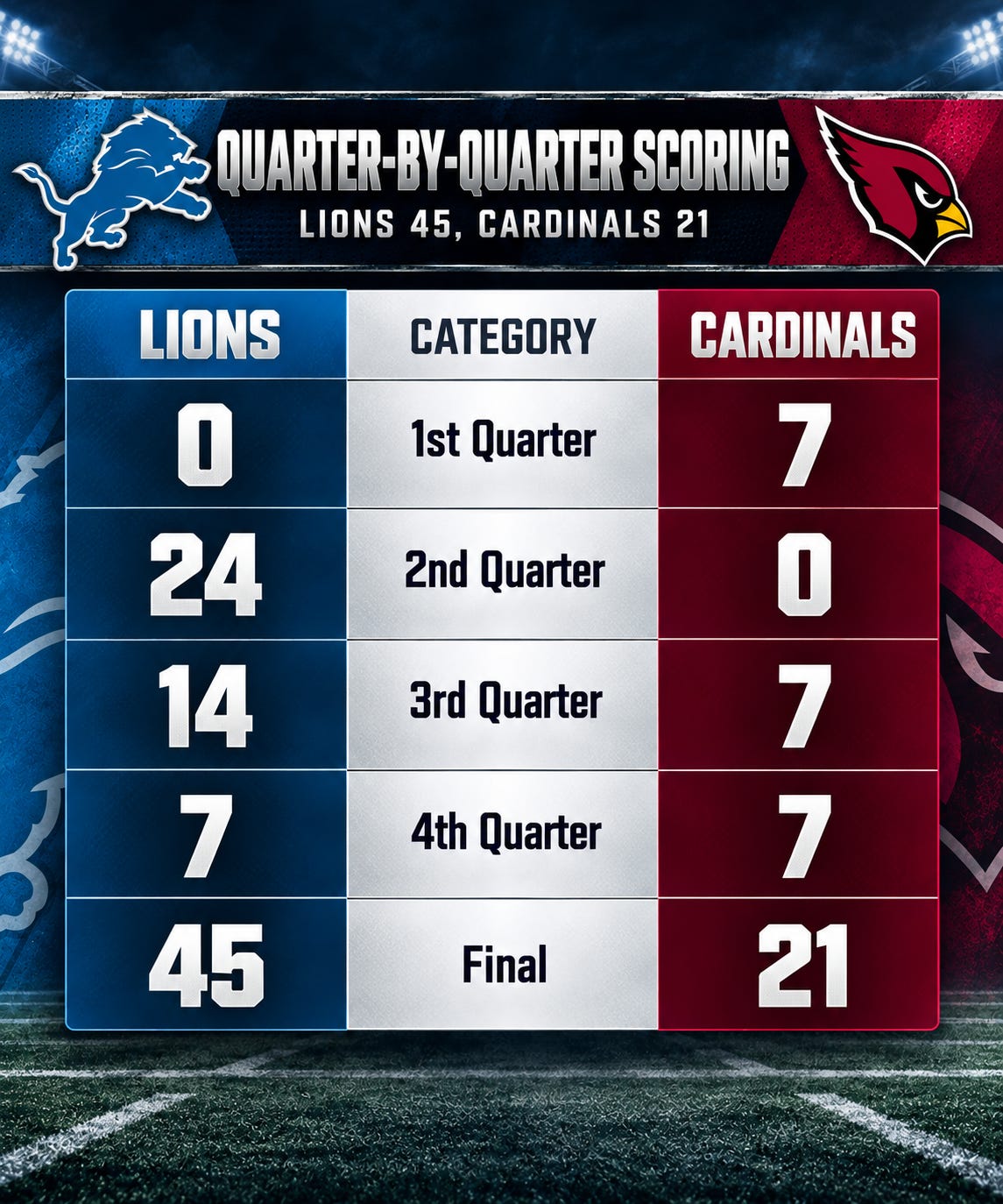
GLENDALE, Ariz. — The Detroit Lions spent the first quarter looking like the same team that left Carolina with unanswered questions, then ripped control away from Arizona. After three consecutive three-and-outs and minus-nine offensive yards, the Lions scored 24 points in the second quarter and finished with six touchdowns in a 45-21 victory at State Farm Stadium.
The defense gave that recovery room to happen by answering Arizona’s opening touchdown with five consecutive three-and-outs. Jahmyr Gibbs delivered 151 rushing yards, 56 receiving yards and two touchdowns, Jared Goff threw three touchdown passes without an interception, and Sam LaPorta and Jameson Williams repeatedly delivered when Detroit faced possession-defining downs.
The game changed when the Lions stopped requiring Goff to rescue stagnant possessions by himself. The run game created balance, fourth-down execution extended drives and Kelvin Sheppard’s defense eliminated Arizona’s rushing attack, eventually forcing Jacoby Brissett into a pass-heavy game the Cardinals could not sustain well enough to threaten Detroit’s lead.
HUGE IMPROVEMENTS
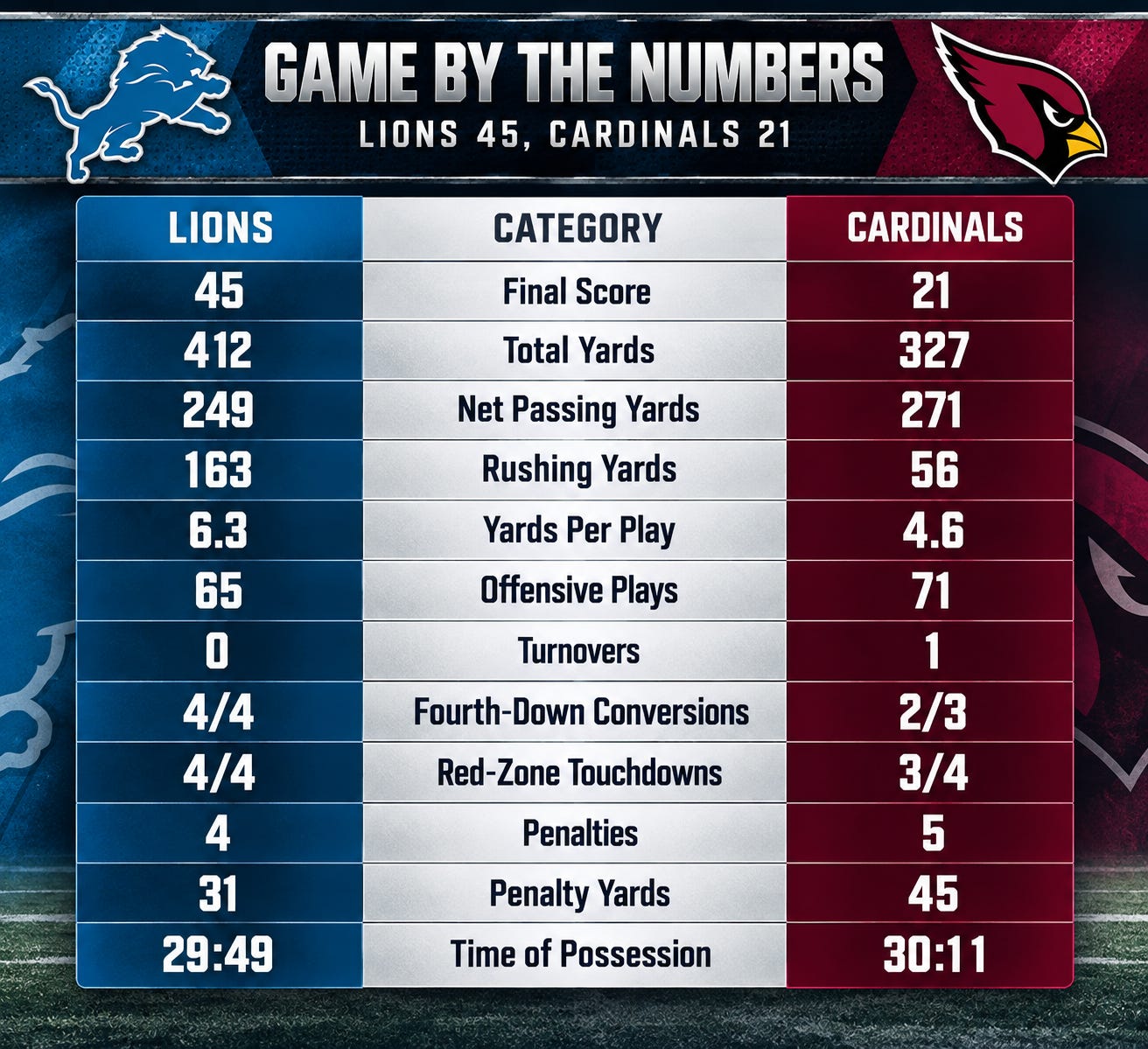
The Lions finished with 412 total yards, including 163 rushing and 249 net passing yards. Arizona accumulated 327 total yards, but its offensive production was heavily dependent on Jacoby Brissett’s passing attempts.
Detroit’s efficiency improved dramatically after the first quarter. The Lions averaged approximately 6.3 yards per offensive play and scored six touchdowns despite opening the game with three consecutive three-and-outs.
The most revealing statistical difference was rushing efficiency. Gibbs averaged 6.0 yards per carry, while Arizona’s leading running back, Jeremiyah Love, managed only 22 yards on 12 attempts.
The Lions also converted all four fourth downs, three of which directly produced touchdowns or sustained touchdown drives. Arizona’s inability to stop those plays prevented its defense from getting off the field when it had opportunities to regain control.
Arizona’s late passing production also came after Detroit had established a substantial lead. Brissett’s 292 passing yards added volume to the box score but did not translate into sustained competitive pressure on the scoreboard.