


NOVEMBER 9, 2026 | 6:31 AM ET
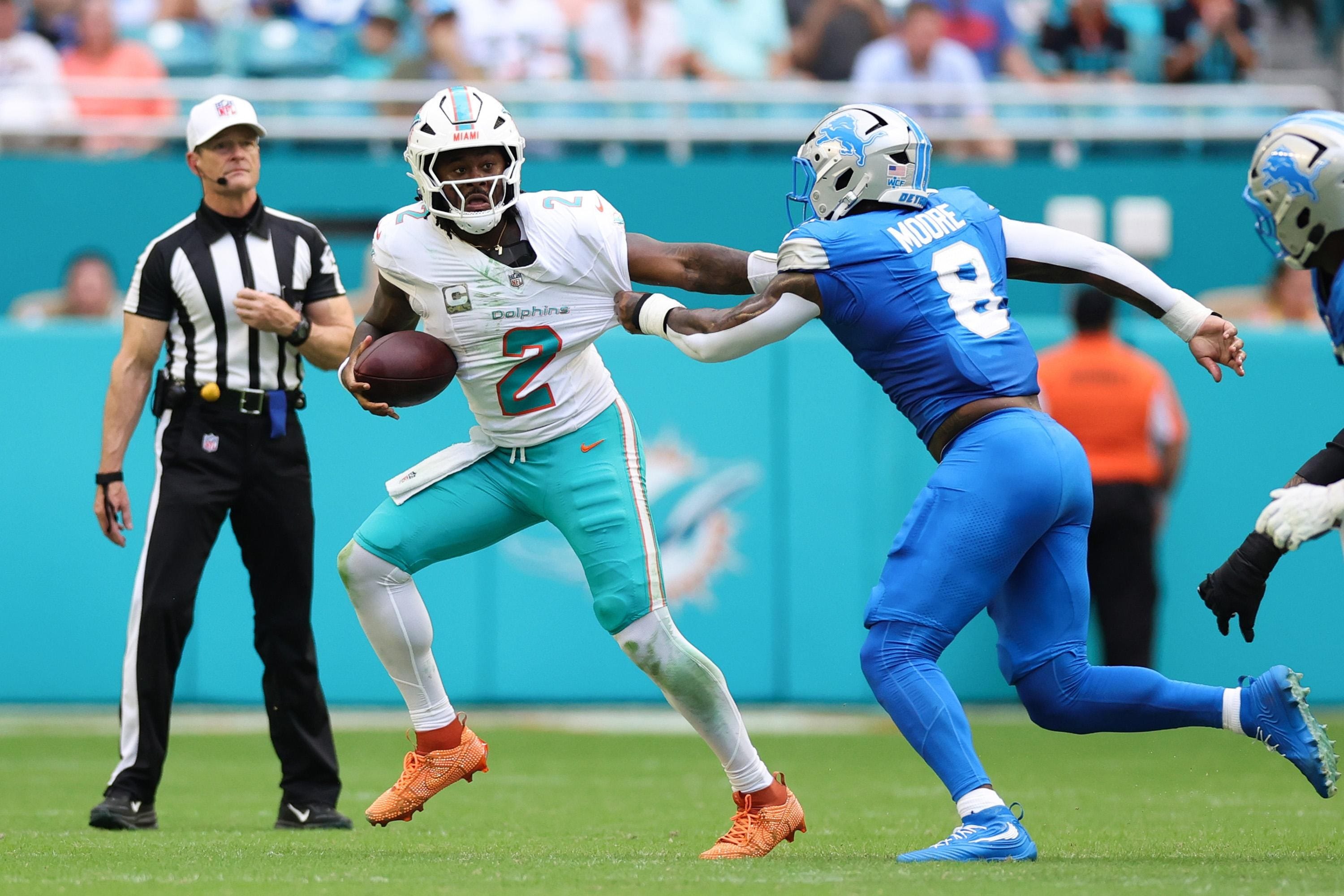
Pompano Beach, Florida—The pregame analysis warned that Miami’s 1-6 record concealed a defense playing considerably better than its season-long rankings suggested. That warning proved accurate Sunday at Hard Rock Stadium. The Lions won 19-9, but Drew Petzing’s offense managed only 270 net yards, converted three of 12 third downs and needed four Jake Bates field goals to overcome a Dolphins defense that repeatedly disrupted Jared Goff.
The strongest pregame predictions concerned Miami’s developing pass rush, Detroit’s ability to contain Ollie Gordon II and the need to limit Malik Willis’ mobility without creating escape lanes. Those assessments held up, while the concerns surrounding Jack Campbell’s absence and Detroit’s defensive rotation produced one of the game’s most encouraging developments. Kelvin Sheppard’s unit prevented Miami from scoring a touchdown, allowing the Lions to gradually establish the two-score advantage anticipated before kickoff.
UNDERRATED MIAMI DEFENSE
THE PASS RUSH WAS REAL
I specifically warned against treating Miami’s season-long pass-rushing numbers as evidence of a favorable protection matchup. The Dolphins had gone without a sack through their first three games before recording nine over their next four. Chop Robinson’s eight-pressure performance against New England also identified him as a defender capable of disrupting Detroit’s passing game.
That concern was justified as Miami sacked Goff three times, and Robinson generated early pressure on a play initially ruled a strip-sack touchdown before replay overturned the call to an incomplete pass. It was almost comical watching Dolphins fans erupt in celebration, desperate for something that resembled a football team capable of competing. More concerning was the initial ruling, considering Goff’s arm was clearly moving forward as he released the football. The replay confirmed what appeared obvious from the start: it was an incomplete pass, not a fumble.
Joshua Uche later sacked Goff on third-and-goal, forcing Detroit to settle for three points after advancing inside Miami’s five-yard line. That defensive stop reflected another pregame concern: the Dolphins had become more effective near the goal line. Detroit converted only one of four red-zone possessions into touchdowns as Miami’s front repeatedly disrupted protection and defended short-yardage situations.
